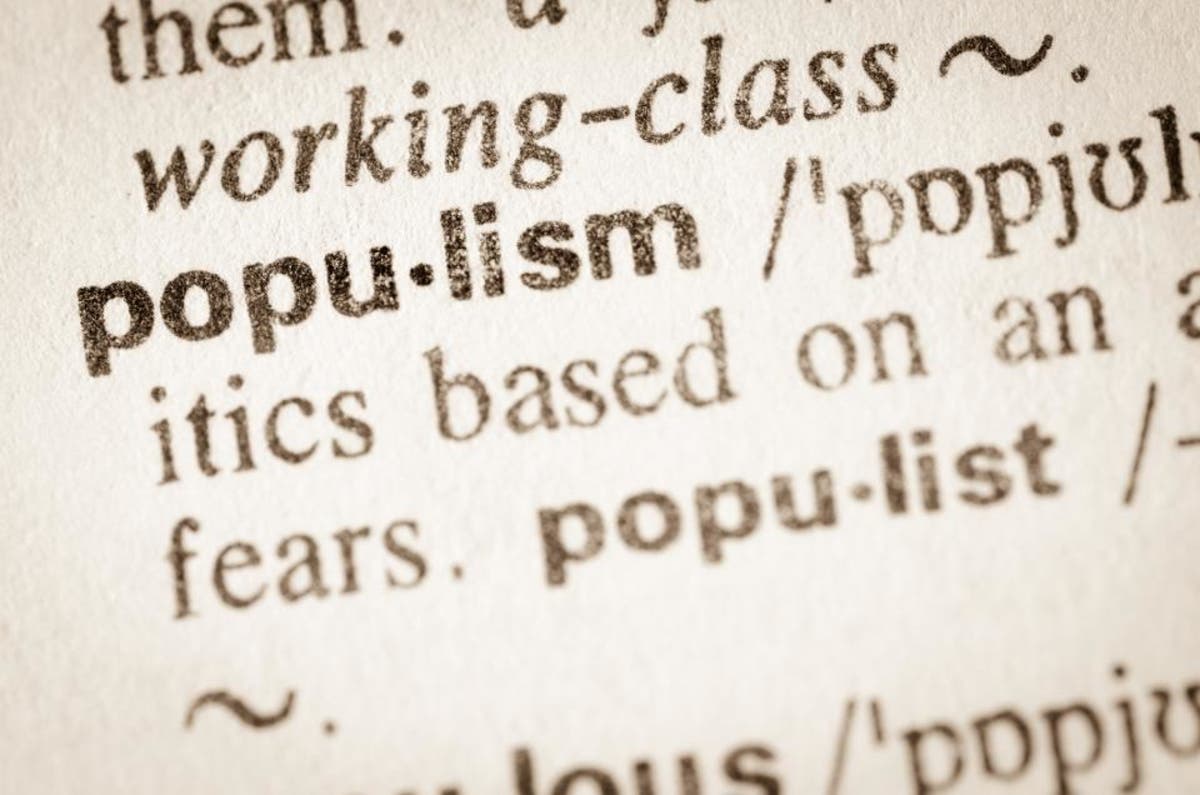
Many are still scratching their heads over the election of Donald Trump, but a look around will reveal that it's really not that surprising. Something is afoot, the status quo is being seriously challenged – and its challenger is a political movement best described as populism and it's much bigger than the current President of the
United States.
It started with Brexit, a 2016 referendum in the United Kingdom over that country's future in a bureaucratic nightmare called the European Union.
Pundits likened supporters of the "Leave" vote to knuckle-dragging wife-beaters, racists, homophobes, xenophobes, and any other pejorative they could throw around. As a result, opinion polls were skewed by voters who wanted to leave the EU but who were afraid to say so openly. Remain-ers were dealt their comeuppance when the votes were counted and "Leave" won handily with almost 52 percent of the vote.
Find out what's happening in Portsmouthfor free with the latest updates from Patch.
Being good Democrats, the losers instantly demanded either a second vote or a nullification of the first. The people have spoken – the bastards!
Next came the US General Election in 2016, when Hillary Clinton would at last get her due. Denied her party's nomination in 2008, it was finally her turn! Half the nation was told that it should vote with its sexual organs while the other half was scolded for its sexual organs, but when all was said and done it was Donald Trump who took the prize.
Find out what's happening in Portsmouthfor free with the latest updates from Patch.
Democrats have yet to stop whining about the popular vote – likely won with a few million questionable ballots – but it doesn't matter: In the US it is the candidate with the widest appeal across the several states that wins the presidency, a somewhat archaic but nonetheless handy little mechanism known as the Electoral College.
Despite – or perhaps because of – an ethically compromised Democratic Party and an even more ethically compromised media machine, Donald Trump's populist message flipped enough "safe" states to leave Hillary throwing chairs on election night and currently touring the country blaming everyone but herself for the loss.
In France the populists made a lot of people nervous when their candidate, Marine Le Pen, came in second among several contenders in that country's presidential election in April 2017. After surviving a first round of voting she failed to gain a majority the following month, losing to Emmanual Macron, who garnered
a healthy 66 percent of the popular vote. But some commentators have suggested her next try, in five years, will be the one that really matters.
In Hungary, Poland, and the Czech Republic, populist governments are resisting the EU.
Just two weeks ago, in Norway, a center-right populist government won an historic second term, something not seen in a generation.
Today, in Germany's federal election, the populist AfD party is expected to make big gains.
Back in the US this Tuesday's Republican Primary in Alabama has populist Roy Moore set to destroy establishment candidate Luther Strange, which will undoubtedly mean a Moore victory in a Special Election for the Senate seat – and despite Donald Trump's odd endorsement of Moore's opponent.
Many voters are seeing the Alabama Primary as poll on the GOP leadership. Paul Ryan and Mitch McConnell are on notice. Expect a change in rhetoric from incumbents in 2018 or a lot more primary challenges.
Leftists, media elites, and other Establishmentarians continue to misread the current phenomenon sweeping the Western world. It is borne of an anger and frustration that crosses racial, ethnic, gender, ideological, and
party lines, and for years to come will shape the political landscape in the United States and Europe.
For better or worse, the new "center" in politics is populism. Fasten your seat belt.