Schools
Scientist Helps Uncover How Disease is Transmitted Between Livestock
NH Agricultural Experiment Station researcher Jeffrey Foster of UNH worked with other scientists recently to study pregnancy in livestock.


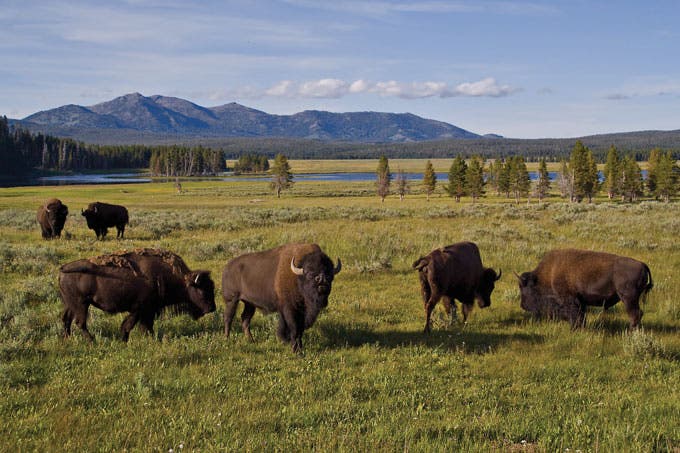
DURHAM, NH - Using new molecular techniques, a team of scientists, including a University of New Hampshire researcher, has shown how a largely eradicated livestock disease has been transmitted among cattle, bison, and elk in the greater Yellowstone area. The research may have important implications in the management of disease outbreaks between livestock and wildlife.
NH Agricultural Experiment Station researcher Jeffrey Foster, assistant professor of molecular, cellular, and biomedical sciences at UNH, according to a press statement, worked with other scientists to investigate the wildlife-livestock transmission pathways of a disease called brucellosis, which often causes a termination of pregnancy in animals. The disease was unintentionally introduced to elk and bison in the greater Yellowstone area over the past century, likely through infected cattle. More recently, however, the disease is being transmitted from elk to cattle, undermining livestock control efforts.
“Bison were long believed to be the most important source of cattle infections of brucellosis, but we’ve found that elk are a surprisingly important component of the disease spread and maintenance in the Greater Yellowstone Area," Foster said. "We were trying to understand how this pathogen is moving around in the Yellowstone area. Which animals are its ‘best’ hosts and how are they dispersing it in the ecosystem? By learning this we can find ways to eradicate this important wildlife and livestock disease."
Find out what's happening in Portsmouthfor free with the latest updates from Patch.
Read the full release online.
Get more local news delivered straight to your inbox. Sign up for free Patch newsletters and alerts.