Politics & Government
Tarps Over Crops Suppresses Weeds: Researchers
At UNH, organic gardens can forgo tilling and limit weeds by using black tarps.


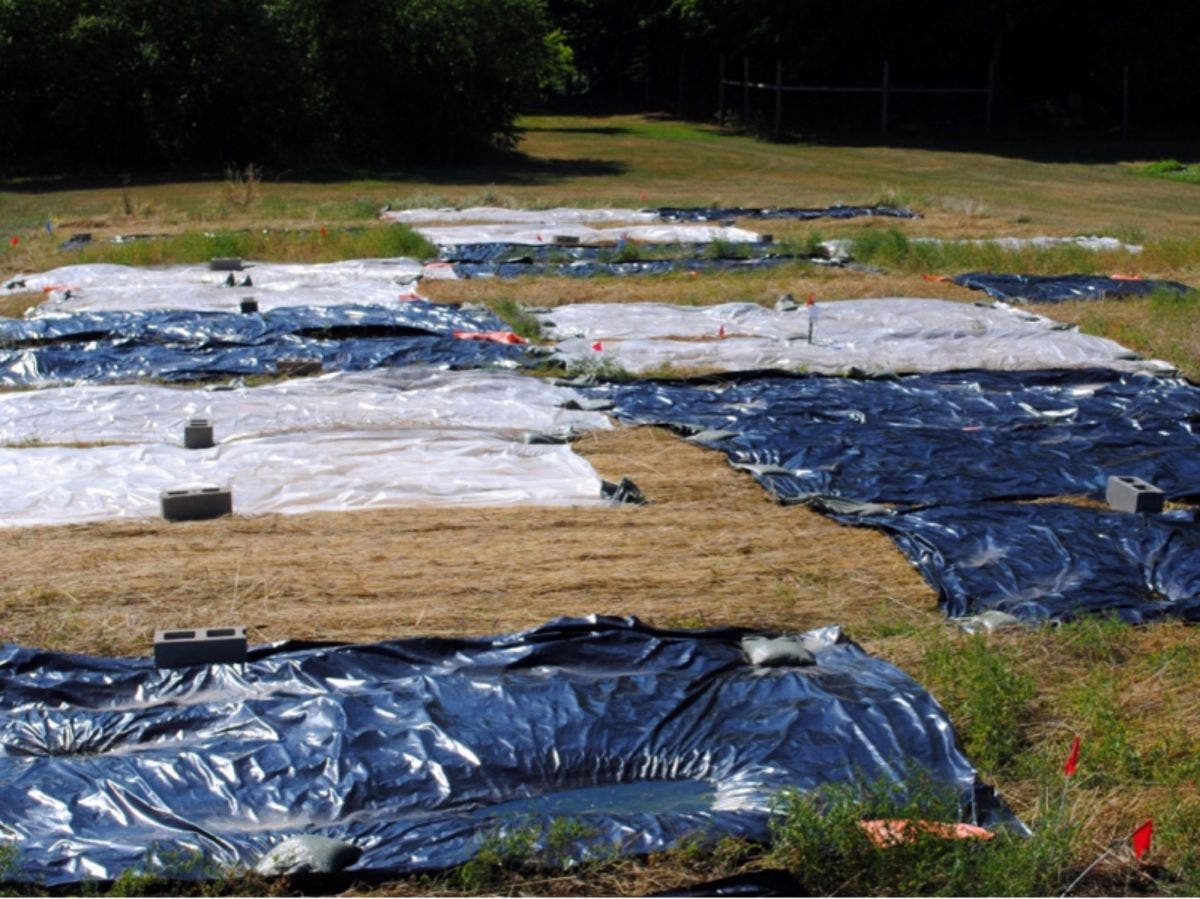
DURHAM, NH — University of New Hampshire researchers have found that using black tarps and cover crops successfully suppressed weeds in an organic vegetable system, allowing scientists to forgo tilling, which can have deleterious effects on soil. The research was conducted at the Woodman Horticultural Research Farm, a facility of the NH Agricultural Experiment Station, by Seamus Wolfe, a sustainable agriculture and food systems major, Dr. Richard Smith, associate professor of agroecology, Natalie Lounsbury, a doctoral student in agroecology, and Nick Warren, manager of the agroecology lab, according to a press statement.
“It appears that it is possible to provide enduring weed suppression in a cover crop-based organic no-till vegetable system by using black tarps to help terminate cover crops and limit weeds,” Lounsbury said. “Many people relish the bucolic image of a plowed field or a tilled garden, but tilling the soil has deleterious effects on soil structure and biology. A tilled, bare soil is vulnerable; in a dry summer like 2016, it dries out quickly from evaporation, leaving plants struggling to get enough water, and in a wet year, it is susceptible to erosion losses.”
The researchers planted a cover crop (a mixture of winter rye and hairy vetch) in the fall. In the spring, they flattened the cover crop using a tractor-mounted tool called a roller-crimper. After suppressing the cover crops with the roller-crimper they covered the resulting mulch with either black tarps, clear tarps or no tarps.
Find out what's happening in Portsmouthfor free with the latest updates from Patch.
“Nonetheless, extensive tillage is the standard practice for vegetable production, largely because of the need to control weeds. This project attempted an integrated approach to soil and weed management in organic vegetable production that may help small farmers and gardeners alike balance the need for weed control with the desire to improve soil health and conserve soil moisture,” she said.
Then the researchers removed the tarps and planted cabbage directly into the cover crop mulch to determine if cabbage yields and future weed suppression varied depending on treatment.
Find out what's happening in Portsmouthfor free with the latest updates from Patch.
This research project also received support from Green Start. For more info on this research project, visit notillveggies.org. Read the full statement with links to the study here: colsa.unh.edu/nhaes/article/2016/09/tarps.
Get more local news delivered straight to your inbox. Sign up for free Patch newsletters and alerts.