Politics & Government
Zill: Portsmouth Police Commission Holds Hearing June 17
Public comment can be made on Roberts Panel report; special investigation into the Webber/Goodwin matter; the report is bold, writer says.


By Jane Zill
The Portsmouth Police Commission is holding a special meeting on Wednesday, June 17, to take public comment on the Roberts Panel report, which is the product of the special investigation into the Webber/Goodwin matter. (http://www.cityofportsmouth.com/ReportofWebber-GoodwinInvestigationTaskGroup.pdf).
The report is bold in its criticism of police officer Goodwin, the Portsmouth Police Commission, and high-ranking officers in the Portsmouth Police Department (PPD). This must have stunned the Commission, as it hand selected the Panel. The report states, “It appears that the existing culture at the time was responsible for the failure to act.”
Find out what's happening in Portsmouthfor free with the latest updates from Patch.
The Panel also made the excellent recommendation that the Portsmouth Police Department participate in the accreditation process of the Commission on Accreditation for Law Enforcement Agencies (CALEA). Experienced public safety specialists create its standards.
It challenged the informal policy preference to promote from within for key leadership positions, and recommended revision of the outdated duty manual, training in ethics, and “Assessment and reevaluation of the relationship between the Police Commission, the City Attorney, and the Police Command Staff in terms of how critical decisions … are currently being handled on a day-to-day basis. The lines of responsibility appear to be blurred and would benefit from a formalized policy.”
Find out what's happening in Portsmouthfor free with the latest updates from Patch.
The Herald reported on June 10th that Golumb met with “counsel” (presumably, the city attorney) twice last week. Although the report clearly highlighted personnel issues, instead of using its authority to deal with them, the Commission has decided that public comment is needed.
The new commissioner, Brenna Cavanaugh, came forward on Friday to let the public know that the other two commissioners (Golumb and Howe) are being influenced by their “personal relationships” (Herald, 6/11/15).
It’s been a long road for the citizens who have fought to bring this case forward.
In September of 2014 the City Council, led by Assistant Mayor Splaine, agreed to fund a special investigation that directly led to the formation of the Panel. Soon after, however, citizens were told that many of their questions for the Panel were beyond the scope of the investigation.
The Police Commission then convened a special meeting by request of the City Council. The Mayor, Assistant Mayor, the Chief and Deputy Chief of the PPD attended. Concerned citizens filled the room, made public comment, and then broke into applause when Golumb clarified, “The scope of the investigation, as the commission designed, was created to encompass a broad latitude for the investigatory team to go wherever the facts and evidence may lead them.” (10/29/2014)
But rather than going “wherever the facts and evidence lead them,” the Roberts Panel kept its investigation narrow, as written in the original charge.
So, was that October of 2014 Commission meeting just political theater?
Or, more concerning, did the Panel find problems it did not want to explore?
The Robert’s Panel avoided or downplayed these important concerns:
- An employee of the city became the primary beneficiary of a multi-million dollar estate that involved “the business of the city”, a prior beneficiary, and, therefore, was a direct violation of the City Charter.
- The role of the city attorney in the management of this debacle, including the creation of a plan for mediation that would have allowed Goodwin to receive 425K.
- State law pertaining to the elderly that can be found online in a publication by the New Hampshire Department of Justice, Responding to the Needs of the Elderly: Law Enforcement Field Guide and Resource Manual on Elder Abuse, Neglect, and Financial Exploitation, 2008), which was submitted to the panel.
- Undue influence and testamentary capacity, opting instead to rely on the probate court’s upcoming ruling. However, this is quite strange given the Panel in its report chided the Police Commission for not acting while waiting for the probate court decision.
A few additional areas the Panel addressed are confusing. The report offered a perplexing view of Webber’s neighbors and Goodwin. While denouncing the lack of formal employee evaluations of police officers, the Panel described Goodwin as a high performing employee and praised his commitment to community policing. But the Panel failed to note that he did not reach out to Webber’s neighbors, not even to his colleague, long-time PPD office John Connors, Webber’s long-term friend.
Unbelievably, the Panel commented there was no evidence that the neighbors befriended Webber or provided for her material needs. The only direct comment in the entire report about concerned citizens is a criticism, and John Connors is never commended for coming forward.
Shortly after Connors ‘blew the whistle’ on Goodwin and the leadership of the PPD, his department charged him with violating a media policy, insubordination, and malfeasance. Prior to that, in 2011, he became the subject of a criminal complaint and investigation through the AG’s office for stalking Webber.
The neighbors correctly understood that direct involvement with Webber could backfire with criminal charges. Due to this possibility, there was no choice but to advocate for her through formal government systems.
How did Webber, who was visually impaired and had dementia, have the where-with-all to involve the AG’s office?
In February of 2011 Goodwin’s superior, Captain Schwartz (also destined to become a 25K beneficiary in the new 2012 will), took Webber to meet with an investigator from the AG’s Office to file a complaint against her long-term attorney. While there, Schwartz told the investigator that Goodwin would be helping Webber find a new attorney.
But in his deposition (2014) Goodwin claimed it was a result of this meeting that Webber asked him to find a new attorney. During the probate hearing (2015) Goodwin testified that he had been directed by the AG’s Office, through Captain Schwartz, to assist Webber in finding a new attorney. Is Goodwin claiming that his effort to find a new attorney for Webber, which resulted in him becoming the primary beneficiary of her estate, was a directive from the AG’s office?
Only after her death was it learned that she lost 40 pounds and sustained several fractures while Goodwin coordinated her care, drank Bloody Mary’s with her during the timeframe she gave him power of attorney, and that she died of inanition (a medical term for starvation associated with dementia.)
Despite the panel’s conspicuous avoidance of many disturbing and sensitive issues, I am nonetheless grateful for what it has accomplished, especially in light of the small, close-knit feel of the city and state.
The Panel also recommended that the public reconsider the merits of the Police Commission.
It is clear from the report that this debacle is due, in part, to specific personalities and old-school cronyism that led to corruption, not only the structure of the Police Commission. The PPD could, again, become a source of pride for its upstanding members and the community, especially with involvement of CALEA and Portsmouth voters electing more commissioners like Cavanaugh.
Please attend the Police Commission on Wednesday about the Roberts report. Will it be high stakes political theater or an opportunity for meaningful interaction with the Police Commission, the supposed citizen overseers of the Police Department?
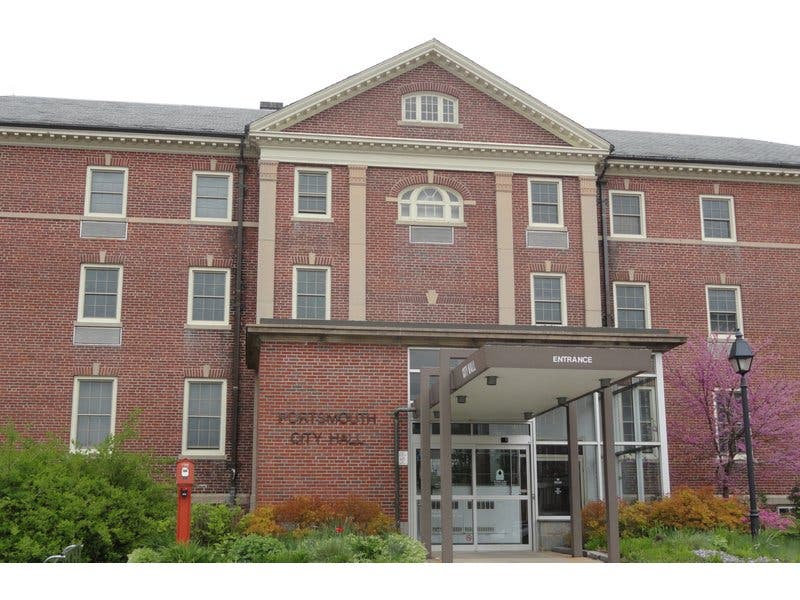
The meeting will be held at 5 p.m. on Wednesday, June 17, 2015, at City Hall.
Jane Zill lives in Portsmouth.
Get more local news delivered straight to your inbox. Sign up for free Patch newsletters and alerts.
