Politics & Government
Conte: Why New Hampshire Must Resist The Siren Song Of Broad-Based Taxes
Former Massachusetts resident: The sales tax there started at a "modest" 3%. Today, it stands at 6.25%, more than doubling since 1996.

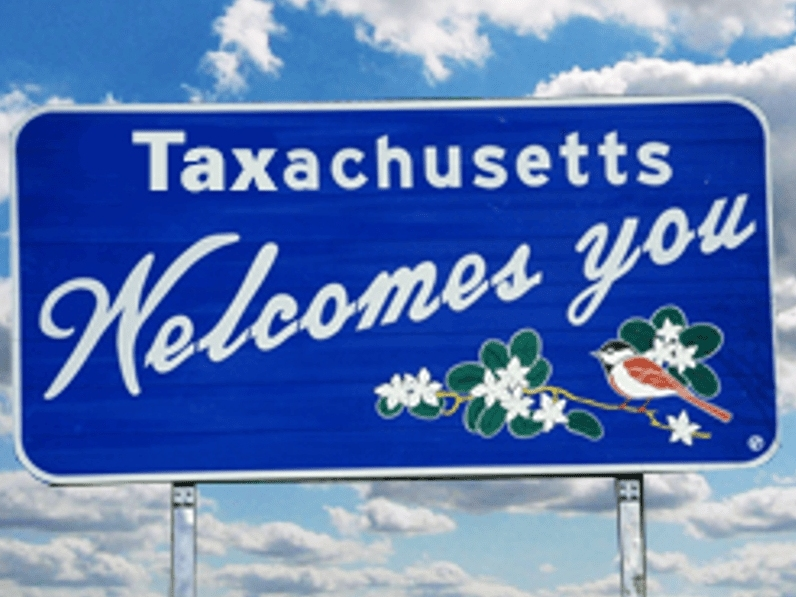
New Hampshire residents don’t have to look far to find a relevant example of why a broad-based tax will not result in lower property taxes. All they have to do is look right across the border to our unfortunate neighbor, Massachusetts. For decades, the “Taxachusetts” model has been sold as a balanced approach to governance, yet it serves as little more than a cautionary tale for those who value fiscal sanity and personal liberty.
As a former resident of Massachusetts who recently escaped that quagmire, I vividly remember how the spending advocates campaigned for a Massachusetts sales tax. Their pitch was as predictable as it was deceptive: they claimed these new revenues would be used to fund education and provide meaningful property tax relief for homeowners.
Find out what's happening in Salemfor free with the latest updates from Patch.
The reality? In 1966, the Massachusetts sales tax started at a “modest” 3 percent. Today, it stands at 6.25 percent, more than doubling since its inception. Despite this massive influx of cash, the promised property tax relief never materialized. In fact, Massachusetts property taxes are not only among the highest in the nation but are also gaining on New Hampshire.
When you factor in the 5 percent state income tax, the “tax burden” becomes a heavy yoke around the necks of working families. So much for the false claim that broad-based taxes are the silver bullet for local property relief.
Find out what's happening in Salemfor free with the latest updates from Patch.
People often complain about high property taxes in New Hampshire, but we must look at the “total tax bill” to see the true picture. When I moved here three years ago, I ended up paying roughly the same amount in property taxes as I did in Massachusetts — but for a much nicer home on a larger lot, and with zero income or sales taxes eating away at my income.
In New Hampshire, your money stays in your pocket. In Massachusetts, it disappears into a black hole of state-level bureaucracy before a fraction of it is “granted” back to your town with strings attached.
The fundamental problem is one of incentive. More government revenue inevitably fuels more government activity. This creates a fertile breeding ground for public employee unions that thrive on expanded budgets. These unions then recycle those very tax dollars to fund the campaigns of politicians who promise even more spending.
It is a vicious circle:
- Step 1: Implement a “small” new tax to solve a problem.
- Step 2: Growth in revenue triggers an explosion in new programs and administrative overhead.
- Step 3: The “problem” remains unsolved, leading to calls for further tax hikes.
The New Hampshire Advantage isn’t just a catchy slogan; it is a philosophy of limited government and local control. By keeping our tax structure simple and avoiding broad-based sales or income taxes, we force the state to live within its means. We ensure that the government remains a servant of the people, rather than its master.
If we allow the foot in the door for a sales or income tax, we aren’t “diversifying” our revenue — we are signing a blank check for bigger government at all levels. We must see through the empty promises of Democratic tax increase plans. Let’s learn from the mistakes of our neighbors to the south. Let’s keep the New Hampshire Advantage and keep our state free, prosperous, and truly independent.
Tony Conte is a recent escapee from Taxachusetts enjoying life in Salem, N.H. He wrote this for NHJournal.com.
This story was originally published by the NH Journal, an online news publication dedicated to providing fair, unbiased reporting on, and analysis of, political news of interest to New Hampshire. For more stories from the NH Journal, visit NHJournal.com.