Schools
NH Supreme Court Upholds Education Tax Credits
Unanimous decision heralded as a win for students; opponents disappointed with the decision.


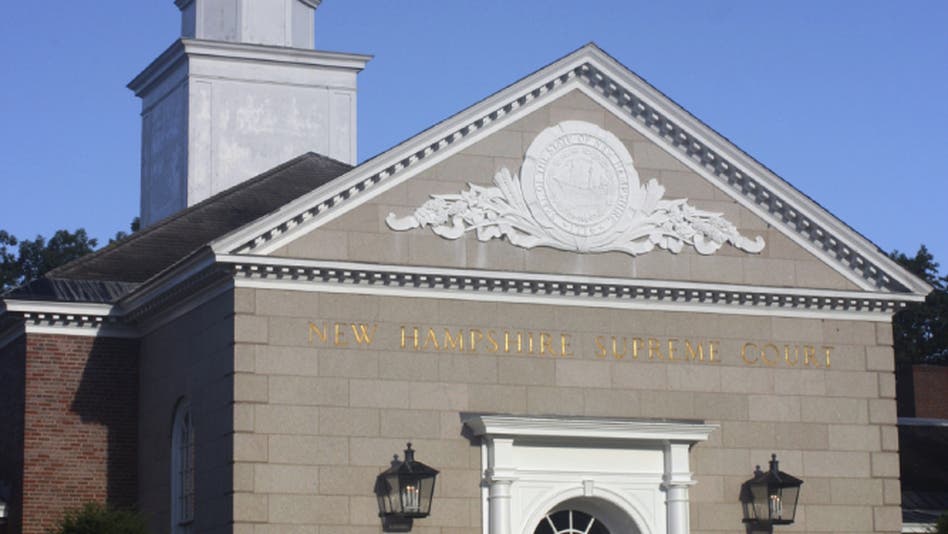
The New Hampshire Supreme Court has ruled that a program allowing tax credits to assist in funding private, religious, and charter school education for non-affluent students is not unconstitutional, according to a decision released on Aug. 28.
The decision, posted here in PDF, was a unanimous one.
The court heard arguments concerning the Opportunity Scholarship Act that was approved by Legislature in June 2012 but vetoed by then-Gov. John Lynch on April 16, after Bill Duncan, the ACLU, and Americans United Against Separation of Church and State, filed a lawsuit challenging the law.
Find out what's happening in Salemfor free with the latest updates from Patch.
The law granted tax credits to businesses at 85 cents on the dollar for money donated to nonprofit scholarship organizations that provided assistance to families up to 300 percent of the federal poverty level to attend private, religious, or charter schools. The program was capped at $3.4 million in the first year and $5.1 million in the second year.
The plaintiffs stated that the proposal violated state law that forbids money raised through taxation to be utilized by religious institutions and protected taxpayers from financing religious educations directly or indirectly.
Find out what's happening in Salemfor free with the latest updates from Patch.
A year later, a Strafford County Superior Court agreed and called the law unconstitutional but that ruling was appealed.
In the 15-page decision by the Supreme Court, issued this morning, the court determined the plaintiffs lacked and were unable to establish standing that taxpayers or students would be harmed by the funding of the scholarship program. The justices used previous case law to essentially pass on the merits of the legislation but ultimately decided that the plaintiff’s complaints lacked merit.
Supporters of the proposal heralded the decision while opponents were disappointed, according to statements.
Former state Rep. D.J. Bettencourt, a Republican from Salem, who helped author the law, said in a statement that he was “thrilled” by the court’s decision and added that the court didn’t address the merits of the lower court’s decision “because it held that petitioners were unable to demonstrate that their personal rights” were impaired or prejudiced.
“This important law empowers needy families to find the best school for their child and now is the time to let this special program flourish without the threat of litigation,” he said. “School choice is not an indictment on public schools nor a battle of public vs. private schooling. It’s about giving disadvantaged and special needs students and their families the opportunity to excel in an education that fits their needs. In addition to better serving our students, the court’s decision to keep the law in place empowers parents to get engaged in their children’s education and create better accountability in education – the single biggest factor in improving academic performance. School choice has a bright future in New Hampshire, and I am proud to have stood behind the legislation that has brought students to this point.”
Bettencourt also called on the Legislature and Gov. Maggie Hassan to “improve and grow” the effort so that disadvantaged students could “achieve educational excellence.”
However, in a statement, Hassan said she was “disappointed” in the decision, stated that the tax credit was “unconstitutional,” and called for the Legislature to repeal it.
“The voucher tax credit is bad public policy for public education in New Hampshire and our taxpayers, diverting millions of dollars in taxpayer money with no accountability or oversight to religious and private schools at the expense of public schools and property taxpayers across the across the state,” she said. “A robust and rigorous public education system is critical to better preparing our students for good jobs and successful careers, and I believe the Legislature should repeal this misguided law in order to dedicate more of our limited resources to ensuring access to quality public education for all of our young people.”
Bill Duncan, one of the plaintiffs in the lawsuit, who is now a member of the state’s Board of Education, thanked the attorneys involved in the case – the New Hampshire Civil Liberties Union and Americans United for Separation of Church and state of New Hampshire – for their work on the case, but said he was also disappointed in the decision.
“While we challenged several provisions of the law, the central question was whether our constitutional prohibition against using state funds for religious instruction, even if that funding was provided indirectly in the form of tax credits to businesses who contributed to the program,” he stated. “We are deeply disappointed by the decision, especially the fact that it was not decided on the merits. This decision on standing disenfranchises taxpayers, parents and students throughout the state. There may be other ways to challenge the voucher tax credit program in the future. School districts harmed by the program could bring suit or a future Legislature could repeal it.”
Kate Baker from the Network of Education, a nonprofit that is working on getting scholarships to students, was also “thrilled” by the decision.
“To date, our organization has had more than 1,500 scholarship applicants – bright, young, talented students, many trapped by their zip code in settings that are failing to meet their individual learning needs,” she stated in a blog post. “We are delighted that for the 2015-2016 school year we will not be forced to discriminate against any applicant families based on their beliefs. Our 2015-2016 scholarship application will be available online January 1, 2015. Every child deserves a quality education no matter where in New Hampshire those students live, what the students look like, what beliefs they hold, or what language their family speaks inside the home. Quality takes many forms and our communication with families seeking financial assistance tells us better educational settings and outcomes are there, but unfortunately they are out of reach for many students. Our first two years in operation have revealed that a solution is found at the intersection of businesses’ generosity toward the communities they serve, and their commonsense interest in driving down costs. The NEO scholarship model created by the state’s education tax credit law proves that businesses and individuals can take the lead in helping children get the education they need. It’s our privilege to connect families seeking improved educational settings and outcomes with the scarce resources to make that goal a reality.”
Get more local news delivered straight to your inbox. Sign up for free Patch newsletters and alerts.