Politics & Government
10-Year Wildlife Action Plan Shows Gains, Challenges
More than a thousand citizens, scientists, and others worked on the plan launched in 2006.


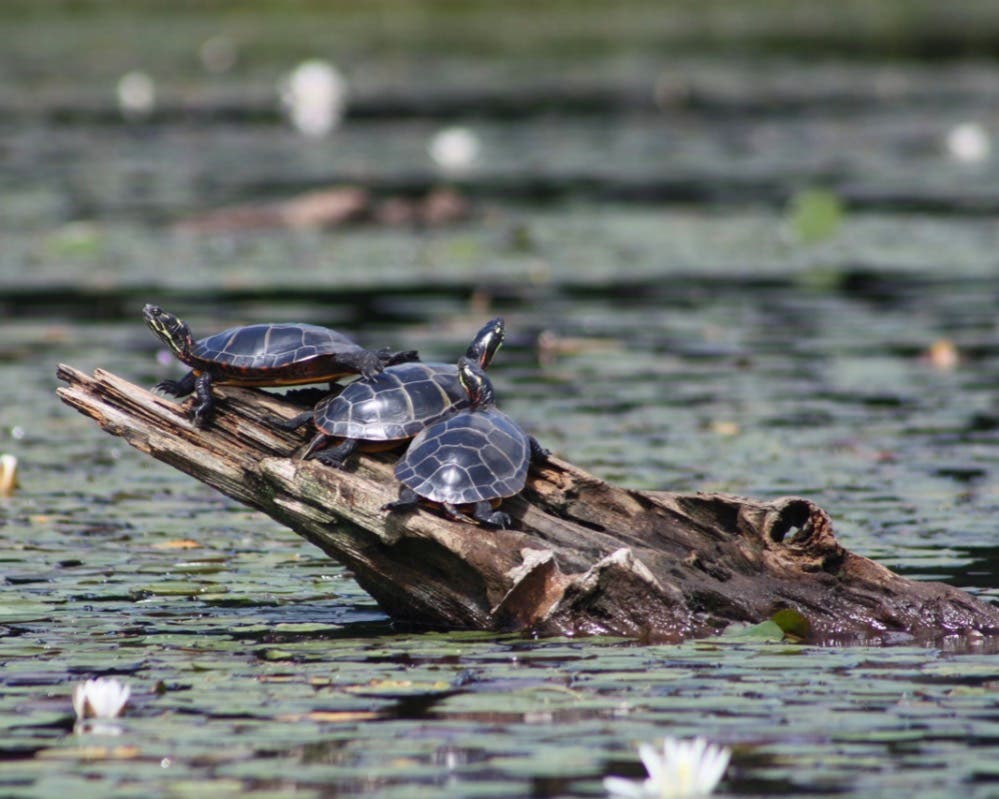
New Hampshire’s newly revised Wildlife Action Plan identifies species that are threatened or endangered, and shows a jump in species of greatest concern in New Hampshire from 118 in 2005 to 169 in 2015, according to the latest data.
Some of that increase is a result of greater knowledge gained about what rare species exist in the state and where, thanks to work guided by the first Wildlife Action Plan launched in 2006, according to officials.
Dozens of scientists and more than a thousand concerned citizens contributed to the updated New Hampshire Wildlife Action Plan, a 10-year blueprint for conserving non-game wildlife throughout the state.
Find out what's happening in Windhamfor free with the latest updates from Patch.
The New Hampshire Fish and Game Department recently sent the 1,600-plus page plan to the U.S. Fish and Wildlife Service for approval. The Wildlife Action Plan provides information, data and maps that state and federal agencies, municipalities, regional planners, universities and conservation organizations can use as they make decisions about land use, development and conservation.
The new plan also highlights the habitat types most at risk in the Granite State including saltmarshes, warm water rivers and streams, dunes, lowland spruce-fir forest and vernal pools. In the ten years since the publication of the first Wildlife Action Plan, more than 230,000 acres of land identified as important habitat for protection in the initial Wildlife Action Plan has been conserved throughout the state.
Find out what's happening in Windhamfor free with the latest updates from Patch.
Pollution, climate change, commercial and residential development, and disease are the risk factors that are impacting the health of wildlife populations and habitats, according to the report. As a part of the revision process, scientists identified where and how wildlife will be affected over the next ten years and what actions need to be taken to prevent further losses of the most vulnerable species and habitats.
“New Hampshire has made significant strides in 10 years,” said John Kanter, Supervisor of the NH Fish and Game Department’s Nongame and Endangered Wildlife Program. “For example, we have made substantial progress toward the recovery of the endangered Karner blue butterfly, and we have played a leading role in the effort to protect the New England cottontail by restoring hundreds of acres of habitat and contributing to a successful captive breeding program. Also, new research and survey efforts have laid the foundation for conserving Blanding’s turtle and other endangered and threatened reptiles.”
While wildlife in New Hampshire faces many new threats and challenges, there are also many opportunities ahead. The Wildlife Action Plan identifies 117 actions that span monitoring, research, species and habitat management, land protection, education and technical assistance. There are actions everyone can take to help protect wildlife in New Hampshire, from homeowners and educators to local commissions, non-profits and businesses. Says Kanter, “It is only through a broad-based, all-hands-on-deck approach that the state will continue to protect and manage species and habitat that improve our quality of life and economy.”
Glenn Normandeau, the executive director of N.H. Fish and Game, said the plan is data-driven and the result of a tremendous group effort that will serve as a roadmap for future actions: “With so many outdoor enthusiasts in New Hampshire and a tourist economy that is fueled by beautiful natural areas, it is no surprise that so many people participated in the process of updating the plan. People in the Granite State are deeply concerned about protecting wildlife and the habitats that support them and their input was critical to updating the plan.”
Normandeau said the Wildlife Action Plan is one of the most cost-effective tools the state has to protect important wildlife and the habitats they need to survive.
“The Wildlife Action Plan helps us coordinate efforts to both protect threatened and endangered species, as well as to keep common species common,” said Normandeau. “It’s far less expensive to protect the land and water that wildlife needs to thrive than it is to restore species and habitat once they’ve been lost.”
As an example, Normandeau noted that conservation actions taken as a result of the first Wildlife Action Plan led to the USFWS decision this year not to list the New England cottontail as endangered.
“The updated Wildlife Action Plan is a crucial tool for us,” said Nik Coates, the executive director of the New Hampshire Association of Conservation Commissions. “Conservation commissions and other organizations need to be strategic about where we focus our limited dollars. The plan has been and will continue to be instrumental in guiding us and providing critical data to make the right decisions.”
For more info about the 2015 New Hampshire’s Wildlife Action Plan, please visit wildnh.com/wildlife/wap.html
Get more local news delivered straight to your inbox. Sign up for free Patch newsletters and alerts.