Health & Fitness
The Dangers of Household Medications to your Pet
Welcome to the REVH blog! We hope to provide useful information on timely pet health issues. This month's blog highlights the dangers of household medications to your pets.
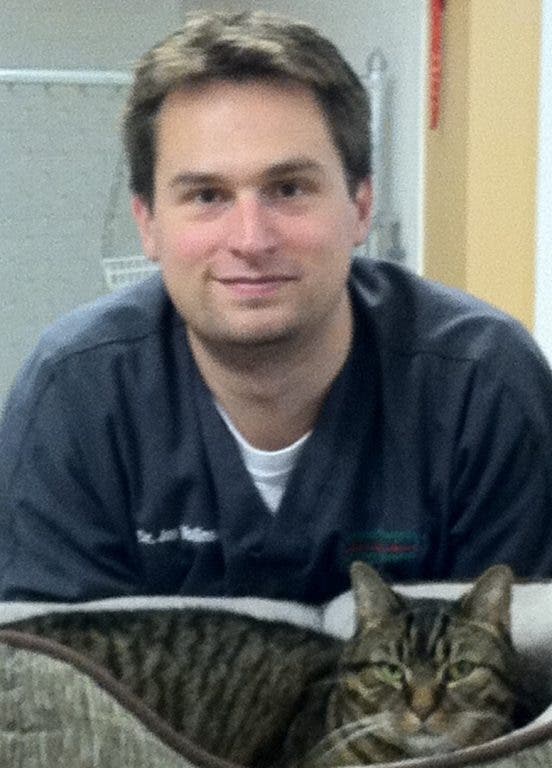
By: Jay Volinski, DVM, Emergency Veterinarian
How often has this type of situation happened to you? You wake up in the morning, meander downstairs, and absent-mindedly go through your morning routine. At some point you notice that the cat is playfully batting something around on the floor. As you stand at the counter devouring your breakfast, you reach for the morning pills you had just set out, and find only 3 where there should have been 4. “Did I forget one?” you think to yourself. Then it hits you – what was the cat playing with? You search the kitchen floor and find nothing there. Of course the cat is now nowhere to be found. If the cat did swallow the missing pill, is it something you need to worry about? Or how many of you have come home to find a mangled medication bottle on the floor, plus-or-minus tablets strewn about, and your dog with a guilty look on his face?
As emergency veterinarians at Rockingham Emergency Veterinary Hospital, my colleagues and I are on the job around-the-clock to counsel you in these situations. And obviously cats and dogs are not the only possible culprits either – a ferret, parrot or iguana could just as easily eat something off the floor – and we are here to treat them all! My intent in this blog is to help you appreciate that situations like these do indeed call for an expert’s advice, but also to impart you with some general knowledge of some of the most common toxicities when it comes to household medications and our pets.
Find out what's happening in Windhamfor free with the latest updates from Patch.
Admittedly there are some human medications like Pepcid® or Benadryl® that we use in small animals as well. But some medications that are safe for humans are not safe for pets, because they are metabolized differently by their systems. A good example of this is acetaminophen (Tylenol®). Acetaminophen is more dangerous to cats than it is to dogs. In cats it primarily affects the blood, disrupting hemoglobin molecules so that they can no longer carry oxygen. This leads to a severe situation where a cat can effectively suffocate despite being able to breathe. In dogs the same process can happen although it is generally less severe. On the other hand it can lead to liver toxicity in dogs which can be life-threatening. Early symptoms include nausea, vomiting, diarrhea, abdominal pain and/or jaundice.
Perhaps the most common medication-related call we receive involves non-steroidal anti-inflammatory drugs (NSAIDs). This class of drugs includes aspirin, ibuprofen (Advil®; Motrin®), naproxen (Aleve®), piroxicam (Feldene®), and celecoxib (Celebrex®), among others. The severity of their effects in small animals is closely related to the amount ingested - 1 aspirin tablet in a dog would not be cause for concern, however ingestion of a whole bottle of aspirin would be another case entirely. On the other hand, I have seen one case fatality involving a single naproxen tablet in a cat. The potential adverse effects of NSAIDs may include: nausea, vomiting, diarrhea, gastrointestinal ulceration/hemorrhage/perforation, vomiting blood, bloody diarrhea, abdominal pain, kidney failure, liver toxicity, seizures or coma.
Find out what's happening in Windhamfor free with the latest updates from Patch.
Dogs (especially puppies) are very curious about everything in their environment, and tend to test things out by putting them in their mouth and chewing them. Albuterol (Ventolin®) asthma inhalers make for an interesting case – if the canister becomes perforated, the pressurized liquid medication will usually shoot into the dog’s mouth. Resulting symptoms include vomiting, racing heart-rate, increased body temperature, increased blood pressure, muscle tremors and generalized agitation. If severe enough, seizures or life-threatening heart arrhythmias can result.
A wide range of prescription medications can represent various dangers for your pet. These include (but are not restricted to) anti-depressants, heart medications, blood pressure medications, birth control pills, and medications to treat attention-deficit disorder (ADD) such as Ritalin®. Even certain over-the-counter supplements and vitamins (such as Vitamin D) can be dangerous if ingested in bulk. There is not enough space in this blog to allow me to address each of these individually, but I cannot overstate the importance of calling a veterinarian in such cases, so they can advise you how to proceed.
In some cases, the veterinarian may recommend that you contact a poison control center by phone before you arrive. This is because there are so many different types of medications out there that we do not always have familiarity with what symptoms they are likely to cause or how to treat them. For this we are thankful that toxicology consultants are available to reach by phone at any hour. I am aware of two pet-specific poison control hotlines currently: the ASPCA Animal Poison Control Center (1-888-426-4435) and the Pet Poison Helpline (1-800-213-6680). Be advised that both do charge a fee for the call, but they often provide life-saving information both to you as owners and to us as service-providers. If you find yourself in one of the unfortunate situations above, please feel free to establish a case report at either of the hotlines above prior to arriving at the hospital, since we may ask you to call them after arrival anyway.
Something else to keep in mind: if your dog has just ingested the pills (within 1-2 hours), the first recommendation from a veterinarian or toxicologist will almost always be to try and induce vomiting with hydrogen peroxide – so this is a good item to keep on hand. If it has been longer than 2 hours since the ingestion occurred, inducing vomiting is unlikely to be of any benefit. Cats should not be given hydrogen peroxide – it does not go smoothly and is likely to make the situation worse. Instead, cats should simply be brought in to be evaluated (we have ways of inducing vomiting once they are here).
Remember - if you are ever in doubt about whether your pet is at risk, or if they are exhibiting any of the symptoms listed below, please contact a veterinarian or bring your pet in to be examined. Rockingham Emergency Veterinary Hospital is located at 3 Cobbetts Pond Road in Windham, and is open 24hrs, 365 days a year. There is always a veterinarian on staff to answer your calls or to treat your pets, so please do not hesitate to call (603-870-9770) or bring your pet in if you are concerned they might be having a problem.