Politics & Government
Water Agitators Could Be Out In Certain Locations Under Bill That Sailed Through Senate
The bill, whose prime sponsor is state Sen. Regina Birdsell, R-Hampstead, received a 5-0 vote of ought to pass in committee.

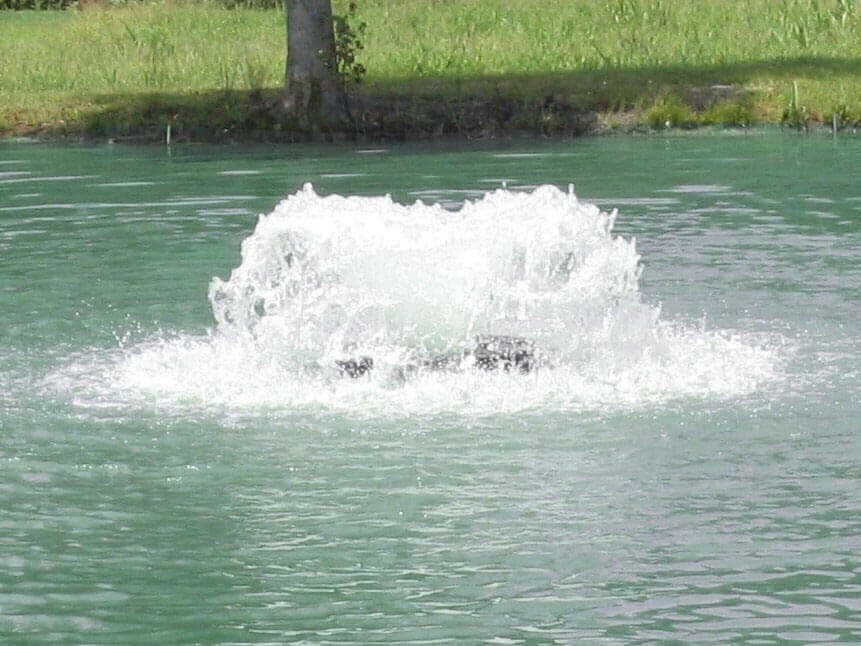
CONCORD, NH — Water agitators used to protect docks from ice would be restricted in use, and extended warnings of thin ice danger from them are part of a bill getting a hearing this week in the House.
Senate Bill 594-FN, https://gc.nh.gov/bill_status/results.aspx?adv=2&txtbillno=SB%20594 eliminating the use of agitators in instances where temporary docks have been removed from bodies of water and extending the warning signs to be seen from 150 feet to 200 feet sailed through the Senate on a voice vote.
Find out what's happening in Windhamfor free with the latest updates from Patch.
It is headed to the House Resources Recreation and Development committee with a hearing Wednesday, March 25 at 11:30 a.m. at 1 Granite Place in Concord, the House's temporary office building.
The bill, whose prime sponsor is state Sen. Regina Birdsell, R-Hampstead, received a 5-0 vote of ought to pass in the Senate Energy and Natural Resources Committee, was placed on the consent calendar and cleared by a voice vote there with Sen. Mark McConkey, R-Freedom writing "The committee believed this legislation would safeguard the public who use the lake for recreation on the ice and would correct a loophole in the statute."
Find out what's happening in Windhamfor free with the latest updates from Patch.
It reads, "No person shall put, place, operate, or cause to be put, placed, or operated in the waters of this state any so-called heating, agitating, or other device which inhibits or prevents the natural freezing of water, or forming of ice, and thereby impedes either the ingress or egress to or from the ice from any property other than that of the owner of the device. No person shall place or operate any aforementioned device except as necessary to protect legally existing permanent structures located adjacent to their shoreline from ice damage.
"Any person or persons responsible for the placement of [the] a device protecting structures by impeding ice formation shall ensure that warning signs are posted to warn of its location. Said signs shall read DANGER, THIN ICE and shall be of sufficient size to be readable at a distance of not less than [150] 200 feet, and shall be visible from all directions and shall be equipped with reflectors and color-coded in a pattern unique for this purpose only. The department of safety is hereby authorized to establish said unique design and coloring and any homemade copies shall follow this design and coloring. The provisions of this section shall be enforced by any law enforcement agency under the direction of the department of safety pursuant to RSA 106-A:14 and the department of fish and game pursuant to RSA 206:26."
The effective date on the bill would be 60 days after passage.
Andrea LaMoreaux, president and policy advocate for the NH Lakes, wrote members to support the bill at its hearing this week and said, "These devices would only be allowed when necessary to protect legally existing permanent shoreline structures from ice damage. Once temporary docks are removed, the bill ensures open water is not unnecessarily maintained.
Unnecessary use of agitators creates dangerous thin-ice conditions for anglers, skiers, snowmobilers, and others, she said.
"The bill also strengthens public safety requirements by improving warning signage. “DANGER, THIN ICE” signs must be readable from at least 200 feet (up from 150 feet) and visible from all directions.
There are also environmental considerations to the use of agitators, she said.
"Natural ice cover is also critical for lake health. It stabilizes winter conditions and limits sunlight penetration. When multiple areas around the lake have reduced ice coverage, more sunlight reaches into the water, which can trigger invasive plant growth and increase the risk of algal and cyanobacteria blooms.
"By limiting unnecessary water agitation, SB 594 improves winter safety and supports healthier lakes year-round," she wrote.
Cyanobacteria Bill
Another bill that also had no problems in the Senate will be heard Wednesday as well but in the afternoon by House RR&D - SB 598, establishing the cyanobacteria mitigation loan and grant fund task force.
It creates a task force to develop long-term, sustainable funding for New Hampshire’s Cyanobacteria Mitigation Loan and Grant Fund.
Cyanobacteria blooms are increasing across New Hampshire, threatening public health, drinking water, recreation, and local economies. The existing mitigation fund has already supported communities in implementing projects to address cyanobacteria blooms—but is now nearly depleted as demand grows, LaMoreaux wrote.
"There is no single solution to funding cyanobacteria mitigation at the scale needed statewide. SB 598 is a critical step toward developing stable, long-term funding solutions that reflect the shared responsibility of everyone who benefits from clean, healthy lakes and rivers," she said.
That bill is to be heard at 2 p.m. Wednesday.
A copy of the bill, sponsored by Sen. McConkey is here: https://gc.nh.gov/bill_status/billinfo.aspx?id=1455&inflect=2
This article first appeared on InDepthNH.org and is republished here under a Creative Commons license.