Real Estate
NJ Home Prices Are Outpacing Paychecks In These Towns
Homes now cost more than seven times the typical household income, up from about four times in the 1960s–1980s, data shows.


NEW JERSEY — The cost of living in New Jersey continues to climb, driven by a housing market that outpaces income growth and forces residents to stretch budgets across nearly every category.
Housing costs in New Jersey run about 32 percent higher than the national average, according to Redfin’s housing market data.
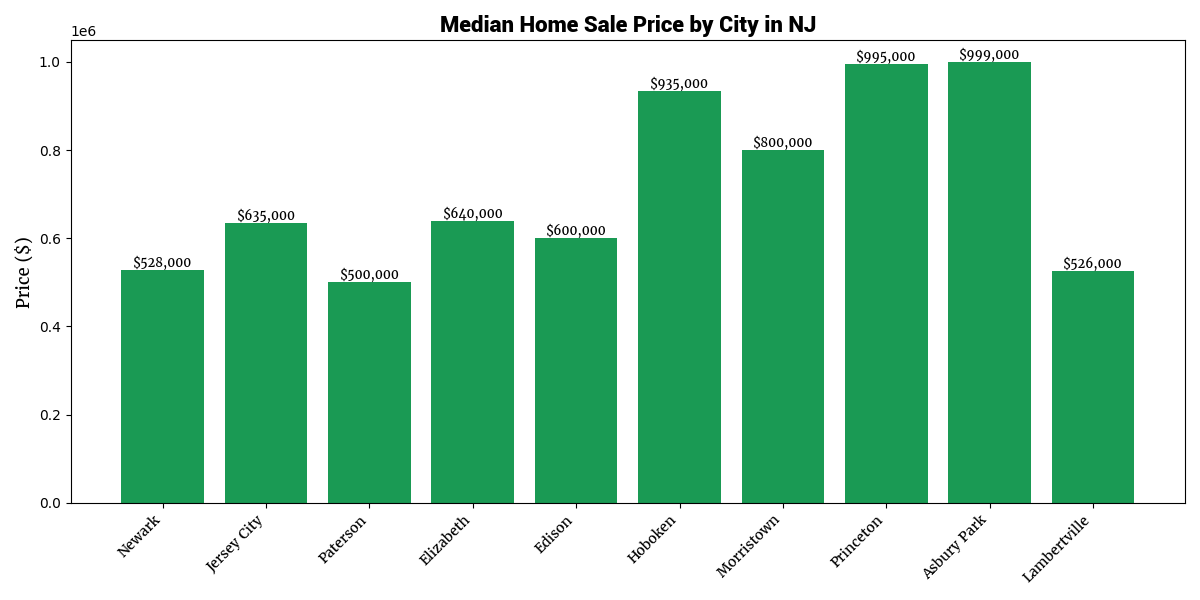
The median home price stands at $584,000, compared with $447,000 nationwide.
Find out what's happening in Across New Jerseyfor free with the latest updates from Patch.
“What are the three most important things that determine the value or price of a house?” economist Steven Pressman said. “The answer is location, location, location.”
Pressman, an emeritus professor at Monmouth University and part-time professor at The New School for Social Research, said proximity to jobs, access to transit and desirable geography, such as waterfront property, continue to drive prices higher across the state.
Find out what's happening in Across New Jerseyfor free with the latest updates from Patch.
That dynamic places a premium on areas within commuting distance of New York City, where high-paying jobs remain concentrated. But even proximity is not enough without reliable transit.
How Much Have Housing Costs Outpaced Income?
The imbalance between home prices and earnings has widened over time.
Pressman pointed to a key metric: the ratio of median home prices to median income.
The ratio of home prices to income has risen sharply over time, increasing from about four times average income in the 1960s through the 1980s to more than seven times today, according to studies Pressman cited.
As a result, households now devote a significantly larger share of their earnings to housing, with costs climbing from roughly 30 percent of income in earlier decades to 40 percent or more for many people, Pressman said.
Why Are Home Prices Rising So Fast?
A limited housing supply continues to drive rising costs as development struggles to keep pace with demand.
Pressman said communities face hard physical limits on growth, noting that towns and cities operate within fixed boundaries that leave little room for expansion.
He estimated the national housing shortage between 2 million and 4 million homes.
“You wind up driving people out,” he said.
New Jersey offers more space for development, but local policies restrict how that land is used.
Zoning rules and single-family housing requirements limit the construction of higher-density housing, reinforcing supply constraints in many communities.
“That's the so-called ‘Not In My Backyard’ phenomenon,” Pressman said. “You can't build anything here.”
How Does Housing Affect Daily Life?
Housing costs ripple across household budgets, shaping spending far beyond rent or mortgages.
High property taxes, rising home prices and increasing rents combine with growing expenses for childcare, utilities and transportation.
Pressman said households that devote most of their income to housing often struggle to save, as fixed costs consume a larger share of earnings. Renters face similar pressure as demand continues to push prices higher.“If you're putting all of your money into housing, there's just no money for even savings,” Pressman said.
Where Are Prices Rising the Fastest?
Price growth has not been uniform across the state.
Along the Jersey Shore, Asbury Park has seen some of the sharpest increases after years of decline, Pressman said.
The average home value in the city stands at $678,959, marking a 1.4 percent increase over the past year, according to Zillow data.
Pressman said redevelopment began at the edges of the city, where new construction and waterfront access attracted investment. As new projects took hold, rising demand spread inward, lifting property values block by block.
“It’s like one block at a time,” he said. “Somebody builds something nice … and then the next block over, housing prices go way up.”
Is Homeownership Still Within Reach?
For many residents, especially younger workers, homeownership remains increasingly out of reach.
Pressman said high prices and elevated interest rates make purchasing a home difficult, while also raising the risk of buying at the peak of the market.
As a result, many households continue renting, move farther from job centers or opt for smaller homes in less competitive areas.
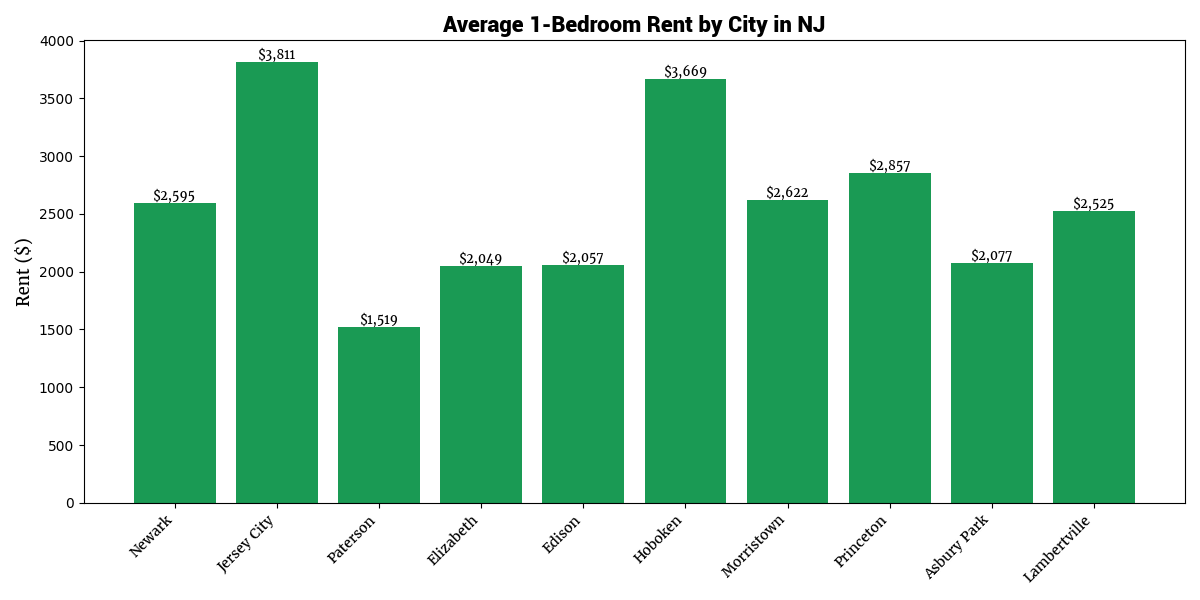
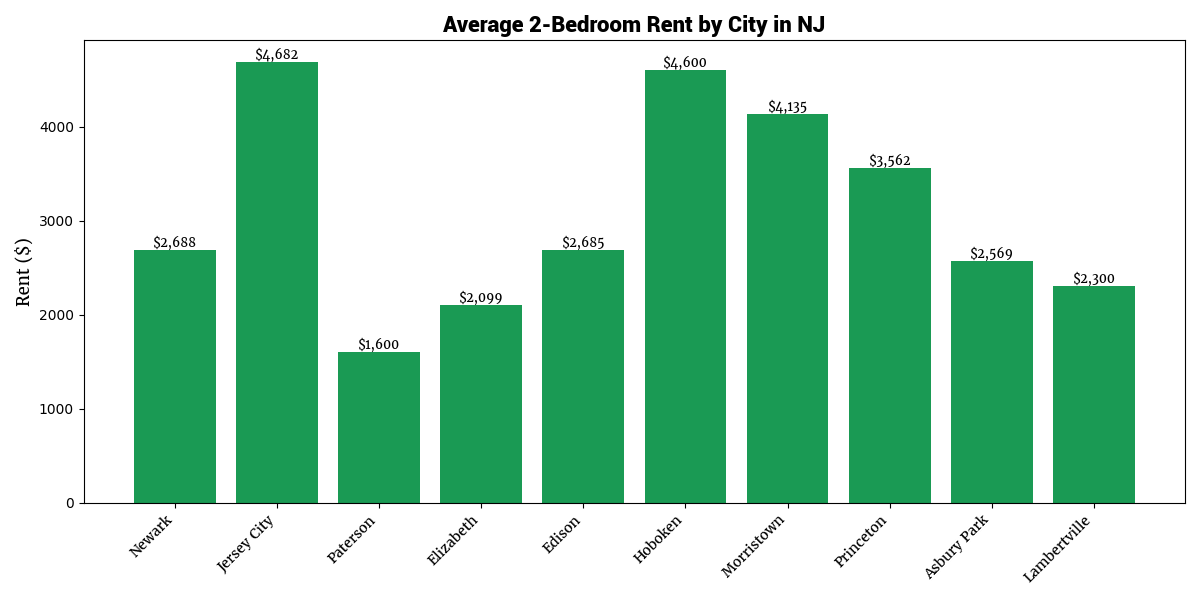
But, renters face similar pressures, with the average one-bedroom apartment statewide runs $2,084 a month, well above the national average of $1,495, according to a Patch analysis of rental price data.
Cities like Jersey City and Hoboken push the envelope, with one-bedroom rents averaging $3,811 and $3,669, respectively.
He said the widening gap between home prices and incomes continues to narrow the range of choices available to buyers.
“Given the current prices and interest rates right now, it's a really tough time to think about going and buying a home,” Pressman said.
Get more local news delivered straight to your inbox. Sign up for free Patch newsletters and alerts.