Politics & Government
Sherrill Proposes Record Education Funding In NJ, Along With Consolidation
Gov. Mikie Sherrill says her proposed budget would lay the groundwork for needed savings and better continuity for students.


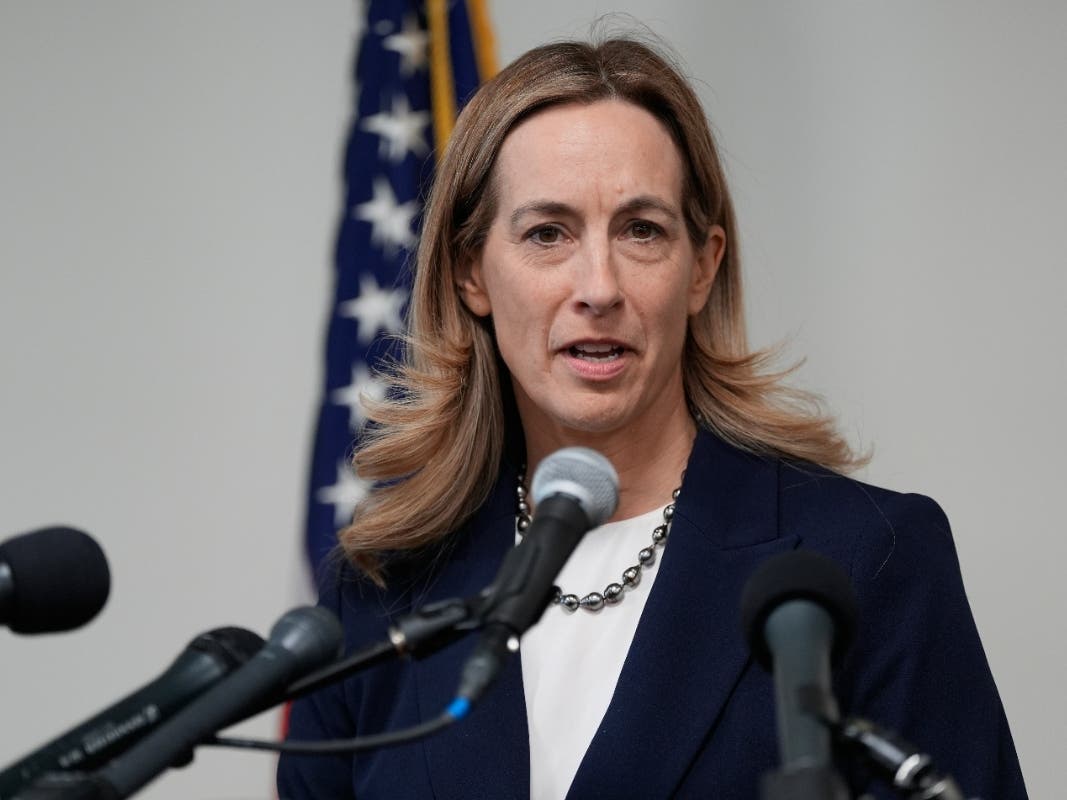
TRENTON, NJ — New Jersey's public schools are set to receive a record amount of state aid in Gov. Mikie Sherrill’s proposed $60.7 billion budget for the 2026-27 fiscal year.
In total she's proposed $13.8 billion for public schools, including the $12.4 billion in state aid for K-12 schools, $1.4 billion for preschool expansion, $15 million to increase high-impact tutoring, and $33 million for school-based mental health supports for students.
But in sharing her first budget proposals for New Jersey, Sherrill indicated she has larger goals for the state’s education beyond just funding schools: She wants to see consolidation and more shared services.
Find out what's happening in Across New Jerseyfor free with the latest updates from Patch.
In her budget address at the Statehouse on Tuesday, Sherrill said her proposed budget will fully fund the school funding formula, which has been assailed by districts around the state and other entities because of wild swings in state aid that have led to drastic cuts in some districts, scrambles to fill unanticipated budget holes and double-digit property tax increases. But she said changes have to be made to maximize the impact of funds spent on education.
“Everyone in this room knows we’re not getting the bang for the buck that we need,” Sherrill said. “Evidence shows the huge benefits of shared services for things like special education, transportation, books, and software. So this budget invests in and lays the groundwork for consolidating services and curricula.”
Find out what's happening in Across New Jerseyfor free with the latest updates from Patch.
“It’s better for students, offering continuity as they move from elementary to middle to high school in one unified system. And it’s better for districts, providing needed savings,” Sherrill said.
School consolidation has long been controversial in New Jersey, where residents embrace “home rule,” where they have a direct say in the schools in their towns. The state, which has 564 municipalities, has more than 600 school districts, with some towns served by both an elementary district and middle and high school district.
In many other states, school districts are regionalized, meaning multiple towns are covered by a single district. In Pennsylvania, for example, there are more than 2,500 municipalities but about 500 regionalized school districts.
It continues to meet a mixed reception in New Jersey even as residents complain about the state's highest-in-the-nation property taxes. School district taxes typically make up 50 percent or more of a homeowner's tax bill.
Sen. Vin Gopal, a Democrat who represents the 11th District and chairs the Senate Education Committee, in late 2025 introduced a bill that would have required county superintendents to come up with plans for consolidating school districts within their counties.
That bill had not been reintroduced as of March 11 in the new legislative session.
At the Public Policy Forum sponsored by the New Jersey Business and Industry Association in January, Gopal said combining districts — particularly small ones with declining student enrollments or those where students attend kindergarten through middle school under one district and high school in another that covers the same town — would provide savings on administrative costs.
“Why should two school districts neighboring each other have the same healthcare broker, yet they're negotiating for two sets of employees? Why do we have IT departments in all these places?" he said.
Gopal acknowledged the fierce loyalty that exists in many districts that perpetuates keeping a district and school open even as costs skyrocket.
One district, he said, had seen its enrollment drop to to a level that left its school about 25 percent full, but its community was unwilling to let it go even as its budget keeps rising.
"They don't want to touch the building because their father or grandfather went to it ... but it's not sustainable," he said.
Christopher Emigholz, the chief government affairs officer for the NJBIA, said the association strongly supports "forced consolidations, incentives to consolidate, forced shared services or anything that pushed New Jersey in that direction, because when we talk about such steps, these are true spending cuts – not just a Band-Aid.”
“Consolidation would allow for a more efficient allocation of resources and personnel, and there would be more continuity in the curriculum," said Althea D. Ford, the NJBIA's vice president of government affairs.
Some consolidations have happened. In Monmouth County, Highlands and Atlantic Highlands merged their elementary schools with the Henry Hudson Regional School to become a K-12 district.
In Ocean County, the Central Regional District undertook a regionalization study to combine the elementary school districts of Berkeley Township, Island Heights, Ocean Gate, Seaside Heights and Seaside Park with Central's middle and high school districts. Discussions on that are ongoing.
The Ocean Gate School District just voted to send its students to the Berkeley Township Schools beginning in September on a tuition basis after voters rejected a request for a $700,000 property tax levy increase to keep its school open. The school district will continue to operate to oversee its students, officials said.
Some attempts to merge, however, have been rejected, as happened in 2024 when voters in Seaside Heights turned down a proposed merger with the Toms River Regional School District. Seaside Heights teachers and parents lobbied hard to maintain their community school, which faced the probability of closure within five years under the proposed merger.
“If you took out the twos, fours, sixes and eights, and made them be part of a regional school district, which they are when it comes to high school, you’d eliminate maybe 250 school districts,” Steve Sweeney, who served as New Jersey Senate president from 2010-2022, told WHYY.
Sweeney authored a bill to regionalize New Jersey school districts while Chris Christie was governor, offering incentives to school districts that considered it. Few chose to move forward.
“If you want to pay less taxes, you have to eliminate the amount of government you have,” Sweeney said. “We can be more efficient, we can do better, but it requires changing the way you do things.”
The school funding formula
Sherrill’s office said she “looks forward to working with the Legislature to modernize and stabilize the school funding formula,” something that has been promised in the wake of S2, the law that led to significant cuts in aid to some districts from 2018-2025. She did not lay out specifics of what modernizing the funding formula might look like.
The state took steps in the 2025-26 budget to begin to try to change the formula by allotting special education aid based on the actual count of special education students a district is responsible for educating instead of the census-based model that estimated how many a district might have.
That change was significant, as some districts were seeing large increases in their special education enrollment without a corresponding increase in special education aid. That put intense pressure on district budgets because they are required under state and federal law to provide services to those students.
Special education costs continue to skyrocket, however, something that will require a more intensive discussion on how to provide needed services without crushing district budgets.
Other aspects of the school funding formula — which has never been fully revealed to school districts or the public in spite of lawsuits against the state for failure to comply with public records laws — remain mired in public debate over enrollment and perceptions of who is or is not paying their fair share of property taxes.
The proposed budget “would continue funding a ridiculously flawed, unfair, unworkable, unsustainable funding formula,” said Sen. Declan O’Scanlon, the Senate Republicans' budget officer whose 13th District includes several districts hard-hit by state aid cuts. He said the formula as it is provides expansive funding to some districts while “hundreds of districts are choking on fumes.”
“That's a big problem that should have been acknowledged in this budget,” he said.
State Sen. Carmen Amato and Assemblymen Brian Rumpf and Greg Myhre, Republicans serving the 9th District, said the funding formula still leaves many districts at the mercy of wild swings in state aid and that fixing the formula “must be part of any serious reform.”
They have proposed a 1 percent cap on reductions in state aid per year for districts to avoid the drastic cuts that have spurred significant budget deficits and cuts.
Assemblyman Alex Sauickie, a Republican whose 12th District constituents include Jackson, also was critical of the funding, saying the state needs to take a hard look at how districts are spending their state aid.
“Every child in New Jersey deserves a great education,” he said Wednesday. “But the current school funding formula is forcing some districts to lose teachers, close schools, and cut programs while billions continue flowing elsewhere. We shouldn’t have to hurt one community’s schools to help another’s. A fair formula should support all students — in every district.”
The New Jersey Education Association praised Sherrill’s proposed budget, saying it “shows a firm commitment to public education.”
“The record level of state aid for school districts that she included will help ensure that New Jersey’s students have the resources and support they need to thrive. That aid also helps keep her affordability promise by reducing property tax pressure at the local level,” the NJEA said in a statement. “As she acknowledged, there is still work to do to ensure that our school funding formula fully and fairly meets the needs of every community and every student, but funding the current formula is a necessary first step toward making those improvements.”
See what your district is receiving in state aid for 2026-27: NJ State Aid 2026-27: See Biggest Increases, Reductions
Preschool and mental health supports
Sherrill’s proposed budget also includes $1.4 billion in preschool education funding. Preschool education programs not only help identify children who may need special education services, they also provide early intervention that can help students move beyond the need for those services — decreasing the need for special education down the line.
She also proposed increased funding for high-impact tutoring programs that will help expand access to tutoring for students who are struggling to learn basics in math and language arts — programs she said have had a positive impact on test scores in Camden and other areas.
Sherrill spoke on mental health concerns among students and said she wants to move back to a school-based program for mental health services for students — something that has been a source of controversy as the state twice tried to eliminate the School-Based Youth Services program in favor of a program that was operated by the state Department of Children and Families.
Sherrill’s budget would eliminate the New Jersey Statewide Student Support Services (NJ4S) program and instead use those funds for what she called SPARK — School-based Partnerships for Access and Resilience for Kids — described as “a statewide initiative designed to expand mental health services in K-12 schools and improve coordination among school districts and providers,” according to Insider NJ.
The goal of the $33 million initiative is to provide school-based counseling and intervention services with licensed mental health providers to “meet students where they are – directly in their schools – ensuring timely access to supports in a familiar and trusted environment,” the Insider NJ report said.
Community colleges flat
The NJEA was critical of Sherrill’s plan for county college funding, saying that the flat funding continues a pattern where the state “has long fallen short of its funding obligations to those colleges, resulting in higher costs and fewer program offerings for students.”
“Families across New Jersey rely on county colleges as places to receive valuable career training and as a more affordable way to begin a four-year degree. Providing even modest but consistent annual budget increases would set the state on a path toward meeting its responsibilities while helping to build the skilled workforce needed to support a growing economy,” the NJEA said.
Get more local news delivered straight to your inbox. Sign up for free Patch newsletters and alerts.