Community Corner
Black Skimmers Nearing End of Summertime Stay
Seek out these amazing – and endangered – beach nesters before they head south

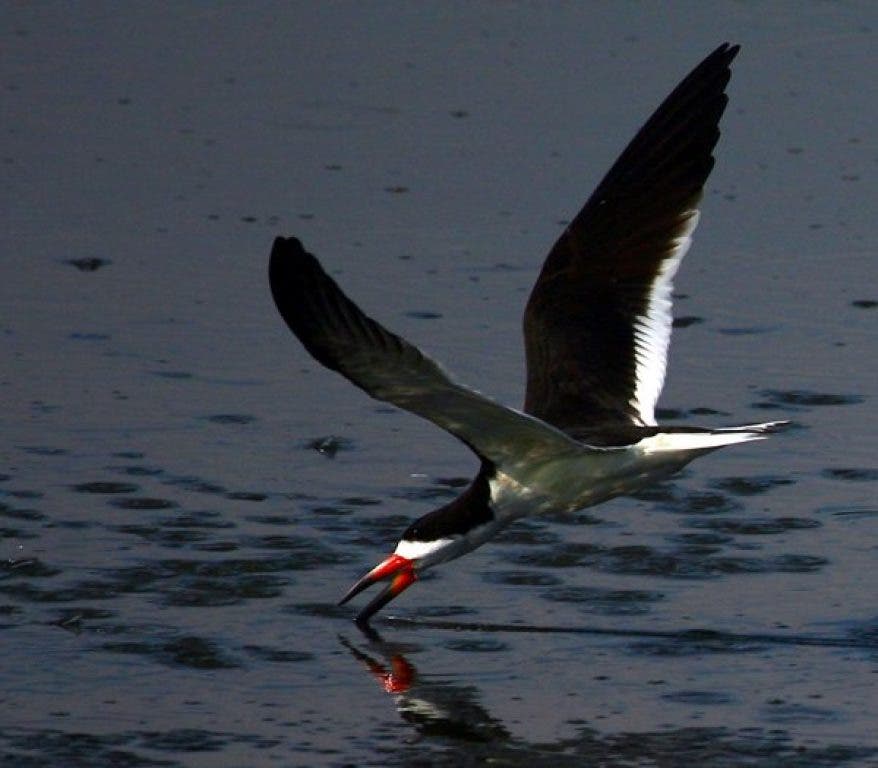
One of our summertime coastal species, the Black Skimmer takes advantage of a few remarkable adaptations as it hunts in spectacular style. It's a great birdwatching subject, so hit the beach now to find it before it flies south.
What it is: The Black Skimmer is a big, beach-dwelling bird that breeds along the Atlantic coast. It’s completely unmistakable, with an oversized tern-like body, a tuxedo pattern and a large orange-and-black beak that gives it a kind of cartoonish look. It’s the only skimmer species in North America, so there’s really no other bird like it here.
Find out what's happening in Barnegat-Manahawkinfor free with the latest updates from Patch.
It’s the beak – or the way the bird uses it, rather – that gives the Skimmer its name. The long beak may look strong and stout from the side, but if you can catch a glimpse of it head-on, you’ll see that it’s laterally compressed, so it’s thin as a chef’s knife.
The lower “jaw” is also longer than the upper, unlike any other bird species. Skimmers fly low over still salt water and dip that lower beak just below the surface, feeling for tiny fish, snapping them up with deadly speed and making high-speed turns in mid flight.
Find out what's happening in Barnegat-Manahawkinfor free with the latest updates from Patch.
It’s amazing to watch – sort of like aerial ballet.
And the bird has other adaptations that help it fill this narrow ecological niche. Its eyes have vertical pupils, like a cat’s, which help it avoid being blinded by bright glare as it flies low over the water. And since it hunts mostly by feel, it can be active in the low light of early morning and after sunset, when the fry it seeks are close to the surface of the water.
Where to find it: Skimmers seek out water protected from heavy surf for hunting, so look for them over bays and inlets. You'll also see them over the open ocean from time to time, especially on calm mornings and evenings. Hunting peaks at low tide.
The skimmer is one of New Jersey’s beach-nesting birds, laying its eggs in shallow “scrapes” in the sand. By now, chicks have hatched and fledged, but you may still see the birds hanging out near the protected beaches that are seasonally closed to allow for their nesting. Starting in mid-August, they'll head off to their wintering grounds in Central and South America.
One reliable spot to see them before they leave is Holgate, on the south end of Long Beach Island. Part of Forsythe National Wildlife Refuge, it’s closed to the public for part of the year to provide a nesting habitat for Skimmers and other birds, but you can watch beach and ocean from just outside the park.
Other good bets are the protected beach nesting areas in Sea Girt, Belmar and Long Branch's Seven Presidents Park.
Why bother: I think of the Black Skimmer as one of those ambassador birds – a species so interesting in appearance and behavior that it’s likely to turn anybody who spots it into a birdwatcher.
And like other beach-nesting Atlantic birds, it’s in serious trouble.
The Skimmer and its summer neighbors, the Piping Plover and Least Tern, rely on open beaches with direct access to the water to lay their eggs and raise their young. Coastal development and our own love of the same beaches have left them with few safe places to nest. All three species are endangered in New Jersey.
To learn more about beach-nesting birds, check out this PDF from the Department of Environmental Protection.
Get more local news delivered straight to your inbox. Sign up for free Patch newsletters and alerts.