Community Corner
Fall Color in the Pinelands
Even in our local pine-dominated woods, the leaves of deciduous trees and shrubs offer gorgeous autumn color

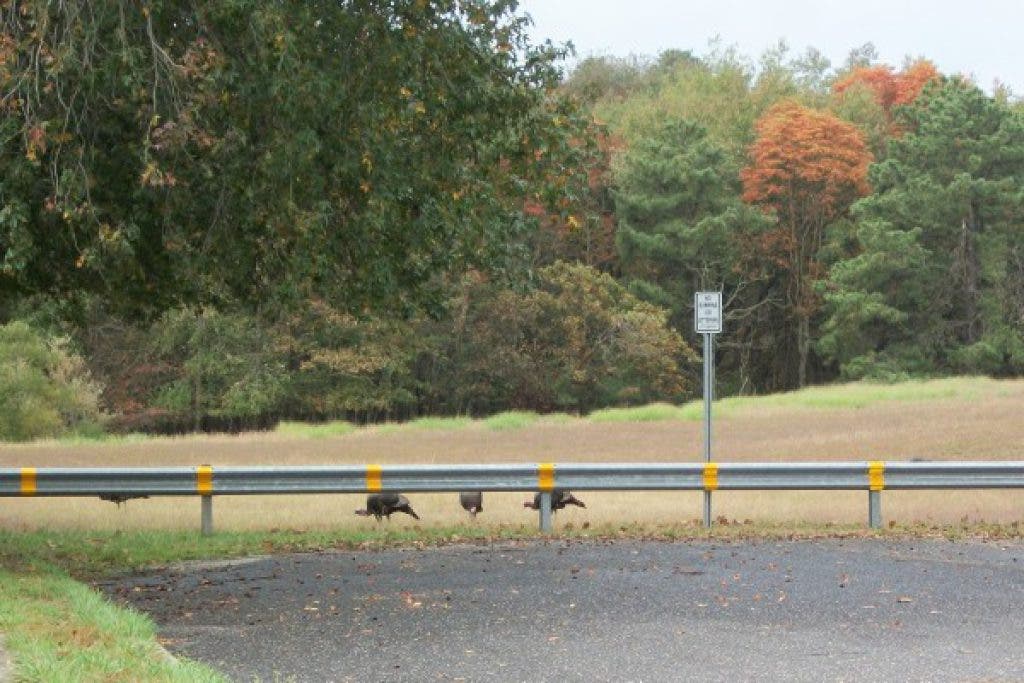

Fall is in full swing, and even in New Jersey’s evergreen-dominated pine forests, bright splashes of leaf color are starting to show.
What it is: Many deciduous trees – ones that drop their leaves in winter – go through dramatic color changes at this time of year. That’s because the green-colored sugar-producing pigment chlorophyll, which is so abundant in summer that it covers up every other colorful compound, begins to break down as days shorten and the weather grows cooler.
Find out what's happening in Barnegat-Manahawkinfor free with the latest updates from Patch.
The degraded chlorophyll turns clear, and as the green veil is lifted, orange and yellow carotenoids and red and purple anthocyanins start to show.
Lots of our native trees and shrubs exhibit fall color (a plant science professor once drilled it into my head that “fall foliage” isn’t really the right term, because it suggests, to the ears of sticklers, that trees grow a whole new set of leaves for in autumn). Here are a few of the most remarkable:
Find out what's happening in Barnegat-Manahawkinfor free with the latest updates from Patch.
- Many maples look lovely in autumn, but the sugar maple outshines them all, and its fiery look defines fall for some. Its leaves turn brilliant bonfire shades of yellow, orange and red, even purple – sometimes all at once. You can often see dramatic color variation within the leaves themselves.
- The sweet gum, another shade tree, rivals the maples with the intensity of its fall display. Its leaves turn similar colors, though you’ll see more yellow and deep purple and less orange. It can be tough to tell the trees apart at first glance, because the leaf shapes look rather alike. Both have multiple lobes that end in points, but while the sugar maple has more complex lobes with U-shapes between them, the sweet gum has simple, triangular points separated by V-shapes.
- A lesser-noticed fall performer is the persimmon, a tree native to our woods that produces round orange fruit in fall, in addition bearing pointed oval leaves that often – but not always – turn gorgeous shades of yellow, scarlet and orange.
- Among the smaller trees and shrubs, the redbud has one of the prettiest fall changes. Its heart-shaped leaves turn not red – the tree’s name comes from its pink-red buds in spring – but a warm, bright yellow, sometimes tinged with orange.
- Witch hazel, a small, shrubby tree with bark long prized for its medicinal use as an astringent and a bruise treatment, might not shine as brilliantly as some of its neighbors, but its clear yellow-green leaves can light up an understory. And as a bonus, it brings color to the woods again later in the season as one of the only plants that blooms in the late fall and winter.
- Perhaps the most common deciduous plant in our Pine Barrens is also one of the prettiest in fall. The native blueberry bushes that make up the understory of vast stretches of pine forests in New Jersey have leaves that turn shades that range from rust-red to magenta and purple.
- Some vines and low-growing perennials also produce beautiful colors. Humble Virginia creeper, a common vine with clusters of five leaves, turns bright crimson and brick red. Even hated poison ivy becomes pretty, its itch-inducing leaves becoming yellow, red and deep purple.
Where to find it: Fall color is everywhere now, and even a short drive down a pinelands highway will give you a first-class view of the show. Route 539 in Barnegat and Manchester and many other roads through Ocean and Monmouth County offer a gorgeous contrast between pine boughs and a bright red blueberry understory.
In general, head to water to see more deciduous trees. Many of our area parks have trails along streams and lakes where you’ll see lots of color. At Allaire State Park, where the pines start give way to many more deciduous species, hikes offer a full spectrum of seasonal beauty.
Why bother: Other parts of the northeast may get more credit for fantastic fall color, but we’re reminded this time of year that our sometimes seemingly monotonous pinelands can show some amazing autumn beauty. The diversity that the Pine Barrens hide is most sharply visible at the turning of the seasons, so it’s the perfect time to take it all in.
Get more local news delivered straight to your inbox. Sign up for free Patch newsletters and alerts.