Schools
Pain and Hope in Pictures and Song
Barnegat High School students attend assemblies that drive home the importance of tolerance and respect.



Crayon drawings and traditional songs may not be the usual methods for teaching the difficult lessons of the legacy of genocide, but Barnegat High School students will likely tell you they're good ones.
Monday, students saw one of two assemblies as part of a Diversity Day celebration organized by Superintendent Jason Bing as part of his ongoing effort to offer students messages of tolerance and respect, even in the face of hardship.
Bing said that while at Rutgers, his masters' work included putting together a program on the Holocaust. Since then, he’s continued organizing similar events to educate and enlighten students.
Find out what's happening in Barnegat-Manahawkinfor free with the latest updates from Patch.
Along with student musicians, ethnomusicologist and viola player Dr. Tamara R. Freeman presented half the student body with songs in her particular field of study: the music of Holocaust, which sustained Jews in the ghettos and concentration camps of World War II Europe.
And earlier that morning, a crowd of high-schoolers listened as Dr. Jerry Ehrlich, a Cherry Hill-based pediatrician in practice since 1966 and a volunteer with Doctors Without Borders, told of what he saw on his 2004 mission in Darfur.
Find out what's happening in Barnegat-Manahawkinfor free with the latest updates from Patch.
The assemblies were meant “to expose students to the world,” said Bing as he watched the auditorium fill up ahead of Ehrlich’s presentation from his seat in the sound booth. “It’s been my experience that too often, they don’t see outside the U.S."
Ehrlich’s talk resonates well, he said, because “it’s about kids. Kids relate to kids.”
Darfur’s children were Ehrlich’s focus in the weeks he spent in the western Sudanese region at the height of what he and many others say was the first instance of genocide in the 21st century.
His mission in the poor desert region was to treat injured, sick and malnourished children and their mothers in an area where 95 percent of villages had been bombed and raided by militias from the east, supported, according to Ehrlich and others, by the Sudanese government.
Ehrlich’s talk gave background on the ongoing civil war, but what he offered was a current events lesson like no other.
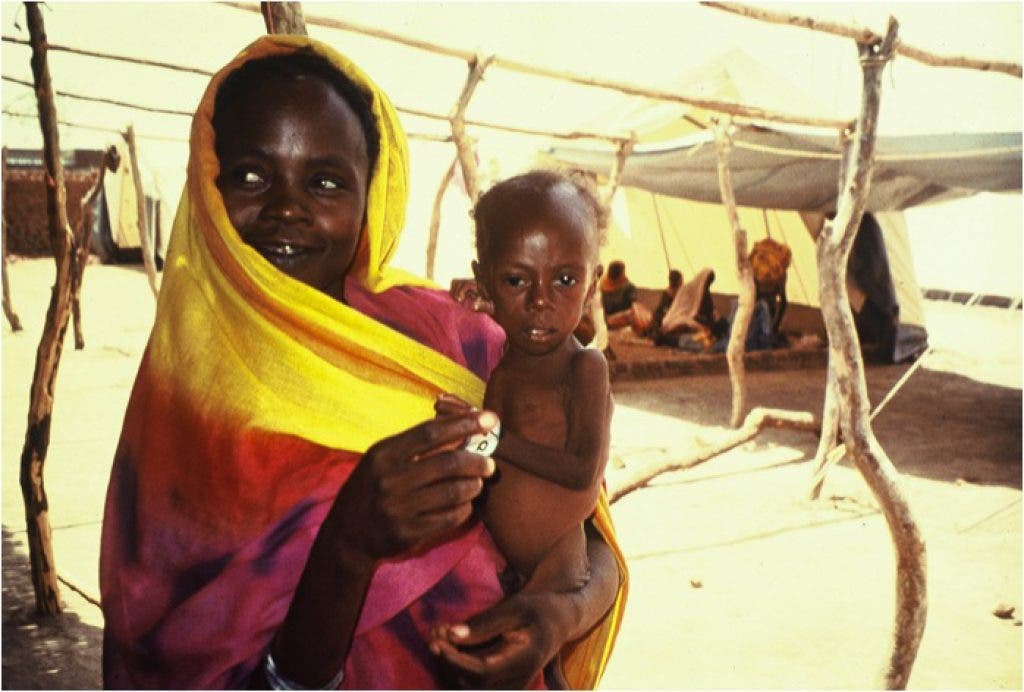
Against orders from the Sudanese government, Ehrlich carried a camera with him in the refugee camp where he worked, snapping pictures that showed terrible suffering as well as moments of hope.
And he got the children of Darfur to tell him their stories the best way he knew how.
“I brought 20 boxes of crayons and 400 pieces of drawing paper,” Ehrlich said. “I gave them out to kids at random, mostly those being discharged from the hospital.”
He asked them to draw what their lives had been like and what had happened to them. He wasn’t expecting to get much from them.
“For those kids to survive from Monday to Tuesday to Wednesday was something of a miracle,” he explained. “But to my surprise, they came back, and they came back, and they came back.”
Ehrlich ended up with 150 pieces of artwork, which he hid within the folds of a fat Sunday edition of the New York Times and smuggled back to the U.S. Along with his illegal photographs of emaciated toddlers and stricken mothers, the simple drawings offer an all-too-human picture of conflict: burning huts, uniformed gunmen on camels and trucks firing machine guns at fleeing parents.
“Over and over again, this is the message these children wanted me to bring home.”
But Ehrlich’s images also showed hope. There were stories of risky but successful treatments in his dirt-floor field hospital. Pictures of Darfurian doctors receiving the training they needed to go on caring for their people. And, finishing the program, a photograph of a woman smiling, holding her baby, about to be discharged from the clinic.
“This is the look I want you to remember from Darfur,” he told the students.
But there wasn’t a lot in the presentation 18-year-old Taylor Bishop said she’d forget.
“It was mortifying, seeing people suffer like that,” she said. “I think it has to be stopped.” Ehrlich’s work was inspirational, Bishop said.
And effective, added Elizabeth Morris, 16. “It makes me want to help,” she said.
“It’s very shocking,” said Joseph Lynch, 18. “I knew there was genocide in Darfur, but I didn’t know it was that bad. It’s important to learn about it, even though it’s sad."
And that’s what Ehrlich said he wants students to take away from his presentations.
“You kids are the future,” he said. “You should know what’s going on in the world. Truly, you kids can make more of a difference than I can.”
Get more local news delivered straight to your inbox. Sign up for free Patch newsletters and alerts.