Community Corner
Rules Matter, How Parents' Acceptance of Teenage Drinking Can Lead To Long-Term Damage
Bernards Municipal Alliance is developing tactics of delaying first-use in town.

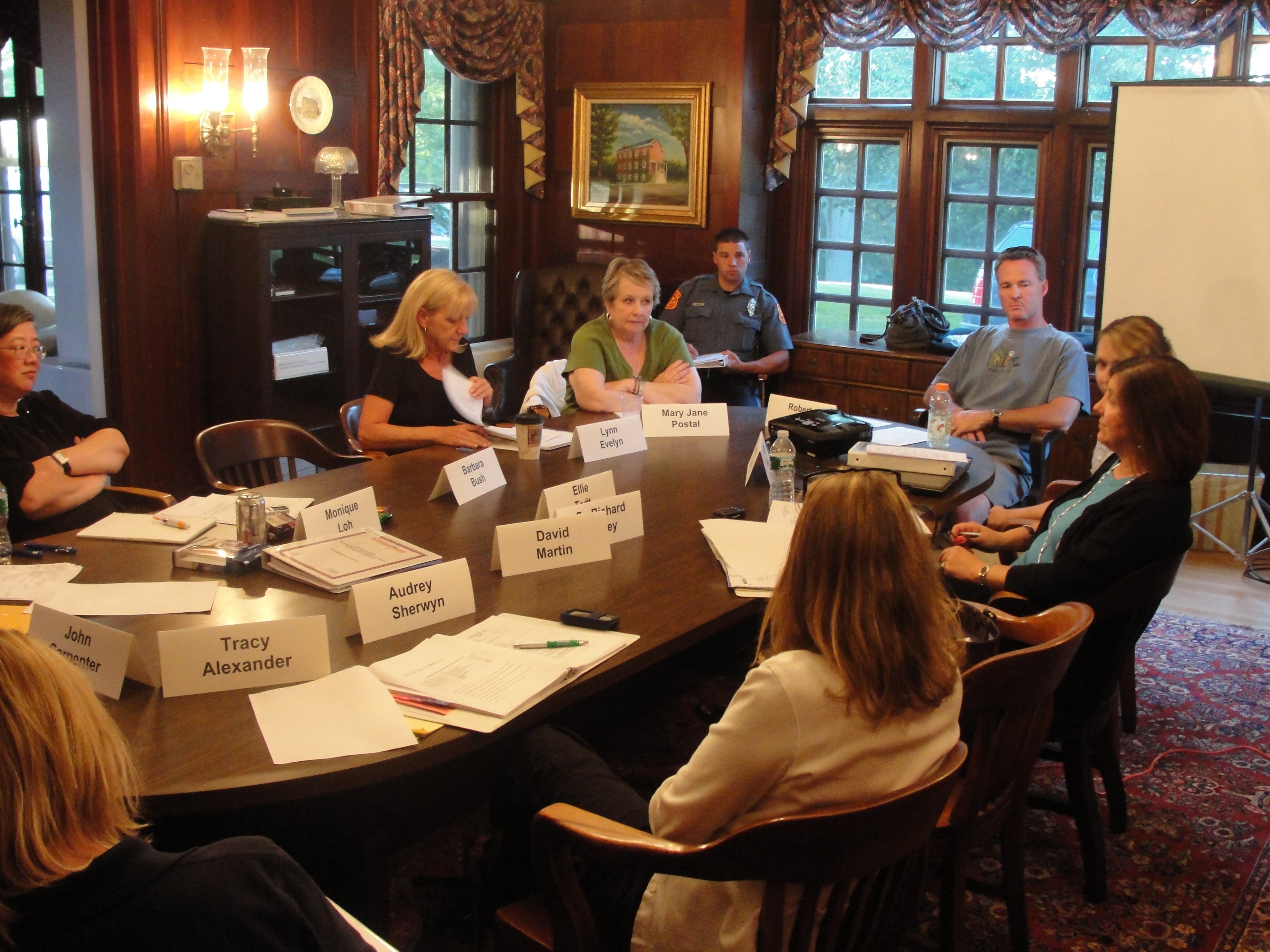
Delay first use. That's the message the Bernards Municipal Alliance, a volunteer group dedicated to fighting substance abuse problems in town has been honing in the last several months for a campaign aimed at Bernards parents on the correlation between early drug use and long-term dependence.
The Message
A number of recent studies have postulated that not only does it matter a great deal when children first use alcohol, but the position parents take on teenage drinking, does in fact have a great effect on their children's habits.
Find out what's happening in Basking Ridgefor free with the latest updates from Patch.
A study published in the American Journal of Psychiatry in 2000 found that there is a strong correlation between the age a young person first uses alcohol and later alcohol abuse or dependency. The journal published that after 10 years, of those who had their first drink at ages 11 or 12, 13.5 percent met the criteria for drug abuse and 15.9 percent had a diagnosis of dependence. For those who began drinking at 13 and 14, the results fell were 13.7 percent and 9.0 percent, respectively. Out of those who started drinking at 19 or older, only 2.0 percent met the criteria for drug abuse and 1.0 percent were classified as dependence.
Similarly, the following table represents the percentage of adults who were classified for alcohol dependency or abuse by the National Survey on Drug Use and Health in 2003, correlated with the age of first use.
Find out what's happening in Basking Ridgefor free with the latest updates from Patch.
First Use Percentage Dependent on Alcohol as Adults
Before Age 12 16.0
Ages 12-14 15.5
Ages 15-17 9.0
Ages 18-20 4.2
After 21 2.6
The 2008-09 American Drug and Alcohol Survey, given in Bernards schools, showed 11 percent of Bernards sixth graders (average age of 11 to 12) had already consumed alcohol. The number jumps steadily, and by the time the students are seniors, 85 percent have tried the drug (higher than the national average of 72 percent).
Percentage of Students Who Have Tried Alcohol By Grade
(2008-09 ADAS Survey)
6th Grade 8th Grade 10th Grade 12th Grade 12th - National Average
11% 34% 68% 85% 72%
For parents hoping to steer their children away from future alcohol related problems, other recent studies have offered hope. An NPR article in May included information from two recent studies on the effects, and prevention techniques, of teenage drinking.
The bad news, according the research of Susan Tapert, a professor of psychiatry at the University of California, San Diego, is that teen drinking has been linked with the stunted development of brain cells responsible for judgment, critical thinking and memory. Tapert indicates that alcohol consumption may not be safe at any level for some teens.
The good news is that parental involvement makes a difference. Caitlin Abar, a researcher from Pennsylvania State University, published a study in the journal Addictive Behaviors following over 300 teenager-parent relationships, and concluding that children whose parents who "disapprove completely" of underage drinking are statistically less likely to consume large quantities of alcohol in college.
Conversely, the study finds that teens who are allowed to drink casually at home are more likely to engage in harmful drinking behaviors in later years.
Action in Bernards
Feeding off information about the dangers of first use, the Municipal Alliance in Bernards is constructing a multi-faceted message to give to parents over the coming year.
The Alliance developed a slideshow presentation with the arguments for delaying first use, aimed specifically at parents and the actions they can take. The team also recruited a high school student to shoot a video, interviewing police and school officials on the dangers of alcohol use in town.
In the video, former Bernards police chief Tom Kelly shared gruesome stories from his time on the job, including a 15-year old who was heavily intoxicated and sexually assaulted and a 17-year old driving home while alcohol-impaired on a June night, when the car hit an embankment, ejecting one of the passengers, a close friend, out of the front of the car, and eventually rolling over and killing the passenger.
The campaign also stresses the consequence of parents allowing their children to host parties where alcohol is served to other minors. In many cases, the parents can be held liable for any damage or injury that occurs to others as a result of minors becoming intoxicated in their home.
Neighborhood Coffees
One of the largest undertakings of the Alliance over the next year will be to organize another "neighborhood coffee" session in the Spring on 2011. Neighborhood coffees first began in 1990, according to Bernards Health Director Lucy Forgione, and were held most recently in 2006.
The concept is for volunteers to host a meeting on the issue of substance abuse in their own homes, inviting neighbors, as well as trained, volunteer facilitators who will lead the discussion. "There are three parts," Forgione said. "You get to know each other, including a dialogue around a story or a video, have a summary and discussion, and then talk about 'what do we do know?'"
The coffees are intended to increase dialogue between teens and adults, as well as help neighbors get to know each other and band together in the fight against substance abuse. In previous years, 50-60 different coffees were held in neighborhoods throughout the township over a two-week period. The 2011 version is scheduled for late March of early April.
Currently, the Alliance is forming a steering committee that will lead the planning and organization efforts needed to recruit and train volunteers, as well as handle issues of publicity and training among other things.
"The coffees are labor intensive, but however, I did not meet one person who did not love them," Forgione said. "It's a wonderful way to educate parents about the laws and studies surrounding teenage alcohol use."
Get more local news delivered straight to your inbox. Sign up for free Patch newsletters and alerts.