Arts & Entertainment
Celebrating Christmas, 19th-Century Style
Newark Museum Exhibit Highlights a Holiday Past.


The Christmas season, circa 1891, wasn’t all that different from the Yuletide celebrated today. Newspapers were stuffed with ads for holiday bargains, kids breathlessly awaited the arrival of Santa. A tree brimming with ornaments likely stood in the parlor.
Not everything was precisely the same, however. The traditional holiday meal back then might also have included such delicacies as stewed oysters and (yum!) fried celery. Along with stockings on Christmas Eve, youngsters might also have put out wooden shoes to be filled with candy by a certain jolly old elf.
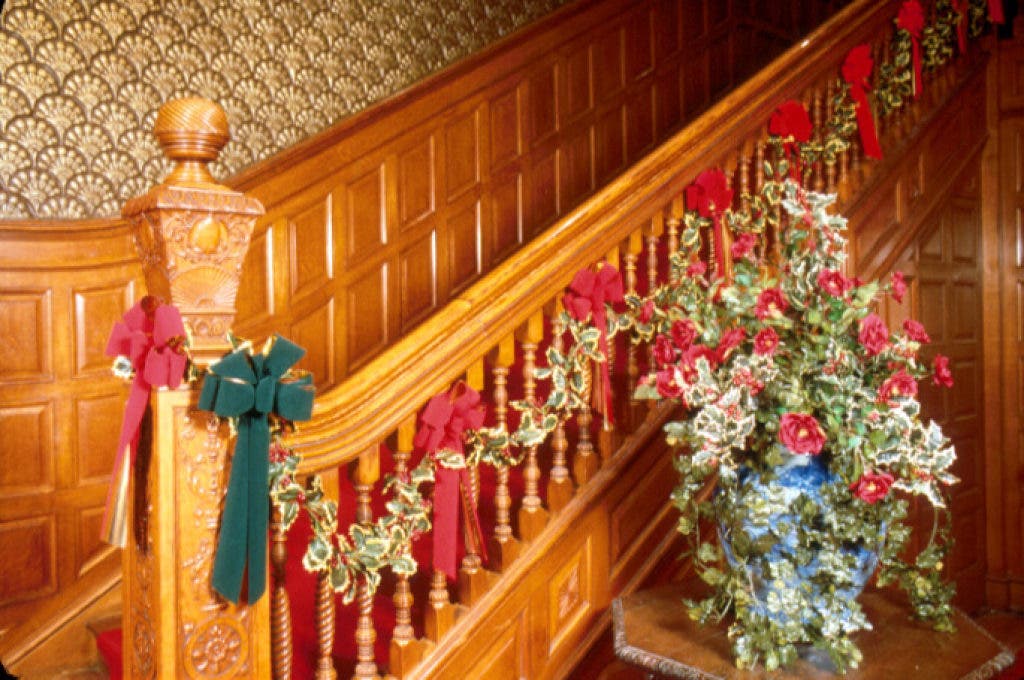
The Newark Museum is currently hosting an exhibit that transports visitors back to that Christmas past called “Christmas in the Ballantine House: Feasting with Family and Friends.” It runs through Jan. 8.
At that point in time, 1891, Christmas as we know it today was just coming into being, shaped partly by English, German, Dutch and home-grown American traditions, said Ulysses Grant Dietz, the museum’s curator of decorative arts.
“There’s a community aspect, a family aspect, and a very child-centered aspect to the season at that point,” said Dietz, who is named for his forebear Ulysses Grant, the Civil War general and president of the United States.
Then as now a religious holiday, Christmas by the late 19th century had also become commercialized, if not quite to the extent seen in 2011.
“It was all about shopping then. There were already Christmas cards and wrapping paper, it’s just that it wasn’t so over the top as it is today,” Dietz said. “There wasn’t a Black Friday. Christmas shopping was still crazy but only by December. November was untouched.”
Located on the museum grounds, the Ballantine House was built in 1885 for the family of John Holme Ballantine, a beer brewer and one of Newark’s most prominent industrialists at the time. Far more luxurious than the average home, exterior light filtered through priceless Tiffany stained glass windows lands on walls of rich, ornately carved hardwood. The household employed a squadron of servants to handle everything from the cooking to the laundry in those days before electric appliances.
As befitting people of their station, the Ballantines likely hosted neighbors on Christmas Eve, receiving them by the fireplace in a room glinting with silver coffee and tea services. (Ironically, considering how John Ballantine made his money, alcohol probably wasn’t served, since children were present at the celebration.)
But where it’s now commonplace for friends to visit during the holidays, back then this “community” aspect to the holiday was still fairly new, Dietz said.
The Newark of 1891 was a far different city than it is today, with the super-rich living right alongside factory laborers. Workers’ homes were usually within sight of their workplaces, as were the mansions of the wealthy elite who also owned those same factories. Is it possible that, in the spirit of the season, the blue-bloods and the blue-collars rubbed elbows, if just for one night?
“That’s speculation. We just don’t know,” Dietz said. “Maybe.”
The Newark Museum, 49 Washington St., is located near the Washington Park NJ Transit Light Rail station; on-site parking is also available. The museum is open Wednesdays through Sundays from noon to 5 pm. Admission is free for city residents and museum members; for all others, admission is $10 for adults and $6 for children, students and senior citizens. For more information click here.
Get more local news delivered straight to your inbox. Sign up for free Patch newsletters and alerts.