Politics & Government
NJ Lawmakers Back Plan To Make National Flood Insurance Cheaper
Democrat and Republican lawmakers – including several from New Jersey – are pushing for a overhaul of the National Flood Insurance Program.


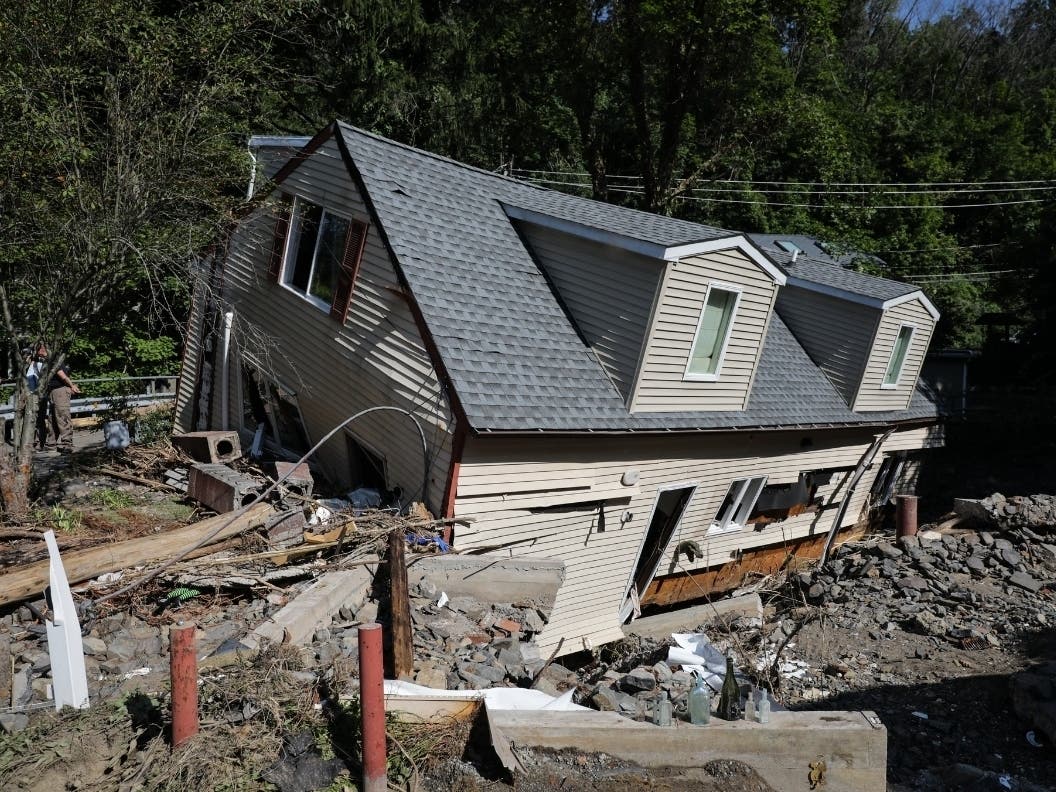
NEW JERSEY — It was nine years ago that Superstorm Sandy tore through New Jersey, leaving a devastating legacy of damage behind. In 2011, just months before Sandy, Hurricane Irene caused billions of dollars in damage across the state. In September, Hurricane Ida brought a new wave of destruction and déjà vu to the Garden State.
And for many homeowners, one of the only things that stood between them and financial ruin was their insurance.
Now, a group of New Jersey lawmakers are pushing for a massive overhaul of the National Flood Insurance Program (NFIP) with hopes of making it more affordable, while also ending the “waste, abuse and mismanagement plaguing the system.”
Find out what's happening in Belleville-Nutleyfor free with the latest updates from Patch.
On Tuesday, U.S. Senators Bob Menendez, a Democrat from New Jersey, and Bill Cassidy, a Republican from Louisiana, officially introduced the National Flood Insurance Program Reauthorization and Reform Act.
If it becomes law, the legislation would extend the NFIP for five years and roll out a series of sweeping reforms that would affect more than five million people in the U.S. who depend on the program, including 220,000 in New Jersey. It would also make insurance more affordable for low and middle-class homeowners, according to Menendez (see more details below).
Find out what's happening in Belleville-Nutleyfor free with the latest updates from Patch.
U.S. Sen. Cory Booker is also supporting the bill; so are U.S. Rep. Frank Pallone Jr. and Bill Pascrell Jr. in the House.
There’s an urgency to the bill, the lawmakers said. Premiums are expected to rise for a whopping 80 percent of National Flood Insurance Program policyholders across the nation after the Federal Emergency Management Agency (FEMA) rolled out a new rating system earlier this month. Around 900,000 policyholders are expected to drop their insurance because of the hikes.
Congress limits the availability of National Flood Insurance to communities that adopt adequate land use and control measures to combat flooding.
According to the Congressional Research Service, the NFIP gets its funds from multiple sources:
- premiums, fees, and surcharges paid by NFIP policyholders
- annual appropriations for flood-hazard mapping and risk analysis
- borrowing from the Treasury when the balance of the National Flood Insurance Fund is insufficient to pay the NFIP’s obligations (e.g., insurance claims)
- reinsurance proceeds if NFIP losses are sufficiently large
Since the end of FY 2017, Congress has enacted 16 short-term NFIP reauthorizations. And it’s finally time to stop “kicking the can down the road” with stopgap solutions that don’t address the program’s systemic problems, Menendez said.
“With this legislation, we can make the NFIP more sustainable, we can make flood insurance more affordable, and we can hold FEMA and its private contractors more accountable,” Menendez argued. “And instead of waiting for the next disaster to strike, we can invest in mitigation that prevents costly flood damage in the first place.”
During a news conference last week, Booker also made a pitch for the plan.
“Nine years ago, Superstorm Sandy made landfall in New Jersey, leading to widespread and historic flooding, devastation to homes and businesses, and the tragic loss of life,” Booker said.
“We know that Sandy wasn’t a one-time event,” he continued. “Instead, due to the effects of climate change, historic and damaging storms will become the new normal. This is why this bipartisan, bicameral bill is important - from reauthorizing the flood insurance program and making it more affordable, to investing in flood mitigation, these efforts are vital to giving New Jerseyans peace of mind from future storms.”
Pascrell said that many New Jersey residents “got screwed with red tape” that slowed the state’s recovery after Hurricane Sandy. And about 180,000 people in the state who rely on the NFIP are about to get another slap in the face when their premiums go up because of the new FEMA rating system, he added.
“Our bipartisan bill will make the program more affordable and fairer,” Pascrell said, adding that it has safeguards to stop premiums from being “jacked up.”
According to Pallone, the NFIP needs to be something that the average homeowner can afford – or it just doesn’t work.
Pallone said that after Superstorm Sandy, insurance companies outright refused to make good on their promises to policyholders, and instead “pointed to the fine print while denying families who had lost everything.”
“This legislation will go a long way to strengthen our flood insurance program so that homeowners in my district are protected from the devastating effects of future flooding,” Pallone said.
During their news conference last week, the lawmakers were joined by Doug Quinn, a U.S. Marine veteran who moved back into his newly-rebuilt, elevated home in Toms River’s Silverton section in 2019.
According to Menendez, nine years ago, the storm surge up Barnegat Bay and the nearby Kettle Creek sent three-foot waves crashing into the family’s ranch-style house that Quinn lived in with his teenage daughter, inundating it with four-foot-deep floodwater.
But that was just the beginning of their misery, Menendez said:
“The Quinns had already been displaced for 21 months when Sen. Menendez first visited their home in July 2014 to highlight systemic problems that delayed recovery for thousands of Sandy survivors. Despite a $254,000 damage assessment and $250,000 in flood insurance coverage, the Quinns initially received only $92,000, of which their mortgage company held half, leaving them with little money to remediate and rebuild. Doug Quinn was later mired for years in the state’s Reconstruction, Rehabilitation, Elevation, and Mitigation (RREM) Program created under the Chris Christie administration, and eventually paid $42,000 in legal fees to get what he was entitled to rebuild.”
New Jersey’s Democratic lawmakers aren’t the only ones pushing for a sea change when it comes to national flood insurance. In addition to Cassidy, Republican sponsors of the National Flood Insurance Program Reauthorization and Reform Act include Senators John Kennedy (Louisiana), Cindy Hyde-Smith (Mississippi), Marco Rubio (Florida) and Roger Wicker (Mississippi.)
According to a statement from Menendez’s office, the National Flood Insurance Program Reauthorization and Reform Act would provide:
Long-Term Certainty - Reauthorizes the NFIP for five years, providing certainty for communities.
No Steep Rate Hikes under Risk Rating 2.0 - Protects policyholders from exorbitant premium hikes by capping annual increases at 9%. Currently, premiums can nearly double every 4 years and FEMA’s new methodology called Risk Rating 2.0 will fundamentally alter premiums on every policy in the country. This new methodology plans to cause a rate shock and lead to unaffordability premiums, forcing homeowners to drop coverage or lose their homes. CBO and FEMA believe that Risk Rating 2.0 will cause nearly 900,000 policyholders to drop NFIP coverage due to the rapid premium increases. We saw all too clearly the negative consequences of hiking premiums after the Biggert-Waters Act of 2012 caused costs to skyrocket, hurting policyholders and disrupting the real estate market. This will put guardrails on FEMA’s new rating methodology, known as Risk Rating 2.0, and safeguard policyholders from sudden rate shocks while responsibly disclosing full flood risk.
Affordability for Low-and Middle-Income Policyholders - Provides a comprehensive means-tested voucher for millions of low- and middle-income homeowners and renters if their flood insurance premium become overly burdensome, significantly increasing the affordability of the NFIP program.
Path to NFIP Solvency - Freezes interest payments on the NFIP debt and reinvests savings towards cost saving mitigation efforts to restore the program to solvency and reduce future borrowing
Limits on Private Insurance Company Profits - Caps Write Your Own (WYO) compensation at the rate FEMA pays to service its own policies and redirects the savings to pay for the means-tested affordability program.
Increased Cost of Compliance (ICC) Coverage - Increases the maximum limit for ICC coverage to better reflect the costs of rebuilding and implementing mitigation projects. In addition, ICC coverage eligibility is expanded in order to encourage more proactive mitigation before natural disasters strike.
Strong Investments in Mitigation - Provides robust funding levels for cost-effective investments in mitigation, which have a large return on investment and are the most effective way to reduce flood risk.
More Accurate Mapping - Increases funding for FEMA’s flood mapping program to implement Light Detection and Ranging (LiDAR) technology for more accurate flood risk across the country, generating data that will lead to better building and land use.
Oversight of Write Your Own (WYO) Companies - Creates new oversight measures for insurance companies and vendors, and provides FEMA with greater authority to terminate contractors that have a track record of abuse.
Claims and Appeals Process Reforms Based on Lessons from Sandy - Fundamentally reforms the claims process based on lessons learned in Superstorm Sandy and other disasters, to level the playing field for policyholders during appeal or litigation, bans aggressive legal tactics preventing homeowners from filing legitimate claims, holds FEMA to strict deadlines so that homeowners get quick and fair payments, and ends FEMA’s reliance on outside legal counsel from expensive for-profit entities.
A copy of the bill text can be found here. A copy of the bill’s section by section can be found here.
Send news tips and correction requests to eric.kiefer@patch.com
Sign up for Patch email newsletters. Learn more about posting announcements or events to your local Patch site.
Get more local news delivered straight to your inbox. Sign up for free Patch newsletters and alerts.