Politics & Government
State Charges Five More With Lying To Get Sandy Funds
All falsely claimed their primary homes were in Ocean County when Sandy slammed into the Jersey Shore on Oct. 29, 2012.



by Patricia A. Miller
One man received more than $200,000 in federal and state funds after he claimed Superstorm Sandy had battered his Bayville home, when he really lived in high and dry in Toms River with his girlfriend.
A New York state woman pocketed more than $183,000 in funds for her secondary home in Manahawkin.
Find out what's happening in Berkeleyfor free with the latest updates from Patch.
They are just two of the five people the state charged on Thursday with filing phony applications for Superstorm Sandy aid, Acting State Attorney General John Hoffman said.
Most of those charged filed bogus claims for funds from the Federal Emergency Management Agency (FEMA). Several also applied for money from the federal Department of Housing and Urban Development or the Small Business Administration.
Find out what's happening in Berkeleyfor free with the latest updates from Patch.
“Collecting government assistance through fraud is always a deplorable crime, but it’s far more egregious in these cases, because the defendants allegedly siphoned relief funds away from deserving recipients and forced administrators to spend time policing fraud rather than focusing exclusively on aiding victims in the wake of this historic natural disaster,” Hoffman said. “We’ll remain unyielding in our pursuit of these offenders.”
The following defendants were charged by complaint-summons:
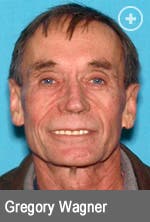
Gregory Wagner, 62, of Toms River, N.J., is accused of raking in $201,122 after he filed fraudulent applications for FEMA assistance, a low-interest SBA disaster-relief loan and state grants under the Homeowner Resettlement Program and the Reconstruction, Rehabilitation, Elevation and Mitigation program. Wagner falsely claimed that a storm-damaged property he owns on Avalon Avenue in Bayville, N.J., was his primary residence at the time Sandy hit, when Wagner was living with his girlfriend in Toms River. The Bayville address was a rental property. Bayville Wagner received $31,900 from FEMA for rental assistance and personal property loss. He also received a $10,000 RSP grant and a total of $159,822 in RREM grant payments, which were paid directly to a contractor for design and construction work on the damaged property. His application for an SBA loan was rejected. He is charged with second-degree theft by deception and fourth-degree unsworn falsification.
- Deborah Glatz, 58, of Putnam Valley, N.Y., falsely claimed that a storm-damaged property she owns on Mill Creek Road in Manahawkin, N.J., was her primary residence at the time of the storm. Glatz received state grant payments under the Reconstruction, Rehabilitation, Elevation and Mitigation (RREM) Program totaling $143,051 and $40,000 in loan disbursements from an SBA loan. Glatz’s primary residence at the time of the storm was a home she owns with her husband in Putnam Valley, N.Y. Glatz and her husband purchased the property in Manahawkin just three days before Sandy hit. Documents signed at closing show that Glatz intended to use the damaged property as a secondary residence. Glatz is charged with second-degree theft by deception and fourth-degree unsworn falsification.
- Laura Matarazzo, 58, of Oakland, N.J., received $5,090 in FEMA funds, a $10,000 Homeowner Resettlement Grang and RREM payments of $93,787. Matarazzo claimed on her applications that a home she owned on Melody Lane in Lavallette was her primary residence, when she actually lived in Oakland. The Lavallette home was a vacation/rental property. She is charged with second-degree theft by deception and fourth-degree unsworn falsification.
- Christina Gumble, 54, of Forked River, N.J., received $23,676 when she claimed she rental expenses at a property located on Forest Avenue in Lyndhurst, after she said she was displaced from her primary home in Forked River. , Gumble actually stayed at her mother’s Lyndhurst home. She allegedly submitted a false apartment lease and false rent-payment receipts in support of her request for rental assistance. She is charged with third-degree theft by deception and third-degree tampering with public records.
- Susan T. Saltstein, 65, of Pennington, N.J., falsely claimed that a storm-damaged home she owned on Albright Road in Long Beach Township, N.J., was her primary residence at the time Sandy struck. Her primary residence was in Pennington, N.J. The home in Long Beach Township was a summer/vacation home. Saltstein of the received a total of $23,512 in FEMA relief funds, including $21,242 for home repairs and $2,270 in rental assistance. She is charged with third-degree theft by deception and fourth-degree unsworn falsification.
“We’ve charged more than three-dozen defendants in these Sandy fraud cases, and we’re not finished,” said Division of Criminal Justice Director Elie Honig said. ”We’re committed to these aggressive efforts with our state and federal partners, because we need to deter this fraud, not only in relation to Sandy, but for any future disasters that might spawn this type of dishonest and selfish conduct.”
The new cases were investigated by detectives of the New Jersey Division of Criminal Justice and special agents of the U.S. Department of Homeland Security Office of Inspector General, HUD Office of Inspector General and SBA Office of Inspector General.
Second-degree charges carry a sentence of five to 10 years in state prison and a fine of up to $150,000. Third-degree charges carry a sentence of three to five years in state prison and a fine of up to $15,000, while fourth-degree charges carry a sentence of up to 18 months in state prison and a fine of $10,000, Hoffman said.
Shortly after Sandy hit, the affected areas in the state were were declared federal disaster areas, making residents eligible for FEMA relief. FEMA grants are provided to repair damaged homes and replace personal property. In addition, rental assistance grants are available for impacted homeowners. FEMA allocates up to $31,900 per applicant for federal disasters. To qualify for FEMA relief, applicants had to affirm the damaged property was their primary residence at the time of the storm.
So far, 37 people have been charged with filing false claims, Hoffman said.
Photo credits: New Jersey Office of the Attorney General.
Get more local news delivered straight to your inbox. Sign up for free Patch newsletters and alerts.