Politics & Government
Bloomfield Town Council Votes On Controversial Sewer Ordinance: Here's What They Decided
After months of heated public debate, the town council has reached a decision. Here are the pros and cons.


BLOOMFIELD, NJ — Bloomfield is moving forward with a controversial plan that will change how sewer bills are calculated for local residents and businesses.
On Monday, the Bloomfield Township Council voted 5-2 to approve the town’s new sewer ordinance. The vote took place after months of heated public debate and a second reading that was postponed for more public feedback.
The measure got a “yes” vote from Mayor Jenny Mundell and council members Rosalee Gonzalez, Sarah Cruz, Jill Fischman, and Monica Charris Tabares. Two council members voted against the ordinance: Nicholas Joanow and Tracy Toler-Phillips.
Find out what's happening in Bloomfieldfor free with the latest updates from Patch.
Instead of being included in property taxes, sewer costs will now move to a “user fee” system with a base charge and a usage-based charge tied to water consumption – similar to how water bills are put together in the township.
Supporters of the plan say it will shift the financial burden of maintaining the town’s sewers from residents to businesses and larger commercial users.
Find out what's happening in Bloomfieldfor free with the latest updates from Patch.
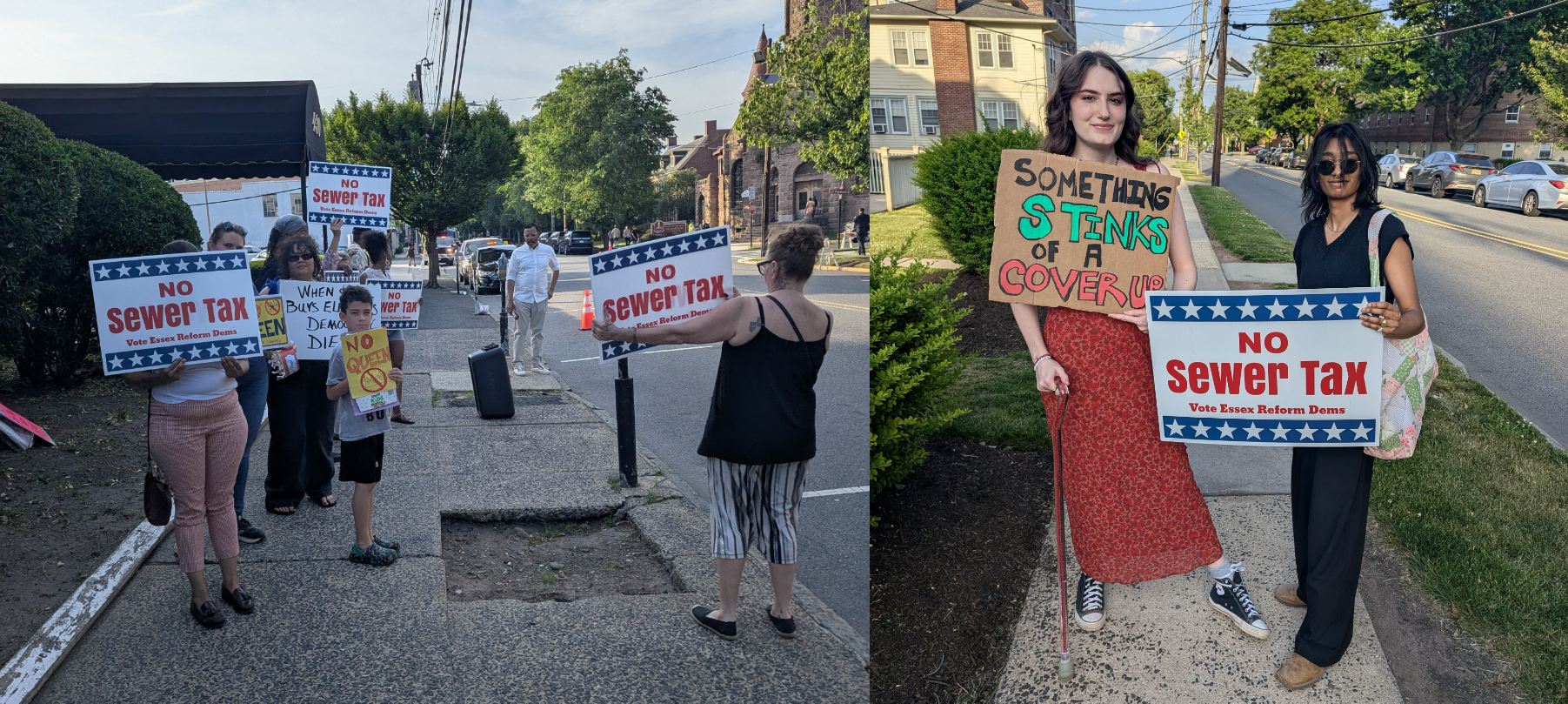
Critics argue that Bloomfield residents could lose legal protections and potential tax deductions, and have questioned town officials’ claims that the move will save most residents money.
>> RELATED: Bloomfield May Make Big Switch To Residents' Sewer Bills: What To Know
The council also introduced some potential tweaks via amendments, which will have to see a second vote before becoming official. Those changes would include:
- Exempt 100% disabled veterans from the sewer fee
- Exempt properties that are 100% deed-restricted affordable housing
- Place the sewer rate directly into the ordinance
- Require any proposed rate increase to go through the public ordinance amendment process and be voted on by the mayor and council
COUNCIL DEBATE
Several council members shared explanations about their vote prior to Monday's final tally.
Cruz asked township administrators if residents who apply for tax reimbursement programs like the New Jersey Senior Freeze will be affected – and was told that they will not be.
The councilwoman said she supports the ordinance as a local homeowner and taxpayer.
“It is not a new bill, it is not a new tax… you are already paying it within your taxes,” Cruz said, disputing claims that the council wasn’t being transparent in their decision.
That viewpoint was later contested by Joanow, who isn’t running for re-election this year in the second ward.
Explaining his “no” vote, Joanow said he wasn’t aware of the ordinance until two weeks before it was first introduced on the agenda. He said another colleague on the council also was “excluded” from the discussion – claims that Mundell said were not true.
Joanow said he opposed the ordinance because it appears to be geared towards “filling a budget gap – not for the equality in terms of payment” that is being proposed by supporters of the plan.
Joanow also said he is concerned that the senior freeze tax deduction may be at risk, despite what the council has been told.
Meanwhile, Gonzalez said she is confident – as someone who rents a home in Bloomfield and knows many others who do – that local seniors and military veterans will be protected under the new sewer system.
“I wouldn’t vote on something that’s going to jeopardize my pocket,” she said prior to voting “yes.”
Toler-Phillips – who provided the second “no” vote – explained her viewpoint in a social media post. The councilwoman said she is concerned the new fee will hurt local mom-and-pop small businesses in town. She also said that many renters could be left “completely exposed” if landlords decide to pass along the cost of the fee to a tenant’s monthly rent.
“If Zohran Mamdani can find ways to manage New York's massive budget, why can't Bloomfield balance ours without adding extra burdens to our community?” Toler-Phillips questioned.
Several community members also spoke against the sewer ordinance at a public hearing held before the council's vote. Watch meeting footage here, or view it below (video is cued to the hearing at the 2:22:13 mark):
BLOOMFIELD OFFICIALS: HERE'S WHY CHANGE IS NEEDED
Township administrators have released a list of “frequently asked questions” about the proposal, which can be seen here.
The township has also released a “sewer fee calculator” for local residents.
According to the FAQ guide, 98 percent of Bloomfield households will pay less than they are currently paying through property taxes. The typical Bloomfield household currently pays about $211 per year for sewer costs. If the ordinance passes, households will pay about $100 per year – an annual savings of $111.
On the flip side of the coin, many businesses will pay more. Some properties that are operating under long-term tax agreements such as PILOTs – and which do not contribute to sewer costs through property taxes – would be required to pay under the new system.
Currently, “high-volume” users such as laundromats, car washes and large buildings are not paying based on usage – leaving homeowners and renters on the hook for about 78 percent of the town’s total sewer costs. The proposed ordinance would leave residents footing only 37 percent of the bill.
Bloomfield officials pointed to a steep spike in sewer costs during a presentation given at the April 13 town council meeting, which can be viewed online here.
Costs have increased by over 35 percent in the past four years, and greater than 10 percent over the past two years – currently coming to more than $5 million.
“Should residential taxpayers be paying the same rate for sewer charges as the local car wash?” Mundell recently questioned in a social media post summarizing the ordinance.
“Sewer costs have increased over 35 percent in the past four years, driven by the Passaic Valley Sewerage Commission (PVSC), which sets these rates,” Mundell continued. “State law also limits how much taxes can increase.”
“This proposal is about managing real costs fairly, and in a way that benefits the average homeowner,” she added.
Other details in the town’s FAQ document include:
- The town would use a phased approach, moving about $3 million of the estimated $5.15 million in sewer costs to the new system first – with the rest remaining in property taxes during the transition
- Rates may be adjusted over time as part of regular financial review and depending on rate increases from the PVSC
- No new meters or additional equipment is needed
- Sewer charges will appear on a resident’s water bill
- The proposal was developed by the town’s chief financial officer, the financial advisor and auditor
In the below video, town officials and administrators discuss the new sewer fee during a "mayor's information session" on June 10, 2026
CRITICS: HERE'S WHY WE'RE AGAINST THE PLAN
Some Bloomfield residents have been offering dissenting views on the town’s sewer and budget conundrums – and alleging that there may be other factors at play that are being overlooked.
Doug Grant, who clashed with town officials last year as chair of the Bloomfield Rent Leveling Board, has been outlining his concerns in a series of Substack posts.
“This new fee is not about covering simple cost increases – it is a deliberate cap-evasion strategy,” Grant recently wrote. “By shifting $3 million off the visible property tax bill and onto a new user fee, the administration is bypassing the state’s 2 percent levy cap.”
Grant has also claimed that the new system could lead to rising costs for seniors, veterans and people who rent their homes.
Satenik Margaryan, a former town council candidate, advised residents to be “skeptical” about the sewer proposal in a recent Bloomfield Chronicles post with Peter Tom.
They pointed to New Jersey’s 2 percent ceiling on budget increases – which can only be exceeded in limited situations – as well as the “cap bank” that towns are allowed to squirrel away for a rainy day.
“In short, the CAP law creates a tight box that towns have to budget inside of – which is exactly why moving costs like sewer fees off the tax levy and into a separate user fee is such an attractive option,” Margaryan and Tom wrote. “It’s not just about saving residents money. It’s about making more room inside that box.”
Here are two potential trade-offs to keep in mind, they said:
- You Lose The Tax Deduction – “Right now, sewer costs are embedded in your property taxes. If you itemize your federal taxes, that means they’re partially deductible — typically saving the average taxpayer somewhere between 22 and 24%. Once sewer costs become a standalone fee, that deduction disappears entirely.”
- The Fee Is No Longer Capped – “While sewer costs sit inside the municipal budget, they’re subject to the same 2% to 3.5% annual CAP as everything else. The moment they move to a user fee, that protection is gone. The town could theoretically raise sewer fees well beyond 3.5% in any given year with no state-imposed limit.”
“Let’s be direct: moving sewer costs out of the municipal budget benefits the township — not the taxpayers,” Margaryan and Tom wrote.
“Bloomfield has a CAP space problem, and this is their fix — one that happens to give them more room to raise both property taxes and sewer fees down the road, unconstrained by the statutory limits that currently protect you,” they added.
This isn’t the first time that Bloomfield has seen a debate over its sewer fees. A similar proposal was made in 2011, but didn’t cross the finish line after an outcry from residents.
PROCEDURE QUESTIONED
Prior to Monday’s meeting, Grant alleged that council members may be subjecting themselves to legal risk by voting on the proposal.
Mundell asked township attorney Khalifah Shabazz to clarify the legality surrounding a vote on the sewer ordinance.
“I don’t see anything that would subject any of you by mere vote on this to criminal or civil liabilities,” Shabazz replied.
Send local news tips and correction requests to eric.kiefer@patch.com. Learn more about advertising on Patch here. Find out how to post announcements or events to your local Patch site.
Get more local news delivered straight to your inbox. Sign up for free Patch newsletters and alerts.