Politics & Government
19 Percent Tax Hike Won't Fix Brick School Aid Crisis: Officials
State legislation to allow the Brick schools to exceed the 2 percent cap on property tax increases will destroy the town.


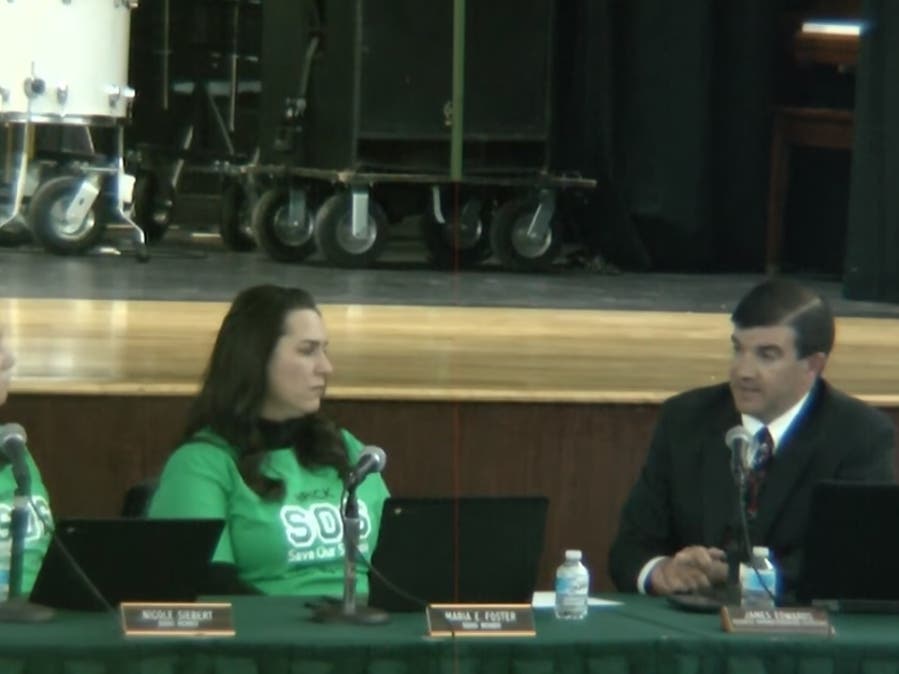
BRICK, NJ — Under the bill passed Tuesday by the state Legislature that would allow some school districts in New Jersey to raise property taxes to cover the loss of state aid, Brick Township could be facing a 19 percent increase in its tax levy.
It's an answer, Brick Township School District officials say, that won't solve the problems facing the district, but instead will destroy the township.
"It wouldn't get us to where we need to be because it doesn't take into account any inflationary costs," district business administrator James Edwards said at the Dec. 12 school board meeting
Find out what's happening in Brickfor free with the latest updates from Patch.
The Brick Township School District is slated to lose more than $22 million in so-called adjustment aid from the state Department of Education, a process that started in 2018 and is expected to be completed in 2025. The cuts are mandated under S2, a law pushed by state Senate President Stephen Sweeney and finally signed by Gov. Phil Murphy in 2018, that forces the education department to follow through with cuts that were included in the School Funding Reform Act of 2008.
The School Funding Reform Act formula, which has been disputed by a number of school districts since the act took effect, included so-called "adjustment aid" that was supposed to be removed over time. But Gov. Chris Christie halted cuts in the aftermath of Superstorm Sandy.
Find out what's happening in Brickfor free with the latest updates from Patch.
The Brick schools along with several others were "held harmless," Edwards said, and the cuts not made, because of the devastation wreaked on the community, which lost more than $600 million in ratables to the storm. More than $300 million have yet to be recovered in Brick.
Sweeney insists that Brick and a number of other districts have been receiving more funding from the state than they are entitled to receive, and not paying what the state says is their local fair share of property taxes to support education.
Edwards and officials from other districts are not so certain that's the case, and said the state's argument is based on the formula it uses to calculate the wealth of a district — a formula it refuses to release. Read more: Toms River, Brick Seek 'Secret' Math Equation In School Aid Fight
The bill that would give districts like Brick that are facing crippling cuts the ability to exceed the state's 2 percent cap on increases in the property tax levy ignores the dispute over the formula, he said.
"Their answer to that, instead of showing how they arrived at that we're a wealthy community, they're going to give us the ability to raise taxes," Edwards said. "I don't believe that's the answer."
Brick, Toms River and six other school districts filed a lawsuit against the state Department of Education over the state's refusal to reveal the formula, which has been sought through multiple Open Public Records Act requests by both districts and media outlets. Two Patch requests for the formula have been denied on the grounds that they are "requests for information, not records." Districts that have sought the formula have been told they cannot have it because it is "proprietary."
Edwards said state officials' insistence that the formula is an accurate representation of the wealth of districts across the state, in the face of their unwillingness to release the formula, does not inspire trust. The formula, he noted, is used to distribute $6.5 billion, about 40 percent of the education department's budget and about 17 percent of the state's budget.
"Just to say believe me and trust me is one thing, when I ask you for the details and you say you can't show you that gives me a little bit of a hesitation for me to trust you," he said. "To say the solution is to ask your taxpayers to come up with $22-plus-million over five years, that's not a real solution."
The $22 million is the amount of so-called adjustment aid Brick is slated to lose under S2. For the 2019-2020 school year, the cut was $2.7 million. For 2020-2021, the cut is expected to be at least $4.2 million, Edwards said, with larger cuts in 2021-22 and 2022-23.
Districts that are having their aid cut but also are under adequacy — meaning they don't spend as much as the state says is required to provide a thorough and efficient education — are required under S2 to increase their property tax levy to the 2 percent cap.
For Brick, that 2 percent increase in the levy will raise about $2.2 million, Edwards said. That leaves the district with a $2 million gap, and that is without taking into account increases in health insurance, utilities or other items due to inflation. Under state law, school districts must submit balanced budgets, so that means the district will have to cut.
That's why Herbertsville Elementary School was set to be closed, Edwards said. It costs $1.8 million to operate that school, which has 237 pupils. And unless something changes, it won't be the last school closure, school board president Stephanie Wohlrab said.
If the district were to use the waiver and increase property taxes to account for the $22 million, it would mean a tax levy increase of about 18.97 percent, Edwards said. That equates to $603 for a home assessed at the township average of $295,100.
"And that wouldn't get us ahead," he said. "That would just catch us up," and would still mean cuts would have to be made.
While the tax increase would be spread over the remaining years of the S2 cuts, it's still significant. And it's not an option that Edwards or the school board find remotely acceptable.
"It's significant, not just to the schools," Edwards said. "As you jam kids into classrooms and schools begin to suffer because of it, so does the community. When the community suffers, the businesses that are in that community begin to suffer, the home values suffer."
"Five years from now, this town will be very different," Edwards said. And increasing property taxes by 19 or 20 percent or more will simply exacerbate that.
Parents are starting to try to rally support to fight back against the cuts, including plans to pack the Brick Township Council meeting on Tuesday night to gather increased support from the Township Council. Plans are in the works for multiple campaigns to protest the S2 cuts and press lawmakers for solutions other than jacking up property taxes.
"Good schools equal good communities," Edwards said. "There's plenty of evidence that shows what happens to communities when the schools are not taken care of. There's historical data that supports that."
If there's no real relief for the cuts beyond increasing property taxes?
"That's a shame if that's what Trenton has deemed needs to happen here," Edwards said.
Have a news tip? Email karen.wall@patch.com Follow Brick Patch on Facebook.
Get more local news delivered straight to your inbox. Sign up for free Patch newsletters and alerts.