Schools
An Unlikely Ally in the Fight Against Water Pollution
Chemicals found in laundry detergent help detect more dangerous types of contaminants
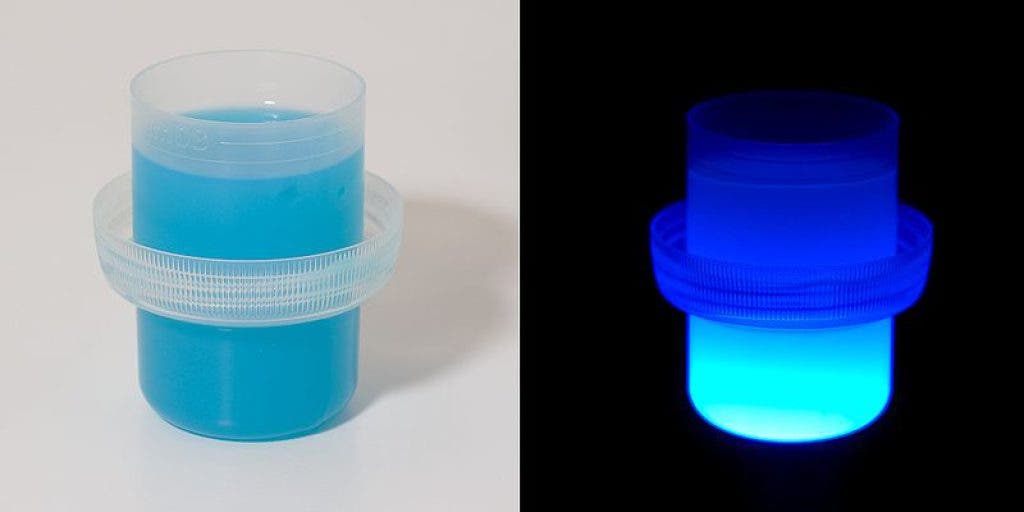
Certain chemicals found in laundry detergents have been finding their way into major waters across the country.
But while these chemicals, known as optical brighteners, may be considered a contaminant, some environmentalists say they actually help detect other, more dangerous ones.
Optical brighteners are being found right here in Brick, which is near the Barnegat Bay and Atlantic Ocean.
Find out what's happening in Brickfor free with the latest updates from Patch.
Over the last few years water sampling groups like the MATES program at the in Manahawkin have been finding high levels of optical brighteners in rivers and storm drain runoffs.
Water testing has proved that optical brighteners are also found in connection with other contaminates like E. Coli and fecal coliform colonies. Testing during or after rain storms usually has higher levels of optical brighteners as well as fecal coliform.
Find out what's happening in Brickfor free with the latest updates from Patch.
Many of the items tested are coming from storm drains that flow into a river or a bay.
Jennifer Thompson, a spokeswoman for Clean Ocean Action, recently spoke about what optical brightener can be used for in terms of water testing.
"Optical brighteners are a good tool for indentifying sources of waste water that can be utilized by high school students or citizen groups as a means to track down pollution," Thompson said.
Clean Ocean Action is a non-profit organization "working to protect waterways using science, law, research, education, and citizen action," according to their website.
"Our goal is to improve the degraded water quality of the marine waters off the New Jersey/New York coast," their mission statement reads.
Thompson spoke about where optical brighteners come from.
"Optical brighteners are found in laundry detergents to 'brighten your whites' and so anywhere there are problems with infrastructure having to do with wastewater, like systems that take waste water from your home (washing machine, dishwasher, toilet, showers). They can be used as tracers for the source of pollution." said Thompson.
For example, if you use laundry detergent in your washing machine and you have a leaking pipeline it could ultimately seep into a water source near your home.
Another case could be if you empty wastewater directly into the sewer system it will empty out in a reservoir or a river eventually.
Testing for optical brighteners is not being tested at the county level. Most of the testing occurs with high school students or citizens who are concerned about water quality.
"(Testing is) a fairly straightforward process and it’s a way where lots of people can get out into the watershed and into the waterways, searching for these sources of optical brighteners," Thompson said. "The state can't be everywhere at all times, but the citizens that truly care about waterways can use these simple devices to track down pollution on the water."
Thompson said optical brighteners are used as "tracers" to detect where other sources of pollution are coming from.
Finding the source of pollution is key to keeping water clean, Thompson said.
"It’s the pollution that is found with the optical brighteners that we need to eliminate," Thompson said.
Besides detergents and paper products, optical brighteners are found in fabric whitening, textile whitening and even color-correcting cosmetic formulas such as shampoos, conditioners and eye makeup can contain optical brighteners.
To find out more about optical brighteners and how to test for them, please contact the MATES program in Manahawkin. To contact Clean Ocean Action, please visit their website.