Schools
Brick Bus Driver Layoffs Were 'Shoved Down My Throat,' Sangiovanni Says
The district's transportation manager says he is being made a scapegoat for a situation that wasn't his doing.


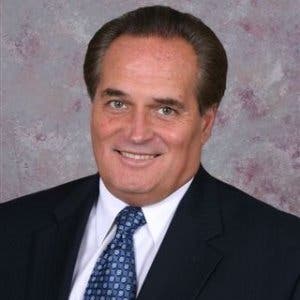
“All I wanted to do was get people to come to work.”
Joseph Sangiovanni, the transportation manager in the Brick Township School District, says that from the start of his time in the district, his focus was on making sure students were transported to and from school.
That job, he said, has been one big headache after another, however, from a union contract that he said is designed to create work to civil service rules to a school board that he said micromanages his job.
Find out what's happening in Brickfor free with the latest updates from Patch.
And now that board, he says, is throwing him under the bus.
The plan to cut 31 full-time bus drivers’ positions was not his idea, Sangiovanni said during a lengthy telephone interview Friday, responding to criticisms and statements made at the May 28 Board of Education meeting, where he was singled out -- though never directly named -- during a six-hour meeting that included about two hours of discussion on the plan to lay off drivers.
Find out what's happening in Brickfor free with the latest updates from Patch.
The board voted that night to delay action on the layoff proposal for two weeks to further investigate the plan, which drivers and parents have said will make a currently chaotic situation -- where students are late for school or even forgotten -- even worse.
They are expected to take up the issue Monday night at a special board meeting set for 7 p.m. at Veterans Memorial Middle School, on Hendrickson Boulevard, where they will decide whether to forward the plan to the state Civil Service Commission or scrap it. Scrapping the plan will leave the board facing a decision about how to account for the $1.2 million the district had expected to save as a result of the cuts, a savings that was built into the 2015-16 budget the board approved in April.
At the May 28 meeting, Board President Sharon Cantillo told the drivers that the plan to make cuts came from the transportation department.
Sangiovanni, who is on a medical leave of absence, says that is not the case.
“I was given an administrative order,” he said of a meeting with now-suspended Superintendent Walter Uszenski and business administrator James Edwards, where he says Uszenski told him he had to come up with a budget that included a plan to lay off drivers.
And Sangiovanni goes further, saying the idea to cut drivers originated with former board member Larry Reid.
“Reid shoved it down my throat,” he said, during a series of meetings over the course of several months, where he was called before members of the board and “lambasted” and told repeatedly to cut drivers.
“That’s an ethics violation,” Sangiovanni said. “They are supposed to go through the proper channels, not speak to employees directly.”
“This board gets too involved in the day-to-day operations of the district,” Sangiovanni said.
He cited the report by the Transportation Advisory Services that was submitted to the district in January. The report, written by Christopher Andrews of TAS, was a follow-up to a 2006-07 study of the Brick school district’s transportation department.
In the summary, Andrews said Sangiovanni had “made quite a few inroads into addressing a majority of the issues” cited in the 2007 report. Andrews also said the labor agreement made it difficult to address others.
Andrews also had harsh criticism for the Board of Education: “It appears that at least one Board Member has taken it upon himself to micro-manage the Department, by allowing one of the office workers to communicate directly with him, rather than going through proper channels. This type of behavior serves to undermine management and should not be tolerated.”
Some have said that criticism of the board resulted from Sangiovanni being the sole source consulted for the followup. Sangiovanni, however, said that was not the case, a fact that Edwards confirmed by email.
Edwards did not say who else was consulted for the follow-up report; Sangiovanni said the business administrator’s office and others within the transportation department were spoken with. He also said the TAS representative spoke with personnel at each of the schools.
“I know because I had to show him where they are,” he said.
Gregory Cohen, the local representative for the Transport Workers Union, which represents the drivers as well as cafeteria personnel, custodians, secretaries and others, confirmed that others were spoken with but said the union felt the head bus drivers also should have been consulted, as they were for the first report.
“It was clear the goal of the follow-up was to push privatization,” Cohen said Friday.
Cohen also confirmed Sangiovanni’s statement about Reid’s demands to cut drivers.
“He (Reid) said if attendance doesn’t improve, we can get rid of 20 drivers,” Cohen said. “That has been thrown at us repeatedly.”
The TAS follow-up is critical of the drivers’ contract, saying it is “unaffordable, unmanageable, and in conflict with the District’s goal of providing the highest level of educational services for the students, in the most efficient manner. ... (The) terms and conditions stem from a time when public sector wages were low, benefits were generous and less expensive than today, and state aid was plentiful. Unfortunately, that is no longer the case.”
Andrews, who was sharply critical of the district in the 2007 report for even having full-time bus driver, urges the district to turn to privatization if it does not get sufficient concessions from the TWU: “I suggest that you select those recommendations already on the negotiating table that you will not negotiate away, and if you can’t get those concessions you proceed with the next step – privatization.”
The needed concessions, Sangiovanni said, involve addressing the problem of absenteeism, which he said is significantly higher than it should be. While some drivers are legitimately ill, there are some who, he said, work the system. And the district’s participation in civil service only complicates matters, he said.
Under the contract, if a person is out sick for one day or four days straight, it counts as a single absence, he said. If someone accumulates several occurrences, they can face disciplinary action.
However, under civil service rules, Sangiovanni said, if the person presents a doctor’s note saying the absences were medical in nature, they become excused.
He said there are some drivers who schedule surgery during the school year, instead of scheduling it during the summer. Others, he said, use sick days during the cold weather, because they simply don’t want to deal with the cold and snow.
“Let’s face it,” he said, “who want to go out there on a 30-degree morning and clean a bus off?”
“There are some people who get legitimately hurt, legitimately sick,” he said. ”But others, at every corner they’re trying to take days off.”
“I don’t care what the union says about absenteeism,” he said. “I’m the guy who has to have someone in that seat to get the kids to school.”
With an average of 30 to 40 absences per day, he said, “You can imagine the fire drill to fill all those runs.”
That is why the cover runs exist, he said. If a driver who has four runs in and out is sick, “that’s eight covers needed. If you multiply that out, it’s 240 runs if you have 30 drivers out.”
Substitute drivers are used to fill in for drivers who are out on long-term disability with illnesses or surgeries, Sangiovanni said, and getting enough substitutes is a problem not only in Brick -- which several people said pays substitutes the lowest rate in the county, though district officials said that number is set out in the contract -- but is an industrywide problem.
The solution, he said, isn’t to cut bus drivers -- though Sangiovanni said Reid had been demanding that for months.
“Reid is telling me ’you can cut 20 drivers,’ and that we should take out all the covers,” Sangiovanni said. “He doesn’t get what we do.”
At the May 28 meeting, Cantillo said -- and Edwards confirmed -- that the ability to bus students more efficiently while cutting 31 full-time drivers hinges on the expectation that all of the remaining drivers do not miss work. It is an expectation, Edwards said, that has inherent risks if the district is unable to get enough substitute bus drivers to fill in for absent drivers.
The district’s plan to reconfigure the bus runs would reduce its primary runs from 492 to 402, while eliminating all of the 129 cover runs that currently exist.
Cutting drivers and cutting the cover runs -- which Edwards said is the current plan -- is not a workable solution, Sangiovanni said. Addressing the absenteeism -- and holding accountable those who are abusing the sick leave must be part of the answer.
It is not going to be easy to change, he said, but the district’s hiring of a labor attorney for the negotiations is a step in the right direction and something that should have been done sooner, instead of having board members in charge of the negotiations. The labor attorney was brought in when board member John Talty, who had been chair of the finance committee, became ill earlier this spring. He later stepped down from his seat, then tried to regain it in the wake of the arrest of Uszenski and the layoff plan becoming public.
“They are trying to change 50 years of this stuff in one contract,” Sangiovanni said.
“I didn’t come up with this plan,” Sangiovanni said. “I was told it is an administrative order.”
“My plan -- my request -- was that they give me a better way to address the absenteeism,” he said.
Get more local news delivered straight to your inbox. Sign up for free Patch newsletters and alerts.