Politics & Government
Brick Introduces Zoning Changes For Affordable Housing Settlement
The ordinances are a required step in the settlement, officials said. Not all of the council supported the measures.


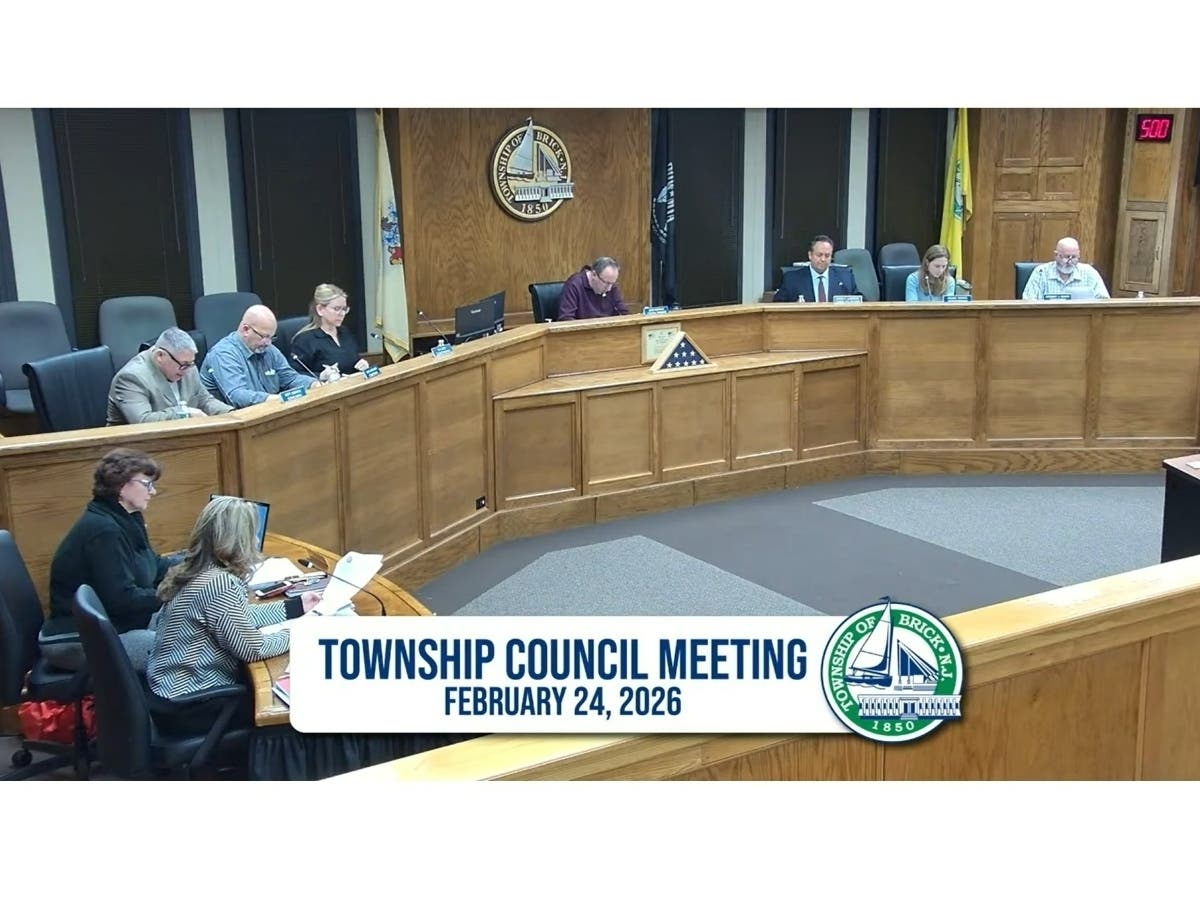
BRICK, NJ — The Brick Township Council introduced three ordinances Tuesday night to address the township's obligations under the fourth round of the affordable housing requirements.
Brick Township was told by the state Department of Community Affairs in October 2024 that its affordable housing obligations for 2025-2035 were 149 units of present need and 360 units of prospective need. It had pushed back, with a present need of 149 units and 29 units for its prospective need.
On Tuesday, as the council introduced the ordinances, the finalized numbers were revealed to be 149 units of present need and 322 of prospective need.
Find out what's happening in Brickfor free with the latest updates from Patch.
The ordinances included changes to the township's codes "that are required in order for us to comply with the affordable housing requirements that have been set down by the New Jersey Superior Court," Council vice president Derrick Ambrosino said, reading prepared remarks about the ordinances. The ordinances and settlement were critical to ensuring immunity against builders' remedy lawsuits, Ambrosino said, where developers can go to court to force a particular development against the wishes of the community.
Builders' remedy lawsuits have frequently been used for high-density projects such as apartment complexes.
Find out what's happening in Brickfor free with the latest updates from Patch.
"The programs and affordable housing projects proposed by Brick Township to address Rpund Four affordable housing obligations are fair, reasonable, and adequately protect the interests of low- and moderate-income residents of the municipality," the prepared remarks said. "Therefore, the township's appointed special adjudicator recommended that Brick Township's proposed amended 2025 housing element is consistent with the revised Round Four plan (and) should be recommended for approval by the Mount Laurel court."
The plan was the result of a mediation agreement with Fair Share Housing Center and a settlement agreement with 975 Burnt Tavern Road LLC, the statement said. The 975 Burnt Tavern settlement will allow the developer to build 264 units, including 53 for very low- to moderate-income families in "an inclusionary residential development," a statement read by Councilwoman Lisa Reina said. The zoning for that is site-specific.
The ordinances and settlement do not include the property at 100 Drum Point Road, where a proposed 60-unit townhouse complex was rejected by the Brick Township Board of Adjustment in May 2025, and officials said the township's decision to not include that site was supported by the affordable housing adjudicator.
The three introductions passed by 4-3 votes, with the three Republican members — Reina, Greg Cohen and Perry Albanese — voting against the introduction.
Reina, both Tuesday night and in a written statement share on behalf of the three, called the affordable housing settlement "coersion" on the part of the state.
"Brick Township is already more than 90 percent developed," the statement said. "Residents raise concerns every day about traffic congestion, overcrowded schools, strained emergency services, and the steady erosion of the quality of life that brought so many families here in the first place. Increasing permitted density under those conditions is not responsible planning."
"Supporters of the ordinances argued that rejecting them could expose Brick to future pressure for even higher density. We reject the idea that local government should be forced to govern under threat. Planning based on fear is not planning at all. This is not planning. This is coercion," the statement said.
A second reading and vote on the ordinances is set for March 10. The state has set a deadline of March 15 for towns to get their compliance measures in place.
The three ordinances can be read here.
The first revises Chapter 245 to add language about affordable housing throughout the township's land use code. The second creates a "middle income overlay zone," which would permit 10 units per acre with a variety of attached-housing types.
The middle-income housing overlay zone includes about 72 acres of land spread among 50 different properties, primarily along major roads in Brick and "theoretically yields 720 total units and 144 affordable units," the statements said.
The third applies specifically to the 975 Burnt Tavern settlement.
"We will continue to meet Brick’s legal obligations," the Republican statement said. "But compliance should never come at the expense of local control, neighborhood character, or the taxpayers and families who built this community."
Get more local news delivered straight to your inbox. Sign up for free Patch newsletters and alerts.