Community Corner
Brick MUA Drinking Water Meets Even Most Stringent Limits For Toxin, Official Says
Levels of chromium-6, the toxin made famous by Erin Brockovich, in Brick are well below even California's public goal, tests show.


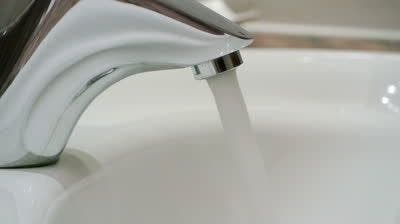
BRICK, NJ — While a study released this week highlighted the presence of a cancer-causing toxin in drinking water across the country, a look at the numbers in the water supplied locally shows very little chromium-6, the toxin made famous in the 2000 Julia Roberts movie "Erin Brockovich."
The Environmental Working Group, a nonprofit, nonpartisan organization dedicated to protecting human health and the environment, analyzed federal data from nationwide drinking water tests showing that the compound contaminates water supplies for more than 200 million Americans in all 50 states.
Although the water provided by local agencies does not exceed the U.S. Environmental Protection's maximum of 100 parts per billion of total chromium, it does exceed 0.02 parts per billion, a level that California’s Office of Environmental Health Hazard Assessment set as a public health goal in 2011, the study explains. That level "would pose negligible risk over a lifetime of consumption," according to the study.
Find out what's happening in Brickfor free with the latest updates from Patch.
For the Brick Township Municipal Utilities Authority, which supplies water to Brick, Point Pleasant, Point Pleasant Beach and parts of Howell and Lakewood, the levels of chromium-6 cited by the study were small. Of eight samples tested in 2013 and 2014, just two were positive for chromium-6, and both just barely exceeded the California goal. The average was well below the .02 ppb threshold, according to the study.
"Brick Utilities water had some of the lowest levels (of chromium-6) recorded in Monmouth and Ocean counties," said Chris A. Theodos, executive director of the Brick MUA. "Of the 34 utilities tested in Ocean and Monmouth counties, only three utilities had lower levels than ours." In Ocean County, the Brick MUA was the third lowest; Lavallette had an average at 0 ppb, and Seaside Park had an average of 0.005 ppb, according to the study.
Find out what's happening in Brickfor free with the latest updates from Patch.
California set 0.02 parts per billion as its goal after Brockovich was successful in building a case against the Pacific Gas and Electric Company (PG&E) of California in 1993 that blamed the company for contaminating local water. The actual legal cap in California is 10 parts per billion.
Neither New Jersey nor the EPA have a standard currently, though the EPA, in a statement released Wednesday, said it is "actively working on the development of the Integrated Risk Information System (IRIS) assessment of hexavalent chromium, which will include a comprehensive evaluation of potential health effects associated with hexavalent chromium." The agency said it expects the draft IRIS assessment will be released for public comment in 2017.
Theodos said there have been discussions in New Jersey that a limit as low as 0.07 ppb is appropriate.
"The Brick Utilities sample results were 87.14 percent lower than the proposed NJ limit of 0.07 ppb. Even at the lowest level suggested by the EWG of 0.02 ppb, Brick Utilities is 55 percent (at .009 ppb) lower and one of only five utilities in Ocean and Monmouth counties with results lower than that level," he said.
"Brick Utilities takes its mission of providing our customers with the highest quality of water possible very seriously," Theodos said. "We employ an extremely effective water treatment and monitoring process to ensure that our customers can be confident in their water quality. The data as presented shows that Brick Utilities water would meet even the most stringent of limits for chromium-6."
The toxin causes cancer, reproductive problems and liver damage even from little exposure, the report says. Environmental Working Group estimates that if left untreated, chromium-6 in tap water will cause more than 12,000 excess cases of cancer by the end of the century.
Read the full study at the Environmental Working Group website here.
Here are the testing samples cited by the Environmental Working Group study for Brick, with the dates of the samples in parentheses.
- Distribution System, Max. Res. Time in Dist. System, 0.0 ppb (Dec. 17, 2013)
- Treatment Plant William Miller Central 0.0 ppb (Dec. 17, 2013)
- Treatment Plant William Miller Central 0.033 ppb (March 12, 2014)
- Distribution System Max. Res. Time in Dist. System 0.0 ppb (March 12, 2014)
- Distribution System Max. Res. Time in Dist. System 0.0 ppb (June 24, 2014)
- Treatment Plant William Miller Central 0.0 ppb (June 24, 2014)
- Treatment Plant William Miller Central 0.0 ppb (Sept. 9, 2014)
- Distribution System Max. Res. Time in Dist. System 0.037 ppb (Sept. 9, 2014)
Image via Shutterstock
Get more local news delivered straight to your inbox. Sign up for free Patch newsletters and alerts.