Politics & Government
Brick's Steel Wall Exposed Up To 18 Feet, But Did Its Job, Mayor Says
Mayor says the steel revetment wall will remain exposed until Army Corps dune project is completed.


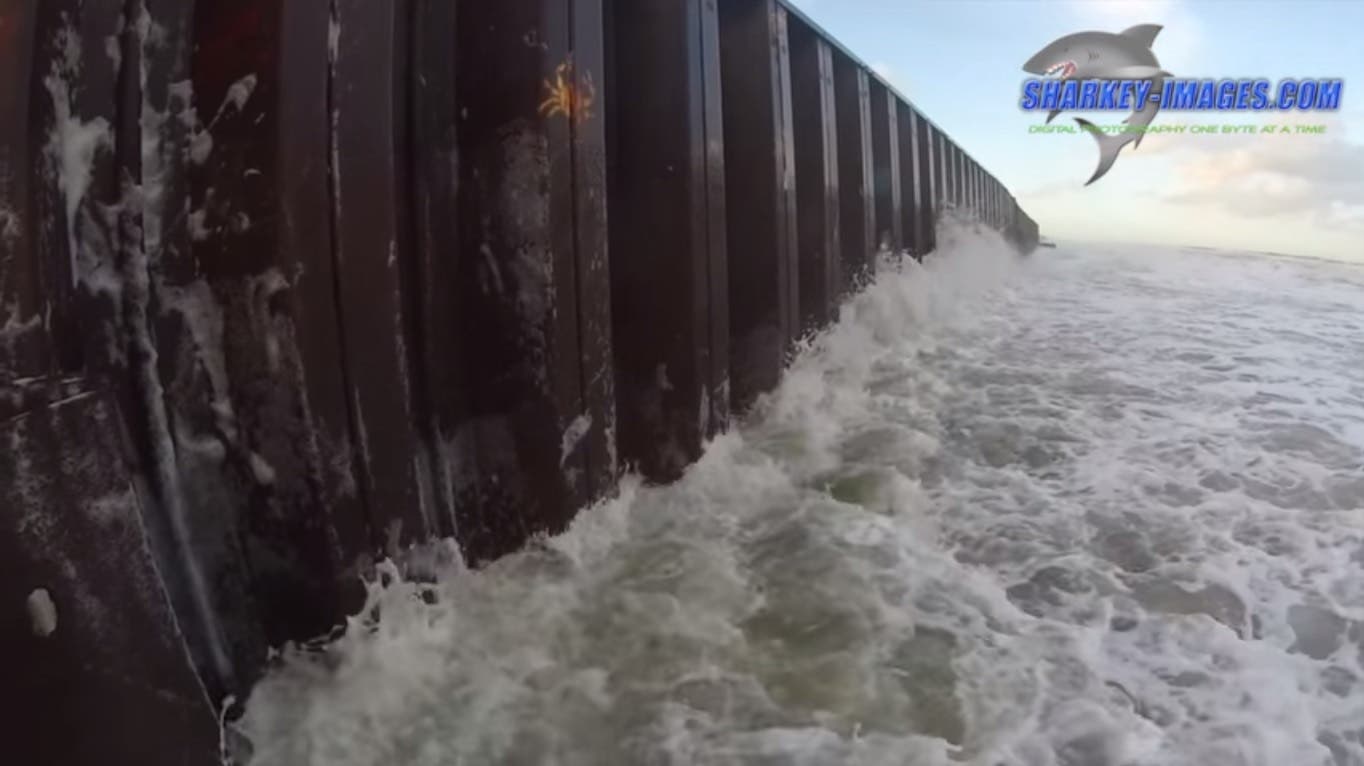


Brick Township officials say that a steel wall put in place by the state Department of Enviromental Protection in Mantoloking and Brick to protect Route 35 has done its job.
Video and photos taken Sunday and Monday show the impact of the waves created by Hurricane Joaquin -- exposure of the steel revetment wall that spans much of Mantoloking and Brick, as well as exposed boulders in Bay Head at the base of the dunes there.
Brick Mayor John G. Ducey, who toured the township’s beachfront Monday, said the entire length of the wall in Brick ”from Brick Beach III on south” was exposed by the waves, from 5 feet of it to as much as 18 feet.
Find out what's happening in Brickfor free with the latest updates from Patch.
The revetment wall -- a steel bulkhead that sits 40 feet east of the dune line -- became partially exposed due to the combined waved effects from the nor’easter and from the hurricane. A video (below) by Tim Sharkey of Sharkey Images shows what he estimates is about 20 feet of the wall exposed.
As the sheet became exposed over the weekend, there were some who criticized the project, saying the storm had exposed problems with the wall, after Brick Township officials closed the beachfront and told residents and onlookers to stay away.
Find out what's happening in Brickfor free with the latest updates from Patch.
“The wall worked exactly as it should have,” Ducey said Monday. ”Instead of the water and the ocean going over the wall, the sand eroded downward, which is what it was engineered to do.”
The steel reventment wall, installed by the state Department of Enviromental Protection in the fall of 2014, cost nearly $24 million, according to a Patch article announcing the project. It was funded primarily with federal highway grants, because it was constructed to protect Route 35, the state highway on the barrier peninsula that was destroyed by Superstorm Sandy.
The steel wall was put in place to provide protection while waiting for the larger, long-delayed Army Corps of Engineers dune project that has yet to be completed because of easements that have yet to be provided by property owners that would allow the Army Corps access to build the dune that will cover the revetment wall.
“I’m hoping that as a result of seeing how the wall was so effective during this storm that people will see how important it is and sign the easements,” Ducey said.
The DEP is in the process of obtaining access through eminent domain proceedings, but that is a slow provess, officials have said. The Army Corps project, which would build the dunes from Manasquan Inlet to the northern edge of Island Beach State Park, has more than 200 missing easements; Ducey said more than 30 easements remain unsigned in Brick.
In Toms River, the easement process hit a bump when the Army Corps rejected a side agreement the town had negotiated with the various beach associations. The DEP is currently working through signing new easements written specifically for those organizations, with just 17 remaining unsigned, Toms River officials said over the weekend.
Ducey said the town will not be putting in any emergency sand to fill by the wall, despite the 18-foot drop in some spots.
“Any sand we put down there is going to be washed away by the next high tide,” Ducey said. Public works employees spent the days preceding the storm bulldozing a giant dune in front of the wall, and all of that sand is gone. Even at low tide, the water is coming to within 15 to 20 feet of the wall, he said.
If the Army Corps project isn’t done before the next summer season, the town will build public access ramps to allow residents to reach the beach.
“Hopefully people will see how important this is and call my office to sign the easements,” Ducey said.
The half-inch-thick wall is 46 feet total, with most of it buried in the sand, according to the specification sheet on the Brick Township municipal website. The top 16 feet of the wall is coated with a coal tar epoxy, according to the spec sheet.
In Bay Head, police have issued a request that people stay off “what beach is left” -- which photos taken by the police department show is not much. Mantoloking emergency management officials posted a reminder Monday that the beaches remain closed, due to safety issues that have arisen because of erosion caused by the waves.
(PHOTOS: Brick revetment wall, by Tim Sharkey; Bay Head beach, by Bay Head Police Department; Mantoloking closure notice, by Mantoloking Office of Emergency Management)
Get more local news delivered straight to your inbox. Sign up for free Patch newsletters and alerts.