Kids & Family
Clinging Jellyfish With Powerful Sting In Metedeconk River: DEP
Researchers found 15 of the dime-sized creatures that sting with a painful neurotoxin around a private dock in Brick, the state said.


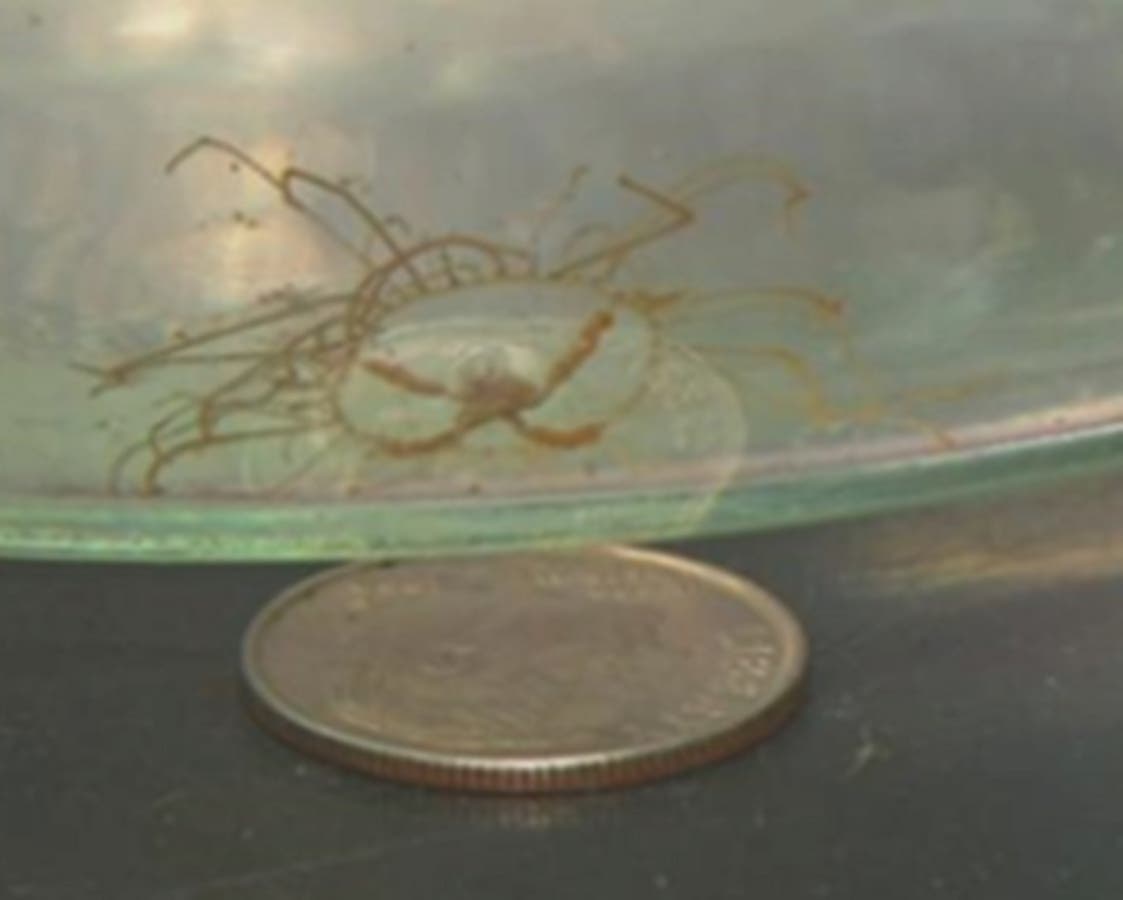

BRICK, NJ — If you love to swim in the Metedeconk River, you may want to be careful for a while: state officials say a clinging jellyfish with a powerful sting has shown up in the river.
The clinging jellyfish is not native to the Jersey Shore but is from the Pacific Ocean, and is small and difficult to spot in the water, the state Department of Environmental Protection said in a news release. A sting can produce severe pain and other localized symptoms and, in some cases, can result in hospitalization.
The clinging jellyfish is not known to inhabit ocean beaches or other sandy areas but tends to attach itself to submerged aquatic vegetation and algae in back bays and estuaries, the DEP said.
Find out what's happening in Brickfor free with the latest updates from Patch.
The clinging jellyfish was first confirmed in New Jersey in 2016 in the Manasquan River at the Point Pleasant Canal. The DEP has been working with Montclair University in studying them since; surveys in 2016 and 2017 found a single clinging jellyfish from the Manasquan River and did not detect the jellyfish outside isolated populations in the Shrewsbury River.
Montclair researchers this week confirmed the presence of about 15 clinging jellyfish of varying sizes off a private dock in the Metedeconk, which flows into the northern Barnegat Bay. Genetic testing is being conducted for final verification, and additional surveys for the jellyfish are being conducted. The jellyfish was found on the inland side of Sandy Hook near Monmouth Beach.
Find out what's happening in Brickfor free with the latest updates from Patch.
Sea nettles, another type of jellyfish with a less powerful sting, are common in Barnegat Bay but are much larger. The clinging jellyfish ranges from the size of a dime to about the size of a quarter. It has a distinctive red, orange or violet cross across its middle.
Both the adult, or medusa, and polyp stages of the clinging jellyfish are capable of stinging, a mechanism the species uses to stun prey and to defend against predators. Each jellyfish can trail 60 to 90 tentacles that uncoil to about 3 inches long like sharp threads and emit painful neurotoxins. Clinging jellyfish primarily feed on zooplankton.
The DEP encourages the public to use common sense and caution during recreation in areas where the jellyfish are suspected. Anyone wading through these areas, especially near aquatic vegetation, should take precautions, such as wearing boots or waders to protect themselves. Swimming near lifeguarded beaches is always encouraged.
In addition to the Metedeconk River, the DEP reminds recreational users of the Shrewsbury and Manasquan rivers to be alert to its possible presence.
If you or someone with you is stung by a clinging jellyfish:
- Apply white vinegar to the affected area to immobilize any remaining stinging cells.
- Rinse the area with salt water and remove any remaining tentacle materials using gloves or a thick towel.
- A hot compress or cold pack can then be applied to alleviate pain.
- If symptoms persist or pain increases instead of subsiding, seek prompt medical attention.
Clinging jellyfish do not swim or migrate but can be spread by boats and in ballast. They were first observed in the eastern Atlantic at Woods Hole, Mass. By the 1920s, they had spread to other waterways in Massachusetts and Connecticut, likely through introduction by ship ballast or from Pacific oysters containing polyps.
If you see a clinging jellyfish, do not try to capture it. Take a photograph if possible and send it to Dr. Paul Bologna at bolognap@mail.montclair.edu or Joseph Bilinski at joseph.bilinski@dep.nj.gov along with location information.
To learn more about clinging jellyfish, the DEP has a PowerPoint presentation (click here). There's also a fact sheet you can print and take with you. Click here for that pdf.
Clinging jellyfish photos provided by the NJ Department of Environmental Protection
Get more local news delivered straight to your inbox. Sign up for free Patch newsletters and alerts.