Schools
CPR Course Added to Graduation Requirements for Incoming Freshmen
Law signed Wednesday mandates all high school students receive training in life-saving technique


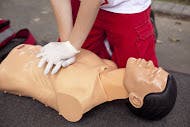
Incoming high school freshmen have a lot of things on their to-do list: Find their lockers. Remember clothes for gym class. Figure what they want to do in life.
Now, there’s one more item on that list: Pass CPR training.
A bill signed Wednesday by Lt. Gov. Kim Guadagno requires that all graduating high school seniors be able to pass a CPR course and know how to use an automated external defibrillator.
Find out what's happening in Brickfor free with the latest updates from Patch.
Senate bill S-235, which Guadagno signed as acting governor because Christie was out of state, was sponsored by Sen. Diane Allen of Burlington County, who said the ability to save a life is the most important skill students can be given.
The legislation takes effect starting with the 2014-2015 ninth-grade class, as part of the required health education curriculum, and provides that the training can be based on available free instructional programs, according to Allen’s website. Both the American Red Cross and American Heart Association urge widespread CPR education. The American Heart Association even offers basic CPR information through videos on its website.
Find out what's happening in Brickfor free with the latest updates from Patch.
The effort to educate students in CPR dovetails with a state law called Janet’s Law that requires every public school to have an AED available in an unlocked, marked place within the school and at least five school employees trained to use it. That law was signed in 2012 by Christie and is named for an 11-year-old cheerleader from Warren who died in 2006 from cardiac arrest.
Janet’s Law required school districts to have the AEDs and training in place by this Sept. 1, but most districts had put them in place prior to this summer. Janet’s Law also requires an emergency action plan for a cardiac incident, and EMTs or other first responders at all practices and events if trained school employees are not available.
New Jersey is among only three states with such requirements.
PHOTO: Shutterstock Images
Get more local news delivered straight to your inbox. Sign up for free Patch newsletters and alerts.