Politics & Government
This Isn't Your Grandma's Weed; Today's Marijuana Far More Potent, Speakers Say
In Brick forum against legalization, speakers say corporations seeking to profit from further addictions behind push for it



The video has gone viral on social media -- three older women, grandmothers, smoking marijuana for the first time, and apparently enjoying it.
It is part of the increasingly vocal push for the legalization of marijuana that is going on -- not only in New Jersey but throughout the country.
Dennis Malloy, co-host of the “Dennis and Judy Show” on 101.5 FM, told My9NJ that he believes people should have the right to choose whether or not to partake in drug use, as long as it doesn’t harm other people. You can see that interview here.
Find out what's happening in Brickfor free with the latest updates from Patch.
But the attitude of “if Grandma can do it, it must be safe,” is just one part of the argument cited by those opposing legalization, who say today’s pot is far more potent than the leaves Cheech and Chong rolled up in to blunts decades back.
At a forum at Brick Township High School recently that aimed to give information to parents and students about the issues surrounding the legalization of marijuana, potency of the drug was just one issue.
Find out what's happening in Brickfor free with the latest updates from Patch.
Legalizing marijuana won’t make other problems -- primarily mental illness and addiction -- go away, they said. If anything, all they will do is mask them. The issues of medical marijuana muddy the water further.
But what the average person doesn’t realize is that the push for legalization is coming from corporations that want nothing more than to make money off people’s addictions, they said.
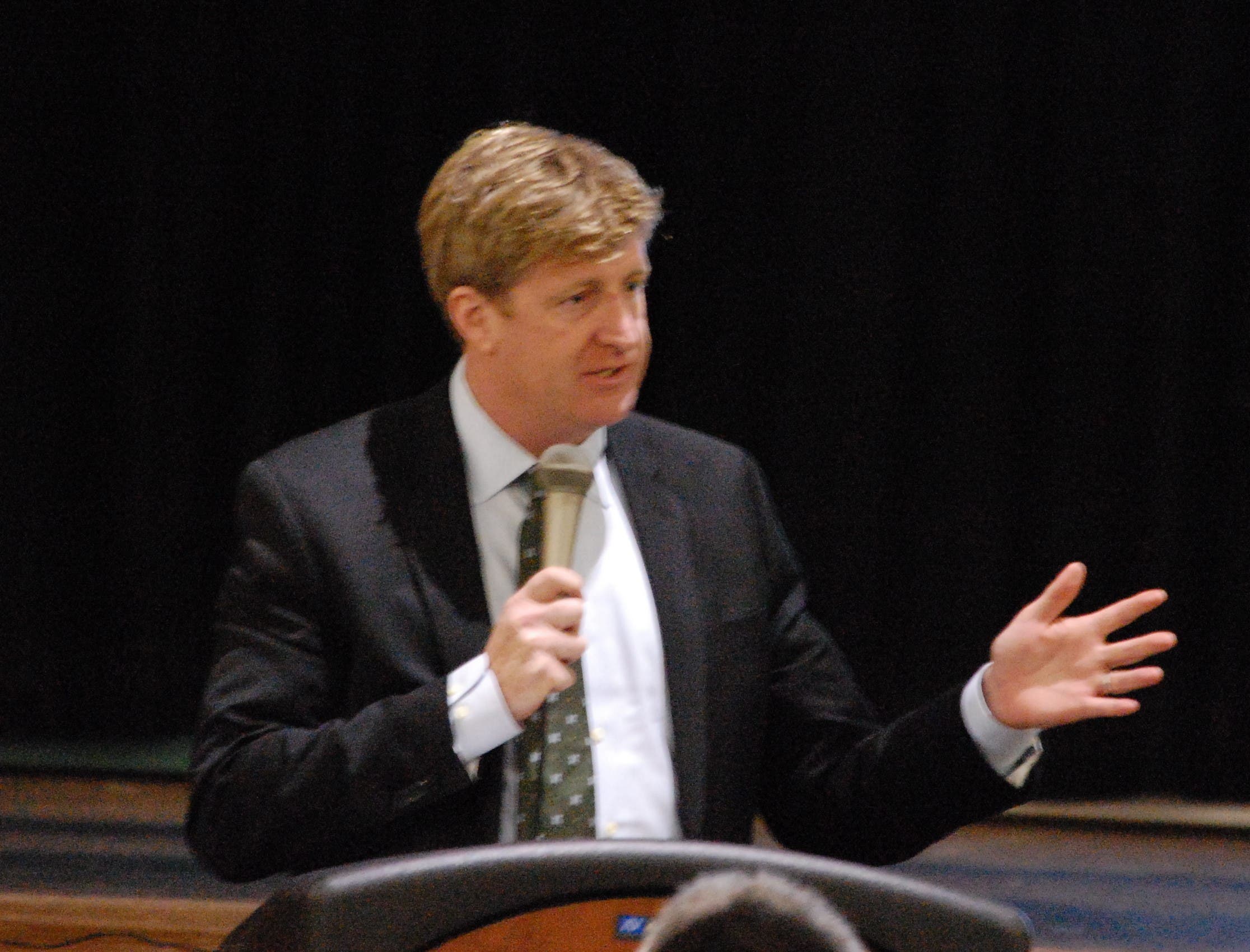
That is the bigger picture, said Dr. Kevin Sabet and Patrick Kennedy, the co-founders of Project SAM (Smart Approaches to Marijuana).
Kennedy pointed to alcohol as a prime example.
“They all tell us to drink responsibly,” said Kennedy, a recovering addict and the youngest son of former Massachusetts Sen. Edward Kennedy. “If we all drank responsibly, they’d have no money. Twenty percent of the drinkers are responsible for 80 percent of alcohol consumption.”
Sabet said the tobacco industry was trusted for years on its claims that tobacco wasn’t addictive; it was even marketed at one time as a cure for asthma.
“That same industry as late as 1999 was still saying it wasn’t sure tobacco is addictive,” Sabet said. Those putting big money behind the drive to legalize marijuana are no different than Big Tobacco, he said.
“It’s not about ex-hippies reliving their glory days,” Sabet said. “It’s about guys like me with MBAs trying to be the Phillip Morris of pot.”
They’re being helped along by the belief among the older generation -- those who were the hippies of the 1960s and ‘70s, and their children -- that marijuana is safe and mild.
“Our experience with marijuana was drastically different,” Sabet said. “It was 10 to 20 times lighter (in potency) back then than it is now.”
One in six people who smoke marijuana will become addicted to it, Sabet said, citing statistics from Medline, a publication of the National Institutes of Health. The risks are greater for teenagers, whose brains are still forming.
And like alcohol, being high on marijuana can affect your ability to drive and complete other tasks, he said.
The way people smoked their marijuana years ago was different, Sabet noted. The blunt-in-a-roach-clip has given way to teens using e-cigarettes and putting dabs -- a small piece of wax infused with THC, the chemical in marijuana that makes people high -- in them to smoke them. The dabs are as much as 98 percent THC, Sabet said, a far higher level of potency than the plant itself.
The higher levels are causing issues -- including severe reactions among people who are exposed to the higher-potency marijuana in places where it has been legalized, such as Colorado. There have been deaths attributable to its use, Sabet said, including a man who had a psychotic episode after eating a chocolate bar infused with marijuana oil.
“They say he didn’t read the directions, that he was only supposed to eat one sixteenth of it,” Sabet said. “Who buys a candy bar to eat one little piece?”
The other big piece of the acceptance puzzle, Kennedy said, is the willingness to seek a chemical solution for any kind of pain.
Kennedy said the acceptance of marijuana use stems in part from a growing willingness to take medication for any problem, whether it’s medicating children for perceived behavioral problems or “popping a cold beer” after a stressful week.
Kennedy, who has battled a drug addiction, said that willingness isn’t simply among those taking those medications; it’s among those prescribing as well. He recounted the story of visiting a new doctor, and despite telling him that he was a recovering addict, nearly got the doctor to prescribe him OxyContin -- a powerful opiate-based pain killer that is chemically similar to heroin and has played a role in the increase in heroin abuse in the United States.
“All of these have normalized the sense that these things (medicating the pain away) are OK,” Kennedy said.
The medical marijuana argument only adds fuel to the fire, and while Sabet said there are some compounds within marijuana that have been shown to help, he believes there are other ways to make those compounds available to those who need them.
“We don’t smoke any other medicine,” Sabet said.
Kennedy said marijuana will wind up like alcohol if it is legalized, with higher rates of use, higher rates of addiction and higher rates of addiction-related mental illness.
“Addiction and mental illness take more lives than car accidents,” Kennedy said, adding the money spent to treat mental illness is a pittance, and something done only grudgingly by insurance companies.
“They will give me all kinds of drugs to save me from a stroke and a heart attack, but they (health care providers) won’t ask about my recovery,” or the mental illness that he said is far more likely to kill him before he reaches old age.
Sabet said states that have legalized recreational marijuana use have already seen higher rates of its use. And despite claims of using taxes levied on the sale of marijuana for programs, the states that have legalized haven’t seen the dramatic boost to their coffers, Sabet said, because drug dealers are selling it at a much lower price with very little fear of legal consequences.
And right behind them are companies lining up to make profits. One company, named Privateer Holdings, is an equity firm owned by three men with MBAs that is helping to push legalization of marijuana.
“It’s legal in Washington state where they were doing it and even though I don’t partake, I’m all for the legalization of all drugs,” Dennis Malloy told My9NJ. “If you’re an adult, you should be able to do to your body whatever you want to do. You can’t drive, or do anything else that would cause harm to other people, but why not? Even though I don’t partake, I’m passionate about liberty and about allowing you to do whatever.”
Ocean County Prosecutor Joseph Coronato, who along with Acting Monmouth County Prosecutor Christopher Gramiccioni spoke at the forum, said policing issues -- including how to quantify whether someone is impaired from smoking marijuana before driving -- are complexities that have to be answered.
“Will we start randomly testing everyone for it?” he asked, such as pilots, bus drivers, taxi drivers and others. “We are going to lose some of our rights,” in the process, Coronato said.
“Legalizing marijuana is all about money,” Sabet said. “We pushed out, kicked out the tobacco companies, but now we’re welcoming something just as insidious.”
Get more local news delivered straight to your inbox. Sign up for free Patch newsletters and alerts.