Politics & Government
Just Make Cuts: One Man's Take On Brick's $25M School Aid Dilemma
The state issued final figures on Friday for 2018-19, just six weeks before the start of the school year.


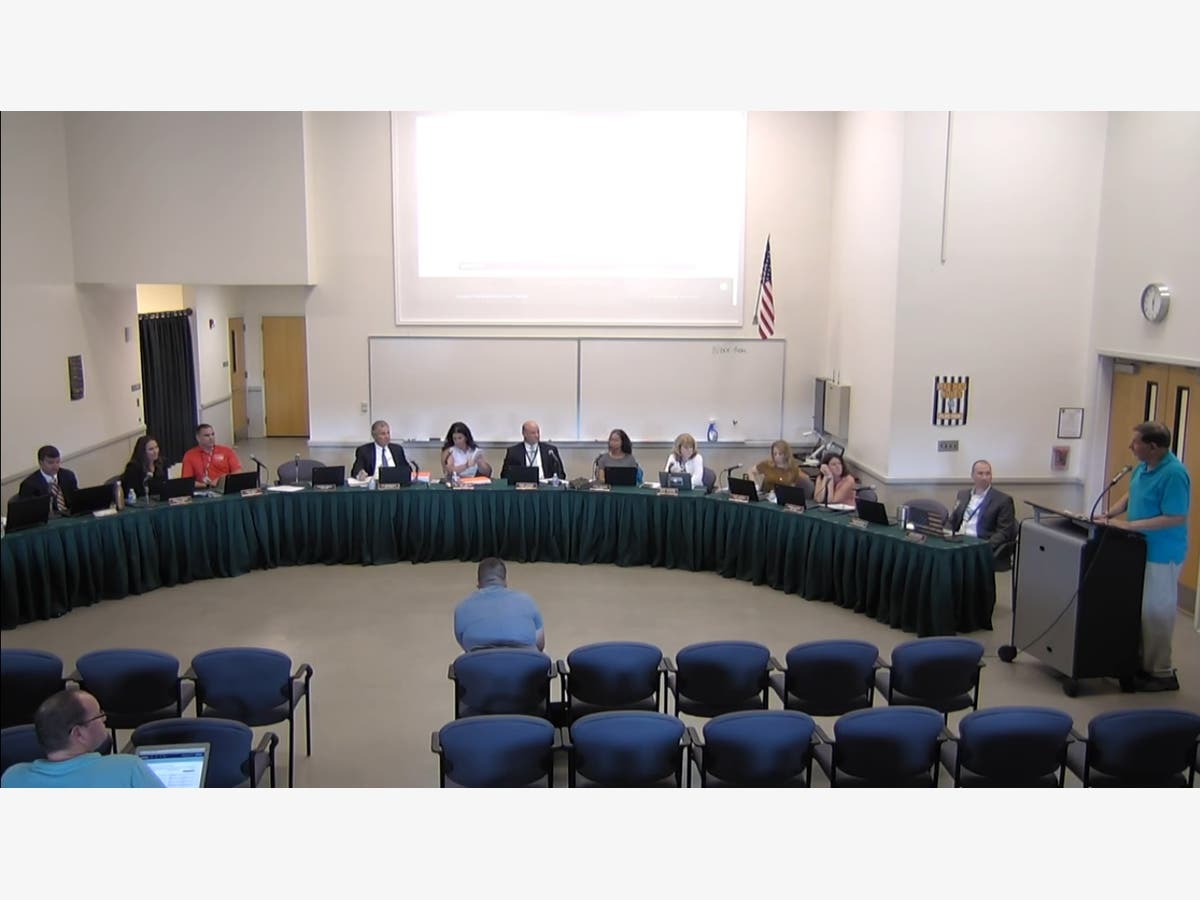
BRICK, NJ — For anyone who attends Brick Township school board or council meetings often, Victor Fanelli is a familiar figure. He has one main message and presses it at every opportunity: Cut property taxes.
In a township where more than 18,000 of its 75,000 residents are senior citizens, Fanelli speaks from the perspective of those faced with the challenge of covering their bills with pensions and Social Security as costs of everything from prescriptions to gasoline rise. And it's a message he especially repeats at the monthly school board meetings. "You have to make cuts," he says.
With the announcement Friday by state officials the Brick Township School District is going to see a $1.9 million cut to its state aid this year, Fanelli may get his wish in the short term. But over the long haul? Property taxes for Brick residents will be going up.
Find out what's happening in Brickfor free with the latest updates from Patch.
The most recent figures on the potential cut in adjustment aid is $25 million over seven years, James Edwards, business administrator for the Brick schools said Thursday night. That includes a cut of $1,913,022, according to documents provided by the state to the school district. Though the state Department of Education website lists the cut at $1,162,224, that number does not include the $750,798 that was cut in the 2017-18 budget deal — money that was later restored to Brick following an appeal to the state.
"You are going to have to cut expenses somewhere," Fanelli said at the June 28 meeting. "You're looking at some serious numbers."
Find out what's happening in Brickfor free with the latest updates from Patch.
The other piece of Senate Bill S2 — which passed the Legislature in late June and as of Thursday remained unsigned by Gov. Phil Murphy — is a mandated increase in the tax levy in districts that have aid cut but whose budgets are "under adequacy," Edwards said, meaning the districts are not spending what a state formula defines as necessary for a thorough and efficient education.
That tax levy increase would be mandated at 2 percent per year until a district is at adequacy, Edwards said. The district's 2018-19 budget is $12 million below adequacy, he said. The net effect is property taxes will rise when the tax levy rises.
Senate Bill S2 would put into law cuts to adjustment aid for more than 100 districts around the state, a plan Senate President Steve Sweeney has been pushing hard since last year. Sweeney has sought to cut adjustment aid to districts receiving it on the premise that they are not paying their fair share of the tax burden of their schools, based on a complex formula under the School Funding Reform Act. The adjustment aid being cut from those districts is being redistributed to districts that are significantly underfunded, according to the bill.
The bill would distribute the cuts over a seven-year period. However, the 2018-19 school budgets settled in late April. The $1.9 million reduction in aid now is potentially chaotic. Because the budget was approved, and the tax rate set, raising the tax levy won't be a way to offset the cuts for this year.
"Under Governor Christie, New Jersey public schools were underfunded by a staggering $9 billion. Governor Murphy is committed to turning the page on years of neglect by beginning the ramp up to full funding of our public schools. The recent budget agreement also takes steps to bring fairness and balance to the school funding formula and the Governor looks forward to signing this legislation into law later this month," said Mahen Gunaratna, Murphy's communications director.
The delay in receiving the final figure has complicated other matters. The district's contract with the teachers' union expired June 30, and rumblings from the public have started at board meetings, where questions have been raised about why a new contract is not in place.
"We have to balance our appreciation for some of the best teachers around with how much we have available for our contract," Board President Stephanie Wohlrab said Friday after receiving the numbers. "We are spending a lot of time and effort getting the best value for our students and taxpayers in this whole process."
Fanelli's answer repeatedly — going back long before the current funding crisis — has been to make cuts. He insists staffing — salaries and benefits are the largest chunk of the school budget — needs to be reduced because enrollment has fallen. "We don't need this many teachers," he says.
The district's enrollment in 2010-11 was 10,495, including 534 half-day kindergarten students. For 2017-18, enrollment was 8,633, including 588 full-day kindergarten students. The population of "ungraded" students — students who are enrolled in special education programs in for significant behavioral or developmental disabilities — has risen from 492 in 2010-11 to 552 in 2017-18. Full-day kindergarten required more staff; self-contained classes for special needs students are smaller, and for the ones placed out of district, the tuition that must be paid by the district continues to rise.
At the June 28 meeting, Fanelli insisted the drop in enrollment demands a corresponding drop in teaching staff.
"You have 25 percent less students," Fanelli said. (The enrollment decrease is actually 17.7 percent.) "You haven't done your due diligence."
Dennis Filippone, who at the time was acting superintendent (Gerald Dalton took over as superintendent July 1) told Fanelli that the district has reduced positions, including 31 paraprofessionals who were cut for 2018-19 and 18 teacher vacancies due to retirements that are not being filled. Several requests for staffing to meet student demand and interest levels in certain subjects were turned down, he said.
And Filippone pushed back on Fanelli's insistence that the district has not cut enough, pointing out that there were budgets within the last five years where the tax increase was flat or only rose because of debt service.
Fanelli, however, insists that is not enough. The budget should be going down because of the falling enrollment, he insists.
The state sees it differently, however, which Wohlrab, Edwards and Filippone all have said.
"The state says we should be spending $128 million," Edwards said at the June 28 meeting. "We are spending $107 million."
"You people control and approve the money that gets spent," Fanelli said. "That's taxpayer money. And when you don't have enough you're going to come back to me and I don't want to give it to you."
Fanelli says the district has to make cuts, insisting the residents of the township cannot bear the stress of increased taxes, which he says will force more into foreclosure.
Nearly 1,300 homes out of roughly 35,000 in the township are in some level of foreclosure proceedings, according to the representative of ProChamps, the company hired by the township to register and track the ownership of properties in foreclosure so the township can press the owners, especially banks, to ensure abandoned homes aren't left to rot and fall apart.
"It's really unbelievable that you think you're going to pass all of this onto us," Fanelli said to the board at the June meeting.
"I agree with you," Wohlrab said. "It's infuriating because they are crippling us as school district and as a community."
Click here to get Patch email notifications on this or other local news articles or get Patch breaking news alerts sent right to your phone with our new app. Download here.
Note: This article has been updated to reflect the new aid figures released Friday afternoon by Gov. Phil Murphy's office.
Victor Fanelli (far right) addresses the school board at the June 28 Brick Township Board of Education meeting, via meeting video
Get more local news delivered straight to your inbox. Sign up for free Patch newsletters and alerts.