Politics & Government
MacArthur Town Hall: Affordable Care Act Repairs Can't Put 21M Most Vulnerable At Risk
Reiterating his stance, the Third District Republican vows to keep fighting for groups who would be most hurt by a blanket repeal.


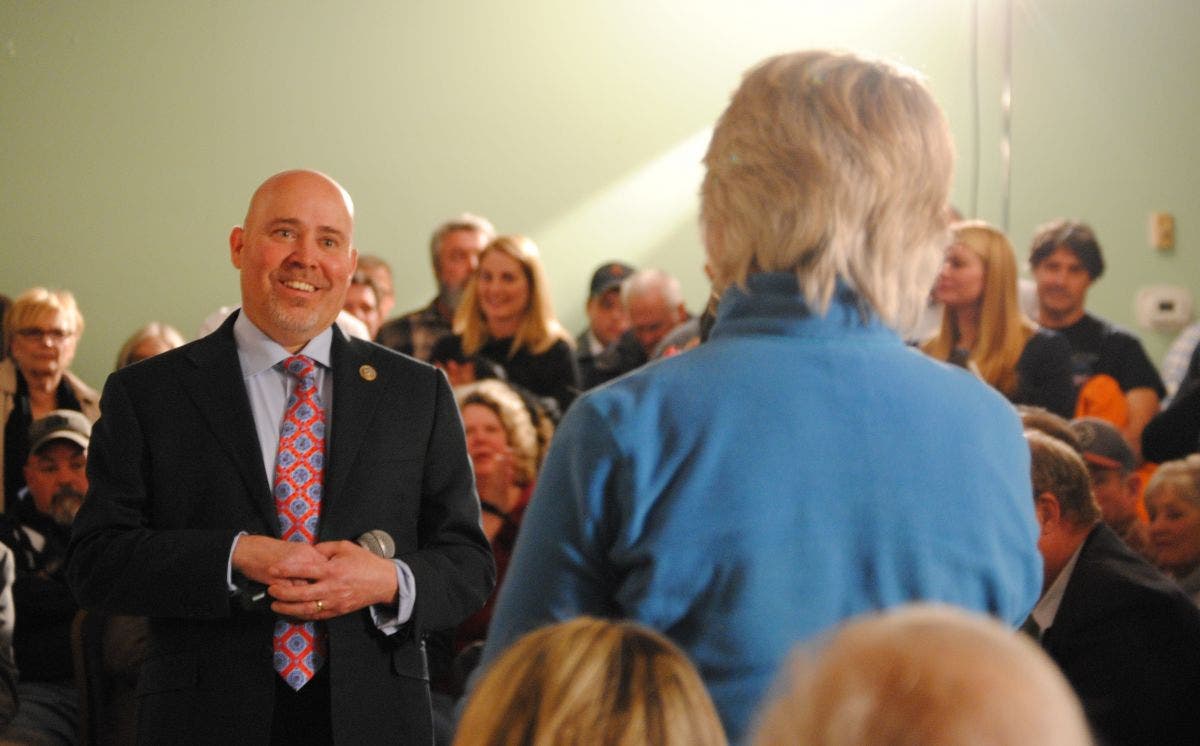
WARETOWN, NJ — It was more than an hour into his town hall meeting at the Waretown Volunteer Fire Company firehouse before Rep. Tom MacArthur faced his first question on the Affordable Care Act.
"I can't believe it's taken this long to be asked about it," said MacArthur, who represents New Jersey's Third District.
The Republican lawmaker was holding his first public town hall event in his district — a hastily announced event at the fire house, where he had met with constituents in the past. Before the November election, those crowds were mostly friendly. But in the wake of the election of President Donald J. Trump town hall meetings across the country have often been loud and unpleasant, as angry constituents demand answers and accountability from their members of Congress.
Find out what's happening in Brickfor free with the latest updates from Patch.
That led to claims that the events were being hijacked by paid protesters, and MacArthur, like many others, had refused to hold a public meeting, saying he didn't want to be part of one that turned into a YouTube moment.
>> RELATED: See video of Tom MacArthur's town hall here.
Find out what's happening in Brickfor free with the latest updates from Patch.
Most of the anger at those town halls was over Republican plans to repeal the Affordable Care Act, an effort that began just days after Trump took office with a vote in the House of Representatives.
On Monday night, the ACA came up after MacArthur was questioned about his stances on investigating ties between Trump and his staff and Russia, about education, and about the environment.
"This is probably the issue of our time," MacArthur said to the Medford woman who raised the issue. In New Jersey, 800,000 low-income residents have obtained health insurance under the act, according to New Jersey Spotlight, which cited a study by New Jersey Policy Perspective. A total repeal could have an impact of $4 billion on the state budget, NJ Policy Perspective said.
MacArthur, who on tele-town halls and on his monthly "Ask the Congressman" radio interview on WOBM has called the ACA a disaster, softened his criticism a bit Monday night, saying "even Republicans can admit it has done some good."
"It's done some things that are good and it's done some things that are not working so well," he said, noting that premiums and deductibles have skyrocketed. One woman in the crowd said she's paying $9,000 for her coverage.
MacArthur voted against the total repeal because he felt the process was moving too fast, he said.
"The health care system is too big to fix in a couple of months," he said.
MacArthur reiterated his commitment to ensure that people who gained coverage under the ACA and who were most at risk of losing it under a repeal would not be left in the cold.
"I have seen what it's like to struggle to pay medical bills," MacArthur said, again sharing the story of his father's struggles to pay medical bills incurred when his mother died of bone cancer when the lawmaker was 4 years old. And he shared the story of the plight of him and his wife after their daughter, Grace, was born with a rare disease that left them with $1 million in medical bills after she died at age 11. The couple also have two adopted sons who are both adults.
"It's not fair to put all of the burden on the 21 million most vulnerable in this situation," MacArthur said. "They're poor. They're working, but they make too much money to be eligible for Medicaid. I have made it crystal clear (to the Republican leadership) that if you try to pull the rug out from 21 million people, I can't support that."
Mark Callaghan of Bayville, who had spoken to MacArthur both by phone and after MacArthur's radio show at WOBM FM two weeks ago, read some of the details of the proposed replacement for the Affordable Care Act. That bill was revealed by the committee that had been working on it late Monday afternoon.
Among the provisions, Callaghan said, is a proposal to freeze Medicaid two years from now, and to extend the usage of health savings accounts to $13,000 so people can use that to purchase coverage.
"There are studies out that say roughly 50 percent of people wouldn't be able to afford a $2,000 charge to fix their transmission," Callaghan said. "How can people afford to put money aside (to buy health care) if they can't afford something like a major car repair?"
MacArthur expressed agreement, saying that while there are benefits in terms of the tax break people get from shielding income in a health care savings account, those accounts cannot be seen as the sole solution.
"There are people who use payday lenders to buy tomorrow's groceries, so the idea of putting away money to buy health care is potentially a pipe dream for those people," he said.
The Medicaid freeze proposed in the bill released Monday night is different from what was originally proposed, MacArthur said, but still needs work. The first proposal was to cut off Medicaid expansion in two years.
"The states would be on their own," he said. But that would mean there would be millions of people who would end up scrambling for solutions. "Giving people two years' notice that you're pulling the rug out doesn't really solve the problem."
He said the proposal to cut federal reimbursement to the states to 50 percent is a problem because it would create serious budget problems for states across the country when they're currently receiving 90 percent reimbursement.
"If we freeze at today's rates and the federal government pays 90 percent I can accept that," he said.
MacArthur said that one thing that is critically important is that the trend that he has seen in Congress where the majority party gives the minority party essentially no voice must stop.
"We have to work together," he said.
Photo by Karen Wall
Get more local news delivered straight to your inbox. Sign up for free Patch newsletters and alerts.