Politics & Government
Mixed Use Zoning Bill Strips Building Control From Towns, Mayors Say
Lawmakers say the temporary change is needed to meet housing demands. Towns say it would upend carefully crafted zoning and cause chaos.


NEW JERSEY — A bill that would allow developers to convert "underutilized" shopping malls and office buildings to mixed-use developments with housing is an unprecedented move to take local control from towns, town officials said.
The Senate bill, S2013, and its companion in the Assembly, A1294, would allow developers who want to turn empty office parks and retail centers — so-called "stranded assets" — into a mix of housing and commercial use, for a limited two-year timeframe.
Planning boards would be required to accept the mixed-use development applications as long as they meet the requirements of the bill, which include not expanding the footprint of the building and using properties that are at least 40 percent empty. No use variances would be necessary under the bill.
Find out what's happening in Brickfor free with the latest updates from Patch.
The lawmakers sponsoring the bills — Sen. Troy Singleton (D-7th District) and Assembly members Louis Greenwald (D-6th District), Clinton Calabrese (D-36th District), Raj Mukherji (D-33rd District), and Mila Jasey (D-27th District) — say the change is necessary to revitalize communities that are being stunted by what they say are outdated, rigid zoning regulations .
"In recent years, vacant retail and office parks have become eyesores and economic burdens to communities throughout the state," Singleton said. "By repurposing these outdated, unused spaces into mixed-use developments, we will be able to provide more new housing and economic growth opportunities in our communities."
Find out what's happening in Brickfor free with the latest updates from Patch.
"Our state must rethink its housing strategies and goals in order to provide residents with more housing options," Greenwald said. "The millions of square feet of vacant office parks and retail centers throughout New Jersey are ripe for redevelopment. Incentivizing developers to convert them into mixed-use communities would increase our state’s housing supply and lower real estate prices to help us achieve our affordability goals."
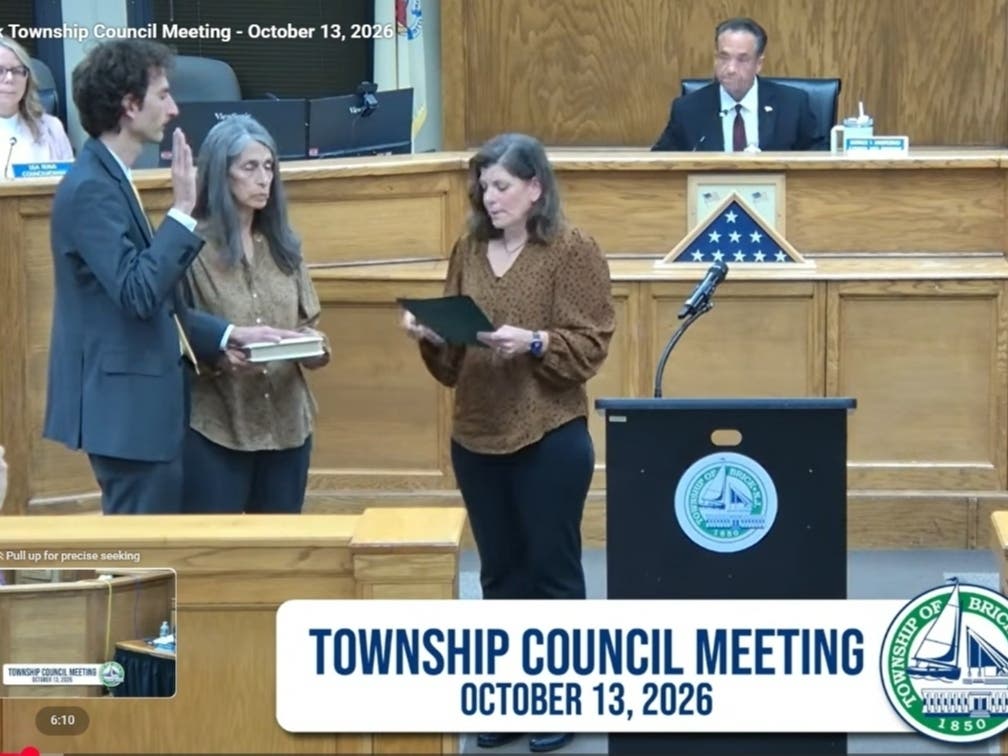
Brick Township Mayor John G. Ducey said the bill strips the ability of towns to manage development in a way that makes sense for their local area.
"We're trying to push back on any kind of development," Ducey said Wednesday, after the Brick Township Council approved a resolution opposing the bills. "This will add to the population. Our roads can't handle it now."
Brick Township has a citizens' committee named the Brick Open Space Savers, which has been working to identify open space areas that the town can then preserve through the use of open space funds. It was created, Ducey said, to try to pick off parcels and preserve them before developers buy them to build homes.
If commercial properties were opened up to residential development it would open a can of worms that Brick officials would be unable to do anything about, Ducey said.
"We have a large commercial district. If that could suddenly be converted to housing without the board’s input or residents' input, the overcrowding on the town would be unbearable," he said.
Manchester Township Mayor Robert Hudak, who is the assistant township planner in Toms River since February 2020 and worked for a private firm before that, says the proposed law would put a "severe stranglehold" on the township because of the required services, infrastructure, and utilities that would be needed to support the additional housing.
"Manchester’s drinking water is operated by the Manchester Township Water Utility with 10 wells, seven which draw from the Kirkwood-Cohansey Aquifer, and three which draw from the Potomac-Raritan-Magothy," Hudak wrote in a letter to Senate President Nick Scutari, urging him to not post the bill.
"Our township is already approaching our state-imposed water allocation limits in our eastern region which is located in the CAFRA section of the township," Hudak wrote. "To require additional mixed use developments in our town without any say from the township, our system would need additional water capacity as well as the infrastructure to meet that new capacity."
Hudak said the bill "completely undermines all of the careful consideration and planning
that goes into municipal zoning efforts and gives predatory developers a 'right' to invalidate the say of the people."
The bill says the driving force behind the mixed-use proposal is the changing demographics of the country, in particular, millennials and Gen Z, and the changes they are bringing to the work world.
"Millennials are driving these changes because there are so many of them," the text of the billsays. "People between 20 and 36 years old outnumber every other generation in the country. Businesses want to hire them, sell to them, or both. While in a former day, it was common for employees to relocate to secure employment, today it is more and more common for companies to relocate to areas in which millennials want to live, work, and play."
That means a shift from the suburban lifestyles of the 1970s, '80s and '90s to a more urban landscape: "Density, walkability, public transit, work-life balance, and urban amenities have grown significantly as quality-of-life locational attractions," the bill says, quoting a 2015 study by Rutgers professors James W. Hughes and Joseph J. Seneca.
"Single-use zoning ordinances often 'unintentionally stand in the way of providing developers, employers, and workers the types of modern spaces they desire,' therefore, 'inhibiting a community's economic competitiveness,' " the bill says, quoting the PlanSmart NJ 2016 report.
The legislation says an office park must be at least 50,000 square feet and a retail center at least 15,000 square feet, with a vacancy rate of at least 40 percent, to qualify for conversion to mixed use. It would have to reuse the existing buildings without expanding the square footage, or redevelop it without expanding the square footage that occupied the site.
If it proposes new residential units, at least 20 percent constructed for owner-occupancy and at least 15 percent of rentals would have to be reserved as low-income, very low-income or moderate-income housing.
Planning boards would be able to grant conditional approvals that set requirements for parking, water supply, sanitary sewer capacity, storm water management, and other typical zoning rules, with "the greatest height and least restrictive setback limitations allowed within the zoning district" under a community's ordinances.
"The legislation basically takes away home rule," said Janet Castro, the township administrator in North Bergen, whose Board of Commissioners passed a resolution opposing the bill, the Hudson Reporter reported. "We have home rule. We approve our own project, we approve our own zoning. ... This in essence, the legislation, takes that away from us."
"Manchester Township takes pride in its carefully planned zoning ordinances and allowances being that we are in the heart of the Pinelands," Hudak wrote in his letter to Scutari, noting that much of the township's 82 square miles are protected because of the sensitivity of the Pinelands.
The legislation would handcuff the town in its efforts to protect those sensitive areas, he said.
Ducey said the legislation, which is opposed by the League of Municipalities, would turn zoning upside down and could have an impact on towns' affordable housing obligations down the line.
"I assume that if you’re part of that Fair Housing Council, that (the legislation) would increase everyone’s obligation," Ducey said. "When they review it now, it looks at only residential zoning. This would change that equation" because of the potential for commercial zones to become mixed use, he said.
"They want to turn not only our town but the state into one big city," Ducey said.
Get more local news delivered straight to your inbox. Sign up for free Patch newsletters and alerts.