Neighbor News
Moonrise, Douglas Island, Alaska
The weekly photograph from Colin Seitz, Fine Art Landscape Photographer

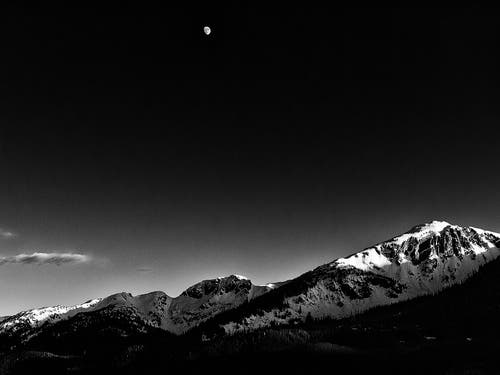
I have mentioned in my writings a few times about Alaska, and its beauty, so it’s about time I shared a photograph and story specifically about it. One of my favorite things to include in a photograph is the rising moon. There is something fascinating about this event that always has me aware of the moon cycles. I made this photograph while on a trip in Alaska in May. Most of the snow at the higher elevations was still on the mountains at this time, and I was that told the snow line while we were there was around 1,500 feet up, so that gives some idea of scale and elevation in the photograph.
I was in Juneau when I made the photograph, looking across at Douglas Island. I had watched as the moon slowly climbed, gaining in altitude. Simultaneously, the sun continued its path lower and lower in the sky, gradually softening the light across the mountains to where it was just painting the top of the mountain. I quickly made the exposure, and then made a few more. I wanted to be sure that I captured this moment, fearing that if I only made one exposure, something would be wrong with it.
Douglas Island, while an island now, will not always remain an island. A few miles upstream, the waterway that separates Juneau and Douglas Island, Gastineau Channel, is fed partially by the run off from Mendenhall Glacier. As the glacier moves over land, it slowly grinds up small bits of the surface that it passes over, and these small bits of minerals and rock add to the glacier. The end result when looking at a glacially carved canyon or fjord are identifiable lines and groves put into the surfaces. The glacier carries with it all of these small pieces, however, as the glacier melts, the sediment that has been gathered by years and years of slow grinding over the surfaces of rock falls into the solution of water that the glacier has melted into. Many who have seen a location where a glacier meets the water will note that the water has an emerald green color to it. This is a direct result of the minerals from the glacier going into the water.
Find out what's happening in Brickfor free with the latest updates from Patch.
The minerals, not quite heavy enough to sink to the bottom, drift off with the flow of water, eventually finding their rest sometimes a great ways away from where they entered the water. It is this sediment that is slowly making its way through the narrow waterway that divides Douglas Island and Juneau. Over time, this sediment has reduced the depth of Gastineau Channel, and scientists believe it will eventually link Juneau and Douglas Island. (Juneau, Alaska’s state capital does not have any roads connecting it to the larger expanse of Alaksa, or the lower 48, and it is the second largest city in the US by size). I have a friend who for years, flew tourists in Juneau to Mendenhall Glacier, and he has several photographs of around 10 years ago of the area. When I compared the glacier with the photographs I made of the glacier (a good topic for another post) the difference in size was certainly notable.
As a reminder, my freshly produced 2015 calendars are now available on my website, (http://www.colinseitzphotography.com/) as are notecards, newly added canvas prints, as well as my gallery quality matted prints. Please mark the date of my solo show, “The Beauty That Surrounds Us” on your calendars, the opening will be December 12th, 2014 from 7-10 PM at McKay Imaging in Red Bank NJ.