Politics & Government
NJ Coastal Floods Will Get More Frequent By 2030, NOAA, NASA Say
High-tide flooding has doubled since 2000, scientists say; the moon's orbit will cause them more often and for longer duration by 2030.


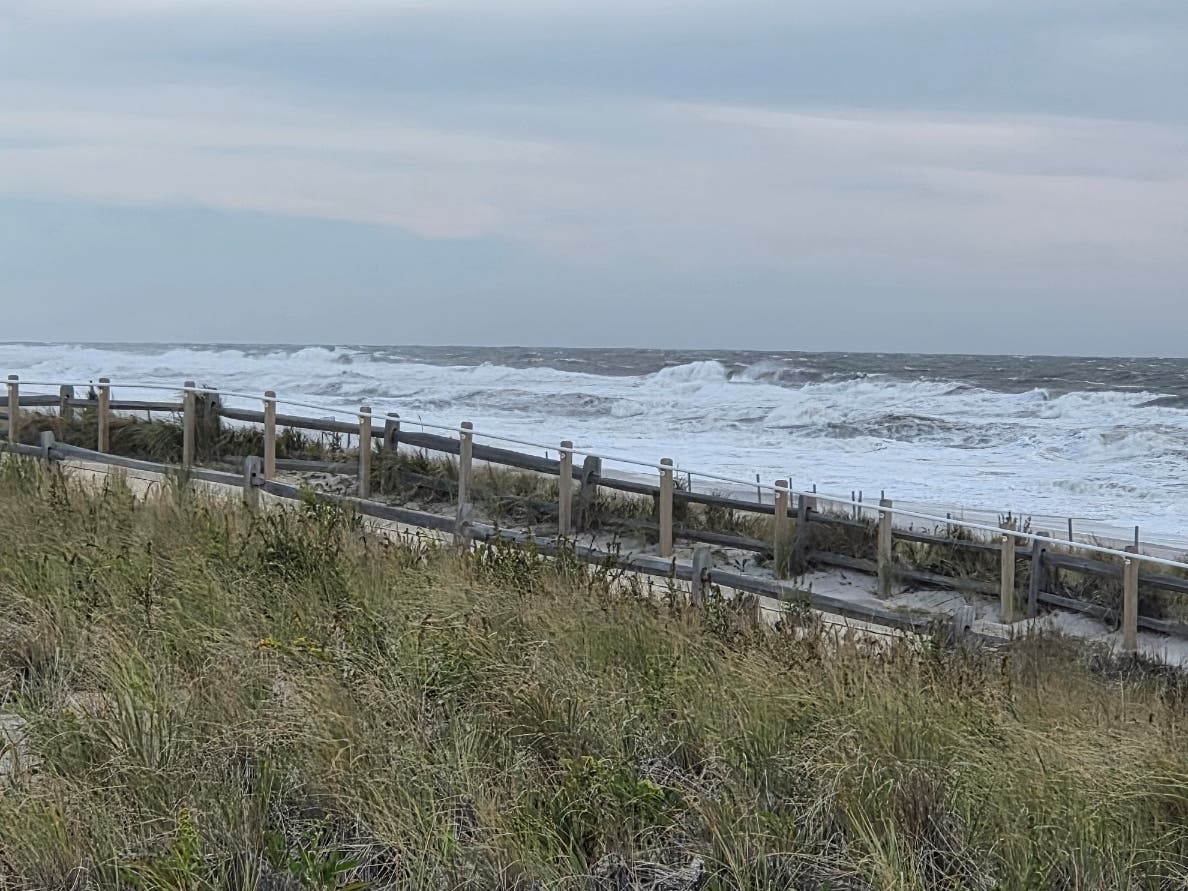
BRICK, NJ — For the residents of the Normandy Beach section of Brick, flooded streets are a regular occurrence. Nor’easter? Flooding. Heavy rain? Flooding. High tide on a sunny day? Yes, flooding.
Storms draw attention because the water levels rise significantly, flooding streets enough that police bring in vehicles that sit high above the water, to help residents get to and from their homes.
Residents have complained repeatedly to township officials about the problems, which they say have gotten worse since Superstorm Sandy ripped through the barrier peninsula.
Find out what's happening in Brickfor free with the latest updates from Patch.
"It has gotten to the point that prolonged flooding occurs every month during the full moon and new moon and the residents are understandably upset," Brick Township Mayor John G. Ducey said in November, when the township received a grant for a street elevation project.
A pair of reports confirm that and say it’s going to get worse, particularly after 2030 due to a combination of rising sea levels and normal shift in the moon’s orbit.
Find out what's happening in Brickfor free with the latest updates from Patch.
An annual report by the National Oceanic and Atmospheric Administration found high-tide flooding from May 2020 to April 2021 happened twice as often as it did 20 years ago. High-tide flooding happens when tides are anywhere from 1.75 to 2 feet above the daily average and start covering roads or coming up from storm drains. The report looks at results from 97 gauges at coastal sites around the country.
For example, gauges at Sandy Hook, Atlantic City and Cape May recorded five high-tide flooding days or fewer in 2000. In 2020, Sandy Hook and Atlantic City each recorded 11 high-tide flooding days. Cape May had 4.
“The number of high tide flood events is now accelerating at 80 percent of NOAA water level stations along the East and Gulf Coasts,” the NOAA report said.
By 2030, there are expected to be 7 to 15 days of high tide events and by 2050, 25 to 75 days — 2-½ months of days where high tides are enough to flood streets, the report said.
The increase in flood events by 2050 will start in the mid-2030s due to a combination of rising sea levels and a lunar cycle that pulls high tides even higher,, a NASA study said. Additionally, they will last for more days in a row because of the alignments of the Earth, moon and sun.
The NASA report said the lunar effect is the result of a “wobble” in the moon’s orbit that lasts 18.6 years and was first reported in 1728.
The wobble increases high tides for half of the 18.6-year cycle, and that combined with rising sea levels will make the high-tide flooding significantly more frequent and more damaging.
“It’s the accumulated effect over time that will have an impact,” said Phil Thompson, an assistant professor at the University of Hawaii and the lead author of the new study, published this month in Nature Climate Change. “If it floods 10 or 15 times a month, a business can’t keep operating with its parking lot under water. People lose their jobs because they can’t get to work. Seeping cesspools become a public health issue.”
In Normandy Beach, officials in Brick and Toms River are working with federal agencies on a street elevation project to try to alleviate the flooding. Brick Township officials have been trying to keep the floodwater from Barnegat Bay off streets through the installation of valves at various street ends in the meantime.
But it has been a slow process, as officials try to address flooding issues in several coastal parts of Brick, which has the most waterfront property in New Jersey.
"We have over 12 neighborhoods where this is happening,” business administrator Joanne Bergin has said. “It's not just a Normandy Beach issue.”
"Regardless of the factors causing this flooding, we have an obligation to do what we can to address and mitigate the problem and help protect the quality of life for our residents," Ducey said.
Click here to get Patch email notifications, or download our app to have breaking news alerts sent right to your phone. Have a news tip? Email karen.wall@patch.com
Get more local news delivered straight to your inbox. Sign up for free Patch newsletters and alerts.