Politics & Government
Opinion: Transparency A Growing Problem With Brick School Board
Board attorney says the agenda doesn't have to include documentation based on a court ruling, but is that fair to the public?


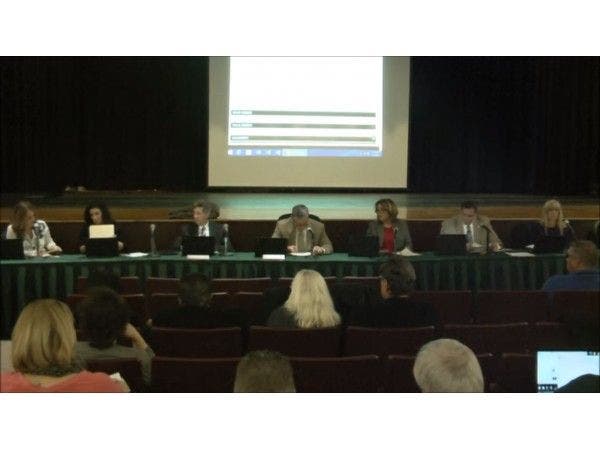
BRICK, NJ — Last January, four people took seats on the Brick Township Board of Education that were won on the premise that previous boards were not being held accountable for their decisions.
Those members swept away most of the professionals in the district in a scorched earth move right after being seated on the board, putting in place professionals who were more to their liking.
That move set the tone for the entire year, and increasingly that tone has been one of not being forthcoming with the taxpayers about how their money is being spent.
Find out what's happening in Brickfor free with the latest updates from Patch.
From the lack of publication of the full proposed budget until after the board approved it to Thursday night's agenda, where a number of agreements were not included with the agenda on the argument that they were contracts considered to be "in negotiation" until the board approved them, transparency on the issue of how money is being spent has been a massive failing of the Brick school district in the last 12 months.
It was the lack of inclusion of information on an "Appeals Program Addendum Agreement with Caremark/CVS" that prompted an argument about transparency Thursday night, with board member Karyn Cusanelli questioning the reason the agreement document was left off the agenda.
Find out what's happening in Brickfor free with the latest updates from Patch.
Business administrator James Edwards said the document had been omitted on the premise that it was a still-negotiable contract. It's a categorization that has been applied repeatedly to various agreements of late, and Edwards has said the reasoning is based in part on advice the board received during staff contract negotiations last year from labor attorney Paul C. Kalac of the law firm Schwartz, Simon, Edelstein and Celso, of Whippany.
Board Attorney Nicholas Montenegro on Thursday night said a state Supreme Court ruling in a case involving the Midland Park School District said districts are not required to put every single supporting document on an agenda under the Open Public Meetings Act.
Not required. That's like saying I'm not required to wear my glasses to drive because my driver's license doesn't have that restriction, even though I know I need them to see street signs clearly.
The Open Public Meetings Act is about being transparent with the public about how their money is being spent. Transparency in our government is a huge problem at any level. It's not just about the documentation — though there are school boards and municipalities throughout Ocean County that are lax about making information readily available to the public. Sit through one school board meeting in any town, or through one township council or committee meeting, and the jargon and acronyms will not only leave your head spinning but leave you wondering what just really happened.
Brick, as one of the largest school districts in Ocean County, owes it to the township's residents to be more open, more transparent, not less open or transparent. Is the concern that members of the public will get up and question the minutiae of the various agreements? Well, gee, that's too bad. That's the role of the public, to ask questions about what its leaders are doing at every level, regardless of what political party or agenda they have.
What is even more disturbing is the response of some on the board to the questioning about the lack of documentation and transparency. When Cusanelli asked about the lack of information on the CVS appeals agreement, Victoria Pakala, who heads the finance committee, said she personally had no questions about it and thought it was fine to proceed.
Yet it was Pakala who, during her 2015 election campaign, repeatedly berated the school board over its lack of due diligence in the hiring of Andrew Morgan, who worked briefly as the district's interim director of special education, waving copies of a New York Times article from 1989 othat she and her supporters said was "easily Googled" if the board had only taken the time to do so.
It was Pakala who repeatedly ripped the previous board over the continuing employment of suspended superintendent Walter Uszenski, demanding the board fire him based on the criminal charges pending against him and refusing to listen to any discussion of why it was not in the best interest of the taxpayers — who would be faced with paying for a potential lawsuit if Uszenski is cleared of the misconduct charges against him.
Yet when Board President John Lamela moved to go to executive session to provide answers to Cusanelli's questions on the CVS agreement, Pakala voted no. Why? She ripped the previous board for a lack of due diligence but now believes it is OK to keep information and clarification from fellow board members.
Lest anyone forget the lessons learned one town to the south, a lack of transparency and understanding by board members can translate into millions of dollars being stolen from the public. Michael Ritacco, as superintendent of the Toms River Regional School District, pocketed millions through insurance contracts that the board and the public never checked closely. Six years after his arrest and more than four years since he was sent to prison, the Toms River schools are still grappling with the impact of that lack of transparency.
Interestingly, the debate about transparency has been thick in recent days as Gov. Chris Christie tried to ram a bill through the state Legislature that would repeal the law requiring the publication of legal notices in newspapers. Christie tried to claim it was about saving the taxpayers money but anyone who really believes that needs to make sure their eyeglass prescription is up to date.
There have been those in the digital media who argued it's time to get with the times and move all of that information to a digital format, and that local governments should be trusted to be transparent and post information. Yet when you have a public body that's choosing to not publish documents online because they're not required to, how can you really believe they will be committed to transparency if they go digital with legal notices?
Transparency cuts both ways, folks. Everyone needs to be held accountable and equally so. Holding one side accountable but then refusing to be accountable yourself is the ultimate in hypocrisy.
And Brick residents from all sides had best be paying attention.
Four new members were sworn to the Brick Board of Education last January. Transparency in the district's dealings has decreased in the months since. Karen Wall photo
Get more local news delivered straight to your inbox. Sign up for free Patch newsletters and alerts.