Politics & Government
Porous Pavement Concerns Dominate Breton Woods Hearing In Brick
The hearing on the application to build 59 homes on a 30-acre site in the Breton Woods section is continuing at an August meeting.


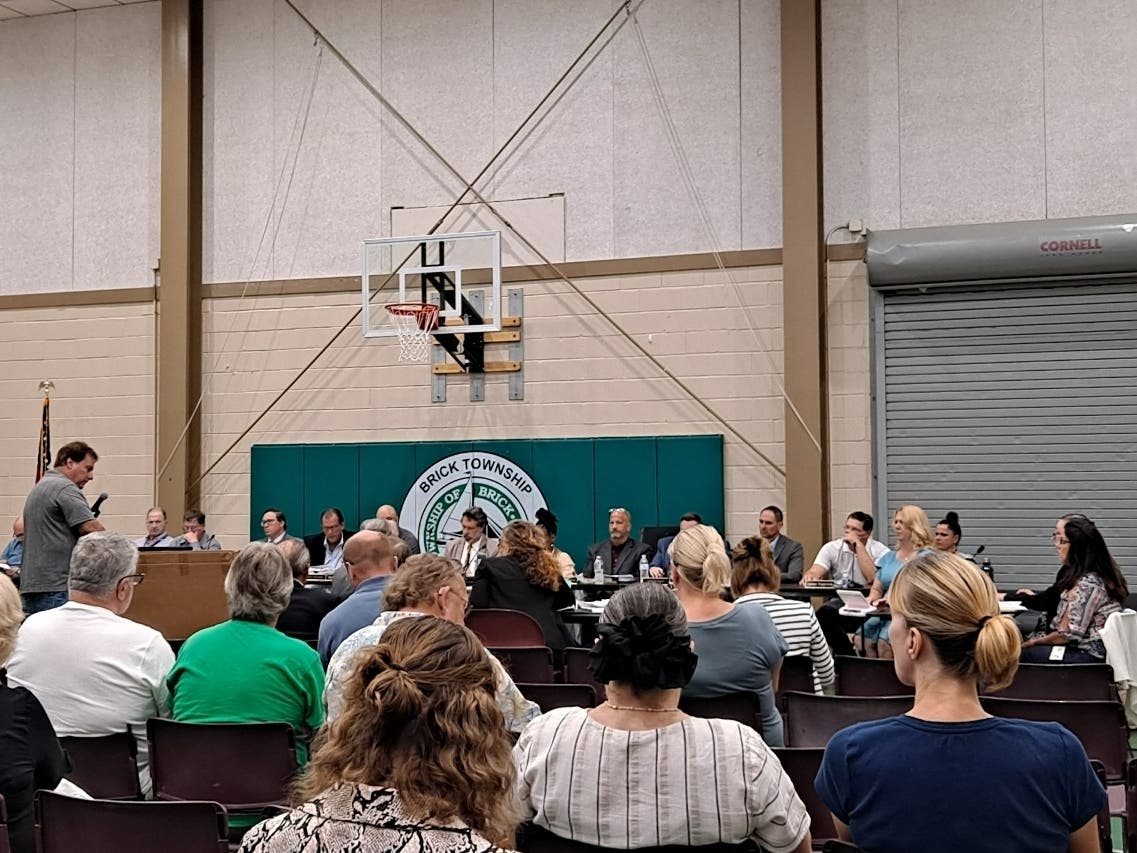
BRICK, NJ — Residents' questions about plans to manage stormwater runoff from a 59-home development proposed in the Breton Woods section consumed nearly four hours Monday night before the Brick Township Planning Board.
The application by D.R. Horton to build the homes on a 30-acre site off Laurel Avenue in the Breton Woods section is scheduled to continue on Aug. 22, at 7 p.m. at Civic Plaza, 270 Chambers Bridge Road.
On Monday night, the stormwater concerns focused heavily on the developer's proposal to use porous pavement on the streets of the development, which D.R. Horton intends to turn over to the township for maintenance after the development is completed.
Find out what's happening in Brickfor free with the latest updates from Patch.
Leanne Hoffman, the engineer for the proposed "The Havens at Metedeconk" of four- and five-bedroom homes, said the porous pavement is part of a new mandate for green infrastructure from the Department of Environmental Protection.
Porous pavement, also known as permeable pavement, allows rain water and melting snow to soak through it instead of simply running off the surface. The federal Environmental Protection Agency says permeable pavement allows "rain and snowmelt to seep through the surface down to underlying layers of soil and gravel. In addition to reducing the runoff from the rain that falls on them, permeable pavements can help filter out pollutants that contribute to water pollution."
Find out what's happening in Brickfor free with the latest updates from Patch.
"Permeable pavements can also reduce the need for road salt and reduce construction costs for residential and commercial development by reducing the need for some conventional drainage features," the EPA says.
The technology has been around for several years, but has not been used for any residential streets in New Jersey that she was aware of, Hoffman testified.
The use of it in the Breton Woods plan, as part of its stormwater management along with four infiltration basins, appears to be a first in the state. And the developer plans to turn over the streets to Brick Township for maintenance — which is more expensive and more detailed than simply maintaining regular asphalt, Hoffman said.
"You can't simply patch it with regular asphalt," she said in reply to a question about what happens if the porous pavement is damaged by snow plowing during the winter.
Hoffman said the porous pavement has been used on the Garden State Parkway to help control stormwater runoff, but in response to a question from Elissa Commins, Brick Township's engineer, said where the porous pavement has been installed, it's over a traditional road base.
The Breton Woods proposal would be a fully porous system, Hoffman has said. It's unclear how that system will hold up to the level of traffic seen in a residential development, based on Hoffman's replies to residents' questions.
"There is a strict maintenance schedule" that must be followed to maximize the life of the system on a road, she said.
The pavement has been used extensively for parking lots and other large paved areas.
Hoffman insisted the porous pavement was a requirement under new DEP rules about stormwater management, but Commins disagreed.
The BMP manual (best management practices) recommends traditional pavement for drive aisles, Commins said, and the use of the porous pavement on driveways.
"Based on that, you do not comply with the residential standards," Commins said.
"I'm not saying that," Hoffman said in reply, and Commins said, "That's not a question. That is my statement. I'm saying that."
John Giunco, attorney for D.R. Horton, said several times that the applicant has complied with the laws and ordinances governing the proposed development.
Hoffman's original design had 72 individual basins that the homeowners would have to maintain, but that was changed after Brick Township officials objected to the multiple small basins.
The infiltration basins have been a sore point as well, with concerns about what happens when children climb over the 4-foot fence into the basins. Three of the basins are 5 feet deep and the fourth is 7 feet deep, creating concerns about the ability of kids to get out if they find themselves in trouble.
It was unclear Monday night whether Commins' concerns about the potential safety issue had been addressed.
Hoffman, in response to a resident's question, said the stormwater plan contains the runoff within the site, rather than it running off onto neighboring properties.
"It's like a bowl," she said.
Stormwater runoff flooded dozens of homes in Greenbriar 1 in August 2019, leaving homeowners with thousands of dollars in repairs and no flood insurance to cover it because they had never been required to carry it as they were not in a flood plain.
It was unclear Monday night whether Commins' concerns about the potential safety issue had been addressed.
John Giunco, attorney for D.R. Horton, said several times that the applicant has complied with the laws and ordinances governing the proposed development.
Residents also expressed concerns about safety, controls on dirt and runoff during construction, and potential noise while students are in school at nearby Osbornville Elementary School, but board attorney Harold Hensel agreed with Giunco that those questions needed to be raised during the public comment portion after the applicant finishes presenting the project.
The project must also be approved by the Ocean County Planning Board, and is still in the early stages of that process, which will involve back and forth with Brick Township officials, who must sign off on changes from the Ocean County Planning Board.
One resident asked, somewhat tongue-in-cheek, if D.R. Horton would walk away from the project if the residents fundraised to cover the money the developer's expenses so far. The question drew laughs from the audience but no reply from Giunco.
The Aug. 22 hearing is scheduled to begin with testimony from Christine Nazzaro-Cofone, the planner on the project for D.R. Horton.
Get more local news delivered straight to your inbox. Sign up for free Patch newsletters and alerts.