Politics & Government
Resident Rips Brick Council, Mayor Over Solar Field Escrow Release
More should have been done to improve the contract, man says. Ducey says town did best it could after Acropolis failed to sign deal.


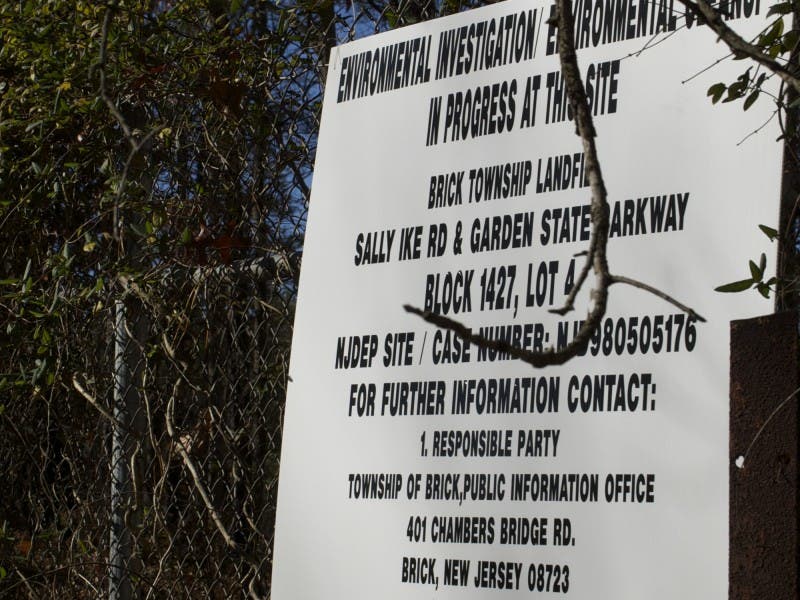
According to most people, the deal to turn French’s landfill into a solar field has not been a good one for Brick Township.
Since September, Mayor John Ducey has been saying the solar fields deal has cost the town $2.6 million. Residents, primary among them George Scott of Queen Ann Road, have questioned whether the town -- or more specifically taxpayers -- could be on the hook for substantially more.
At Tuesday’s Township Council meeting, the council voted to return $462,668.82 in funds to Brick Standard, the company operating the solar field. That money represents most of the remainder of a loan to Brick Standard and its parent company, Standard Alternative, to build the solar field.
Find out what's happening in Brickfor free with the latest updates from Patch.
“Brick Township borrowed $31 million in 2012 and loaned it to Brick Standard to build the solar project. At no time were the loan proceeds property of the township,” business administrator Joanne Bergin said by email on Tuesday. The township had custody of the funds only to ensure the solar array was built as promised, she said.
And under the contract signed with Standard Alternative in December 2011, the remainder of the money had to be returned once the solar field was producing energy. The field became active in October 2014.
Find out what's happening in Brickfor free with the latest updates from Patch.
Scott, who has followed the solar field project closely, took the council and Ducey to task, arguing they should have fought harder to renegotiate certain terms of that contract -- terms Scott has said are very unfavorable to the township. One in particular is a 3 percent escalation clause that allows Brick Standard to increase the rate yearly that it is charging Brick for the energy it buys from the solar field.
Brick is paying 8.5 cents per kilowatt hour for electricity from the solar field right now, Bergin said.
“The township missed an opportunity to get a better electric rate by holding off on (finalizing) the bonds,” Scott said. And returning the nearly $500,000 in loan proceeds merely seals the loss, he said.
The reason, he said, “is purely political.”
Ducey would agree that politics put the town in a bad spot with the solar contract. He has repeatedly laid the blame at the feet of former Mayor Stephen Acropolis, who failed to sign off on changes to the contract that were negotiated by the council in February and March 2012 -- a fact the council did not know until Ducey took over as mayor in January 2014.
Included in that renegotiation was an agreement that locked Standard Alternative into repaying the loan for the solar array at 4.5 percent interest, regardless of what rate the township paid for the bonds. In early 2012, officials said, Standard willingly agreed to that change, because of the uncertainty surrounding bond rates. But by 2014, when it was clear bond rates were staying low, Standard refused to revisit that. The company also refused to allow Ducey to sign off on the contract and make it binding, because he wasn’t mayor at the time.
“I tried signing it. I even scratched out (Acropolis’) name and put mine,” Ducey said. Standard refused to accept it, he said. The town considered litigiation, but in the end decided the chances of winning were outweighed by the potential legal costs.
It was the loss of that locked-in rate of 4.5 percent interest that Ducey said has cost the town $2.6 million, because the final bond sale when through for 2 percent interest for the first five years of the bond. Under the changes negotiated, the town would have received the difference between the 4.5 percent Standard had agreed to pay and the 2 percent, Ducey said, money the town will not see.
Ducey did say that the council never checked to see whether Acropolis had actually signed the revised contract after he threatened not to do so.
”The council passed a resolution authorizing and ordering him to execute the contract,” he said, which is normal operating procedure. No one ever thought Acropolis wouldn’t sign it, he said.
The field of solar panels was seen as one of the few things the former French’s Landfill -- a 42-acre tract on Sally Ike Road that is a former Superfund site, and is not marketable to developers who would build homes or businesses -- could host.
The landfill -- which had operated for 30 years, starting in the 1940s, accepting everything from septic waste to used motor oil -- was purchased by the township in 1973 and finally ceased operations in 1979, according to EPA documents. After several years of wrangling, the township took on the site remediation, spending $14 million to handle the capping of the landfill, which was completed in 2012.
Turning it into a solar field was seen as an attractive option for generating revenue by many municipalities in 2010-2011, with towns and cities across the state and the country jumping on projects. Part of the attractiveness was the production of SRECs -- solar renewable energy credits -- that a solar energy producer can sell and electricity suppliers, mainly utility companies, can purchase as part of New Jersey’s renewable energy program.
Part of it is the idea of reducing energy consumption costs. The Toms River Regional School District put solar panels on the roofs of all of the district’s schools and the Board of Education buildings in an effort to save on energy costs.
The solar panels are projected to reduce the town’s energy costs, though Ducey told the Asbury Park Press in January 2014 that the solar field could hamper the town’s ability to take part in an energy aggregation program -- the other current favorite among municipalities seeding to reduce costs.
Scott’s other criticism of the contract with Brick Standard is what he perceives as a lack of protection for the taxpayers with regard to liability for repayment of the bonds used to build the solar field, an amount that stands now at roughly $23.65 million.
Matt Jessup of from McManimon, Scotland & Baumann, LLC, the township’s redevelopment counsel, said there are six mechanisms in place to protect the taxpayers of Brick from being stuck footing the bill.
Jessup said those measures to ensure repayment of the $23.65 million are:
- The revenue stream from the solar field. The power purchase payments the town makes go directly to the bond trustee to repay the bonds
- The general oblication agreement between the town and Brick Standard, which gives the assets of Brick Standard, including the solar array, to the town if the bond payments are not made
- Sales of the SRECs. Brick Standard earns an energy credit for every 1,000 in kilowatt hours of energy the field produces, and those can be sold. Every dollar generated by those sales must be used to pay the bonds, Jessup said. That’s one reason the bond length is limited to 15 years, when the solar panels in theory reach the end of their lifespan.
- A letter of credit on demand, purchased by Brick Standard in the amount of $2.1 million -- the amount of one year’s worth of debt payments -- that if the developer defaults, is enough to buy the township time to find a solution to pay off the remainder of the loan. The letter of credit on demand is essentially a cash document, Jessup said, where the town can go to the bank involved -- in this case PNC -- and request the money secured by the letter.
- The value of the solar array itself, which the township and the Municipal Utilities Authority would make money on if it took over ownership.
- Federal money in the project, in the form of tax credits that Ironstate Development -- the parent company of Standard Alternative and of Brick Standard -- chose to take. Jessup said Ironstate can only take the tax credit if they pay the debt service. “If there’s a default, if there’s a recapture, they lose the tax credit,” Jessup said. The loss of that credit could be a multimillion-dollar impact for Ironstate, he said.
Scott expressed frustration that the escrow resolution was not listed on a draft agenda he had picked up the week before, saying it should have been on the agenda. Township attorney Kevin Starkey said the matter had been carried from the April 7 meeting just to give the town time to make sure the developer had done the things he was supposed to do, and that it was added formally to the agenda on the Friday preceding Tuesday’s meeting.
Scott said it should have been listed on the draft from the start, adding he would have prepared for the topic -- as he had in the past -- if he had realized it would be on the agenda, adding that town officials owed it to the taxpayers to give them more time to discuss the matter.
That was a sentiment echoed by Nan Coll of Greenbriar, a council meeting regular.
Coll urged the council to revert to separate caucus and public meetings, as were held until 2009, when the caucus and public meetings were combined.
“There’s not enough time to discuss things,” Coll said, adding that the limitation on public comment to five minutes didn’t allow enough time to delve into the issues.
The council did not comment on Coll’s request.
Get more local news delivered straight to your inbox. Sign up for free Patch newsletters and alerts.