Crime & Safety
Tonia's Son Had 9 Heroin Overdoses. She's Ready For The Next Time.
Tonia lives in the Jersey Shore, which has had a high number of heroin abuse cases - and she's trying to do something about it.


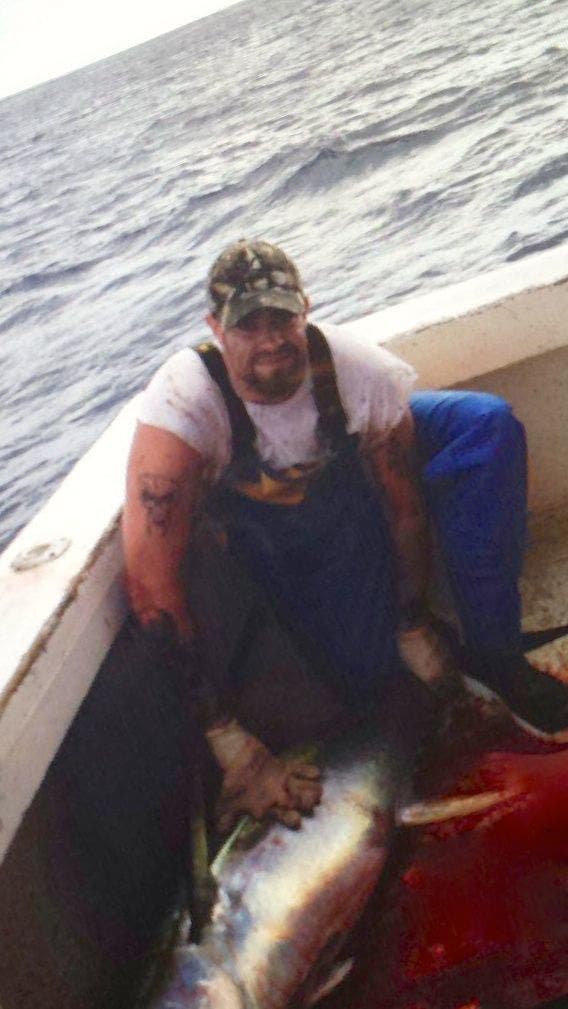
Tonia’s son, Roger, occasionally falls asleep in the car. He’s not driving; but it’s still a problem.
He’s high on heroin.
Next time it happens, Tonia could be asking herself: Is just sleeping?
Find out what's happening in Brickfor free with the latest updates from Patch.
Or Is he dead?
The 23-year-old already overdosed nine times, and Tonia personally saved him twice. Anything’s possible.
Find out what's happening in Brickfor free with the latest updates from Patch.
“He’s good right now,” said Tonia Ahern, saying her son’s been off heroin lately.
“But that’s just for today.”
Tonia and her son live in Cape May County. It’s known for Cape May and Ocean City, its peaceful beaches and summer skies.
The area’s not known for drugs. But that’s changed lately. Every year, Cape May County has the highest number of heroin abuse cases per capita in the state.
And where she is, Tonia says, “there’s just been a lot of death.”
She got tired of it, and she grew impatient with the lack of care and services afforded to her in the state’s southernmost county.
Tonia and others have created a grass-roots network that helps addicts and their parents navigate through drug treatment programs and - for the increasing number of people who can’t get off the drug - the criminal justice system.
“It’s a difficult problem,” she said. ”There’s a lack of treatment, and the worst part is the hopelessness.”
Tonia’s been dealing with the “crisis” of the moment for about a decade now. She grew so accustomed to it that she decided to reach out to others.
It came naturally, she said. She would run into others who had the same problem. They found her easy to talk to.
In many cases, she’s the only person they could talk to. In Cape May County, she said, there’s not much that’s readily available to help people deal with drug abuse, even as the heroin crisis has gotten worse.
“We have no detox, no in-patient programs in our county,” she said. ”We have to travel a distance to get recovery. We don’t have any treatment.”
Tonia didn’t become a doctor or a counselor, but she did decide that her personal experience could be put to good use.
She got a license as a recovery coach; now she finds herself on the phone with people - parents, especially - who are referred to her by the various recovery centers and help personnel available.
She volunteers with Parent-to-Parent, a nationwide support network that offers a core resource for families with children who have a special health care need, disability, or mental health issue.
With a lack of services around her, she’s become one of the organization’s first people to talk to when they need help in her area. And she’s also joined forces with other help organizations when they’ve held joint events and rallies in Washington D.C., and met people from as far away as Australia.
“It’s everywhere,” she said. “We have had people come in from everywhere.”
Many times, she’ll point people to the appropriate counseling agency, or even a treatment program that would be appropriate. She’ll help them navigate thought he whole system by asking questions, such as “Do you have insurance?”
Or if they can’t help where they are, she’ll ask them, “Can you go out-of-state?” if they can afford it.
Other times, she’ll just use her God-given abilities. She has done some training, working with a workbook online that teaches people like herself how to react. “Compassion and empathy are the best tools,” she said.
But she knows enough to avoid talking to people in a judgmental way. Most importantly, she knows how to listen.
“I had one woman who cried the entire phone call,” she said. “She calmed down, and then I talked to her. Then she started crying again because, she said, because she felt better.”
“A lot of times our families have just had enough,” she said. “When I talk to them, there is a lot of healing.“
But of all the cases, the one that confounds her the most, perhaps, is Roger.
As of now, she said, “we’re not in crisis mode.” But those moments can change like the wind.
Roger’s recovery comes in stages. Each time she talks to him, and employs the same tactics she uses others.
But, for Tonia, there’s still a sense of hopelessness. Each relapse, she said, Is “like going through post-traumatic stress.”
“He’ll be falling asleep in the car. We’ll say that to him, and he’ll wake up, and he’ll be like, ’You’re crazy. I’m not doing that.
“Then I say to myself, ‘He’s high,’ “ she said. “It’s like, here we go, all over again.”
She’s hoping he’s on the right track now. Usually, when he’s overdosed, he’s passed out, and didn’t know what hit him.
Last time was different.
“Tthe last time, they woke him and he couldn’t breathe,” she said. “That scared him.”
“People also told me they’re afraid to get high with him because he can be so over the top.”
The only thing she can do, she says, is tell herself the same thing she tells the people who go to her:
Never give up hope.
“He’s better than he was. I can’t force him to stop,” she said. “All I can do is give him the tools and hope he uses them.”
This story is part of an ongoing effort to report on the heroin problem in New Jersey. Here are some related stories:
Get more local news delivered straight to your inbox. Sign up for free Patch newsletters and alerts.