Politics & Government
Visitation Relief Center Had Serious Code Violations, Brick Officials Say
Archdiocese of Trenton closed the center after issues, including lack of certificate of occupancy, weren't addressed, officials said.


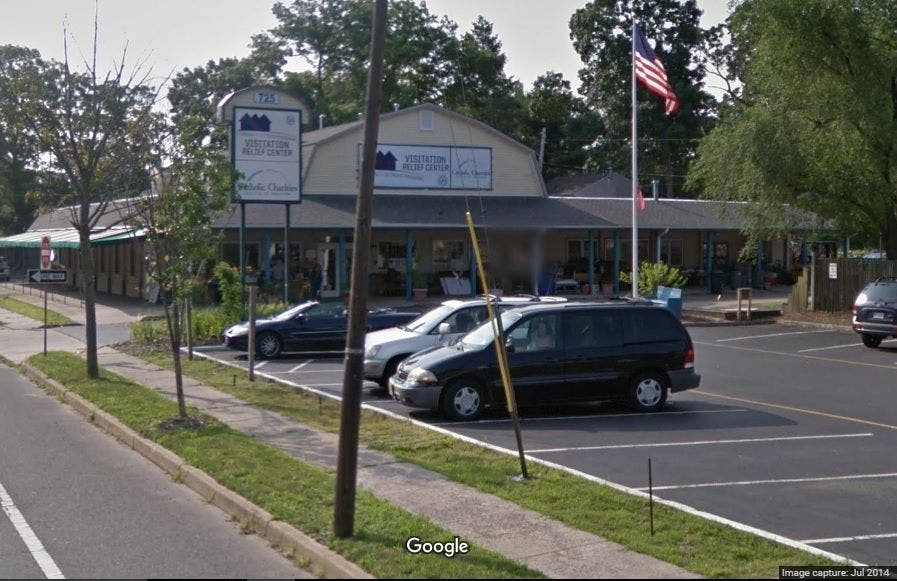
BRICK, NJ — Brick Township officials say serious safety issues that have resulted in the shutdown of the Visitation Relief Center had existed for nearly the entire time it had been in operation and were not corrected despite numerous contacts with the center's director.
Father Edward Blanchett of Visitation Roman Catholic Church late Monday afternoon said the Archdiocese of Trenton, which oversees the church, had decided to shut down the Visitation Relief Center, at least for the short term, because the diocese had been notified of serious penalties the center was facing from Brick Township over code violations in the building at 725 Mantoloking Road.
Those violations, including a lack of a certificate of occupancy and which included installation of a gas line and turning it on without any inspection, posed a serious safety risk to volunteers, staff and those seeking assistance at the center, officials said.
Find out what's happening in Brickfor free with the latest updates from Patch.
Blanchett said the diocese had only learned of the issues with the building in recent weeks.
Joanne Bergin, the township's business administrator, said the township had been in touch repeatedly with Christie Winters, the head of the Visitation Relief Center, going back to May 2013, when the VRC first began exploring the permit process, and had contacted her multiple times to get issues corrected, without success.
Find out what's happening in Brickfor free with the latest updates from Patch.
Attempts were made to contact Winters for comment, through her VRC email address, through Facebook messages, and through phone messages left at the VRC, but as of Wednesday afternoon she had not responded to any of those attempts to contact her.
The building for years had housed Colony Market, a popular produce stand that now exhibits its goods at local farmers markets. Several years ago, however, the property was purchased by another company and housed the Mantoloking Marketplace. The building suffered serious damage during Sandy and the business never reopened, Bergin said. The VRC initially leased the space, but the Archdiocese purchased the building in August 2013, according to Ocean County Clerk's office property records.
Bergin shared a timeline of events laid out by Daniel Newman, head of the township's building department.
Needing more space because of overwhelming volumes of both donations and need, the Visitation Relief Center leased the space that had been Mantoloking Marketplace, which was a merchantile use under township codes. The group filed a permit application on May 23, 2013, outlining use of the first floor of the building, but not the second, Bergin said. And there were discussions about seeking approval to use part of the building for short-term sleeping quarters for volunteer groups wanting to help with the recovery effort — an idea that would have required an automatic sprinkler system for the sleeping area and installing shower trailers and a kitchen trailer for the volunteers to use, she said.
A permit was issued in July 2013, Bergin said, changing the use of the first story of the building from a mercantile use to a business use. The additional items were not approved, she said. But after that permit was issued, problems arose.
A certificate of occupancy was not issued because final inspections were never scheduled, Bergin said. And when the town reminded the VRC about the lack of the certificate of occupancy, inspections were scheduled.
Those inspections, Bergin said, revealed rooms were constructed that were not shown on a plan, and that the second floor of the property was altered: walls were added, the use was changed from storage to office space, and additional mechanical equipment was added to the area without the proper clearances or headroom, and people were actively using the building without the certificate of occupancy, she said.
"The second floor does not have the proper fire egress and required significant alterations to the space prior to occupying," Bergin said.
At that point, Bergin said, township staffers met with Christie Winters, the director of the Visitation Relief Center, and told her the second floor could not be used for staff.
Bergin said Winters told township officials that the work, including installing mechanical equipment that Blanchett said was for heating and air conditioning, had been done by volunteers.
"The gas line was turned on without a test, or an inspection," Bergin said, and none of the equipment installations had permits.
The timeline Bergin shared said in late March 2013, the Brick Township Municipal Utilities Authority raised concerns about the lack of a certificate of occupancy and unpaid MUA bills.
"They wanted to turn off the water to the building," Bergin said. On May 14, 2013, staff met Winters and an architect for the VRC and Winters said the bill would be paid, Bergin said. She also said a mechanical engineer was going to provide plans and specifications for the mechanical work done, Bergin said.
The township served notice of violation on Oct. 15, 2013, Bergin said, due to the lack of the certificate of occupancy. But township officials continued to contact and meet with Winters, trying get the issues addressed, she said.
Finally, on Christmas Eve 2014, a new comprehensive permit application was submitted that was intended to address all of the issues, Bergin said, but "the application was deficient."
So the next month, in late January 2015, Bergin said she sent a letter Winters, with a copy sent to Father Albert Ricciardelli of Visitation Church. Despite yet another meeting, Bergin said, it wasn't until Aug. 25, 2015, that the revised permit application was finally submitted.
The township approved the permit the next month, but the VRC did not pay for it until December 2015, she said.
The issuance of the permit required inspections, Bergin said, and between Dec. 16, 2015 and Sept. 29, 2016, nothing was done, she said.
Meanwhile, the VRC had continued to occupy the space.
It was at that point, Sept. 29, Bergin said, that the township notified Winters the issue was going to be escalated to municipal court if inspections were not done by Nov. 1, "pursuant to the Penalty Enforcement Law of 1999," and that fines and an order to close the building would be sought.
On Oct. 14, Bergin said, Newman was contacted by Scott Pirozzi from the Archdiocese of Trenton's Office of Construction and Property, who indicated the Archdiocese was not aware of the violations.
"A few minutes after that call, Ms. Winters called to schedule inspections. All four subcodes were scheduled on the same day, October 26," Bergin said.
Pirozzi called back and canceled the inspections, saying none of the work to correct the violations had been performed, Bergin said.
That was when the Archdiocese made the decision to close the building, Bergin said.
Whether the Archdiocese will reopen the building or resume the work of the VRC is unclear. Blanchett said the costs associated with the work that needs to be done are significant, as are the fines the VRC is facing for its lack of compliance.
Bergin said the accumulated penalty for occupying without a permit is now $306,000, but discussions are ongoing with Pirozzi from the Archdiocese about the future of the building and the course of action, and Bergin said Pirozzi indicated the church will likely close the VRC for good and not pursue a certificate of occupancy for that use of the building.
"In that case, it is likely we would agree to a much smaller penalty of $10,000," Bergin said.
Bergin said the township does not issue violation notices until after a warning is issued and dates have passed for the violations to be addressed.
"Once we issue the violation, there is a penalty because the person/organization had a chance to remedy and did not," Bergin said, and continuing to deal with the situation costs the township time and money related to the site visits, administrative duties and court appearances.
The primary goal always is to get the violations addressed, she said.
"By the time the court date arrives, if the violations have been addressed, we do request that a fine be imposed, but it’s a lesser fine simply because the problem has been resolved," Bergin said. It's only when they remain unaddressed that the township seeks a stiff penalty, she said.
Blanchett told parishioners that donations of money and goods that had been designated for the Visitation Relief Center will be redirected. Food will go to other local food pantries and donations will go to the St. Vincent dePaul conference.
Visitation Relief Center, via Google Maps
Get more local news delivered straight to your inbox. Sign up for free Patch newsletters and alerts.