Community Corner
Body Image a Struggle for First-Year College Students
Students returning from their first year away at college talk about their body image and self-esteem.
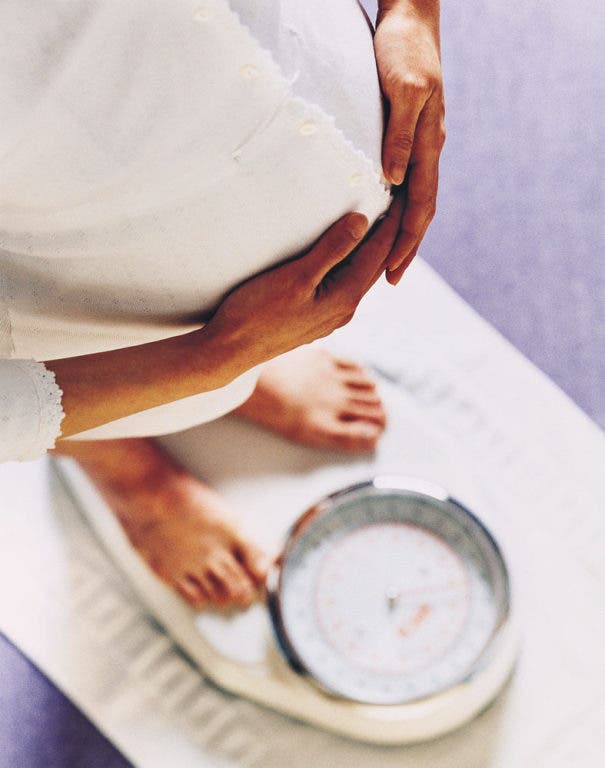
Teenagers face many worries before leaving for college for the first time—moving away from home, having to make new friends, taking harder classes...and the fear of the purported "Freshman 15."
Body image is not a great concern for students who are soon-to-be leaving for college. But in hindsight, it was for those who graduated high school as part of the Class of 2010.
As defined by Christine Craggs-Hinton in “Coping with Eating Disorders and Body Image,” body image is the mental picture you have of your own body, and does not have anything to do with the body’s physical state. According to Craggs-Hinton, body image is influenced by perception, imagination and emotions.
Find out what's happening in Bridgewaterfor free with the latest updates from Patch.
For 19-year-old Bridgewater resident Jenna Charles, a public relations major at Pennsylvania State University, she developed a more negative body image after moving to college than the one she had in high school
“Body image is all about the way you grow up and what you see," she said.
Find out what's happening in Bridgewaterfor free with the latest updates from Patch.
Bridgewater resident John Wilkinson, 19, who is an early education major at University of Scranton, said body image is all about how you feel about yourself.
Wilkinson said his body confidence has actually increased since going to college. He was not extremely concerned with his body in high school, he said, as he was on the track team for three years and stayed active in college by playing intramural soccer and volleyball.
But Charles was also active in high school—she played lacrosse during her freshman and sophomore years; volleyball both for the school and a club team all four years; and joined the throwing team on Track and Field in her senior year. She also danced for 13 years.
When she got to college, Charles said, her academics became more important than working out. She did not join any sports clubs or teams, a probable cause to her loss in confidence, she said.
Despite maintaining the healthy mentality she said she learned from her mother, Charles still struggled when she moved to school.
“I can acknowledge that my confidence did go down, but a lot of time I would just push it out of my mind," she said.
Wilkinson said he struggled more in high school than college with his body. He said people told him he was too scrawny and he felt awkward. His body image, he said, was something he thought about pretty often.
In addition, Wilkinson said, he struggled with his acne, which he said he “went through hell for.”
In an attempt to cure the acne, Wilkinson said he took different medications during the second half of high school which restricted his diet and made him physically ill.
“There were days that I knew, if my skin was really bad, I wouldn’t look in the mirror, like at all, for the entire day,” he said of his high school years. “I’d get up and go wash my face and I’d look down into the sink the whole time.”
After his skin cleared and he moved to college, Wilkinson said he became more confident and cared less about what others thought.
“I don’t care all that much what these people think because when it comes down to it, I’m not at college for them," he said. "I’m at college for me.”
Wilkinson said he made a point of going to the gym multiple times per week in order to stay healthy.
According to Scott Poltrock, a psychologist in Somerville, body image issues vary among teens.
“There are certainly people that survive in college and have no issues of body image and there are others where it becomes more of a concern,” he said.
For 19-year-old Bridgewater resident Jamie Winder, an English major at the University of Delaware, her physical activity entailed being part of the marching band in high school, and her body image, “stayed pretty much the same” in college.
In high school, Winder said, she covered up most of her insecurities purposely by wearing t-shirts and pants to school. She said she cared less in college.
“I didn’t really care how I looked anymore," she said. "I was going to class in sweats. I didn’t care. And I was like, ‘You can stare all you want. I’m tired. Let the world know I’m sleepy.’”
Winder said she did not join any sports clubs or teams. Instead, she said, she chose to work out in her room when her roommate was not there.
Poltrock said that sports speak of the functionality of the body, and that by looking at the body’s functionality, one can begin to gain self-esteem.
“View your body in a positive way,” he said. “It is something that allows you to derive so much pleasure from activities you engage in.”
Bridgewater resident Brian Rosa, 19, a biology and education major at Westchester University of Pennsylvania, said he found pleasure in color guard, which he refers to as his “love.”
Rosa joined color guard and winter guard in his last two years of high school after being on the track team for the first two. And now, he is part of Westchester’s marching band and an independent winter guard.
Rosa said he struggled with his body image throughout high school, especially his freshman year.
“I did not like myself at all in high school,” said Rosa, who admitted to being anorexic the first year and a half. “Every time I looked in the mirror, I saw a fat kid.”
Rosa said he was dealing with a lot of family stress at the time and anorexia was a way of controlling what he could.
“I was looking for perfect, which is impossible and it just wasn’t happening,” he said, adding that he overcame anorexia with support from his friends.
Sophomore year was the high point of his body confidence, said Rosa, because that was the year he came out as being homosexual.
“Every gay guy will tell you that when they go through their stepping-out phase they go through ‘I don’t care what nobody thinks’ even though they really do,” he said. He said he was still concerned about how he was viewed by others and wasn’t completely comfortable with himself until he could joke about it.
At first, Rosa said being gay “was almost like it was a flaw.” Now, he said, he is more confident, after having struggled with a father who did not accept his lifestyle and a mother who tried to suppress it, on top of personal issues that included a suicide attempt.
“Back in high school, I didn’t have any interest in being happy,” he said. “I just wanted to be perfect. Whereas now, I have a lot of interest in being happy.”
Rosa said that without his struggles in high school, he would not have been as confident in college.
For 19-year-old Bridgewater resident Samantha Meringolo, an elementary education major at Susquehanna University, she knew her body allowed her to be successful in swimming, even though she struggled with her body image once she got to college.
“I started to see I had way bigger shoulders, way bigger thighs,” said Meringolo, who said she gained about 21 pounds in muscle her first year of college. “I had to go buy new clothes.”
At the time, she said, she had a big problem with how her body changed.
Meringolo said she has been a swimmer for 13 years, and, in high school, she had practice twice a day as she swam for the team and the Bridgewater Elite Team. Meringolo continues to swim in college on Susquehanna’s division three team.
Even though she struggled with the amount of muscle she gained, Meringolo said she knew that without it, she would not have done as well during the season.
Poltrock said that body image issues can occur in the first year of college because of the transition that students go through.
“It’s a really tough time for kids," he said. "They’re going sort of into the great unknown. A lot of them have lived in their hometowns most of their lives and they know sort of what to expect each year."
"All of a sudden they’re going to this college environment where for the most part a lot of it is unknown,” he added, saying that he sees people try to control what they can during this time, which is their body.
Meringolo said she felt pressure in college and began comparing herself to the girls around her, which she hadn't done in high school.
“In high school, you’re surrounded by all the people you’re comfortable with or you’re more comfortable with because you’ve been with them forever and then you get to college and you’re constantly trying to impress other people and one-up the girls next to you,” she said.
And 19-year-old Julia Ericsson, an English major at St. Lawrence University, said she began accepting her body in her senior year at Bridgewater-Raritan High School, after struggling with it before. She said she did not feel pressure at school.
“There was zero pressure to try and change your body to look a certain way,” she said.
Both Wilkinson and Rosa said they did not feel pressure when they moved to college because they did not care what other people thought of them.
“If you met me the first time and didn’t like me and I was in sweatpants, you’re not gonna like me if I’m in jeans and a t-shirt,” Wilkinson said.
Rosa agreed, and said it didn’t matter what people thought of him because they didn’t know him.
“If people feel like they can derive self esteem from other sources,” instead of just their body," said Poltrock, “then they might be resilient to those issues of body image. Intellectuality, emotionality and morality should also play into self-esteem.”
Rosa, who said he prides himself on being a nice person, said he sees his self-esteem as coming from within and, to him, that is more important than physical beauty.
“Yes, outer beauty is important because it represents health,” he said. “But there’s a certain level where, if you care too much about your outer beauty, your inner beauty goes away.”
Winder said she also focuses on more aspects of herself than just her body.
“I’d rather do something that’s actually productive than just make my eyebrows look all shapely,” she said.
While struggling with her body image, Winder said that she has moments where she thinks it would be nice to be blonde or have tan legs. But, she said, she believed the girls she saw like that were insecure.
“I thought if I somehow transformed into that body package, the emotional package would come with it and I don’t want it,” she said.
Many of the students returning from their first year away at college said that their self-esteem was better when they focused on who they are as people and less on their bodies.
"Weighing all of your self-esteem and how you view yourself on one aspect of self-esteem is always detrimental,” said Poltrock. “It’s like a table with one leg. It’s very wobbly.”
Ericsson said who she as a person is more important than how she looks.
“If you’re the type of person that’s gonna judge me on the way I look and not the kind of person I am then you’re not someone I really want to care about,” she said.
And several students who did not join a sports club or team their first year of college said they are planning on doing so next semester.
Charles said it will hopefully help with her self-esteem.
“It’s impossible to not be negative,” said Rosa about body confidence. “You’re always going to have your insecurities, they’re never going to go away."
"But you will be more comfortable with them," he added. "You will either choose to embrace them or choose to ignore them. It doesn’t matter what you go through. If you’re alive at the end, you’re okay.”