Business & Tech
Feeling the Heat: Hot, Dry Spell Spoils Crops
Irrigation systems provide some relief as produce awaits much-needed rainfall.
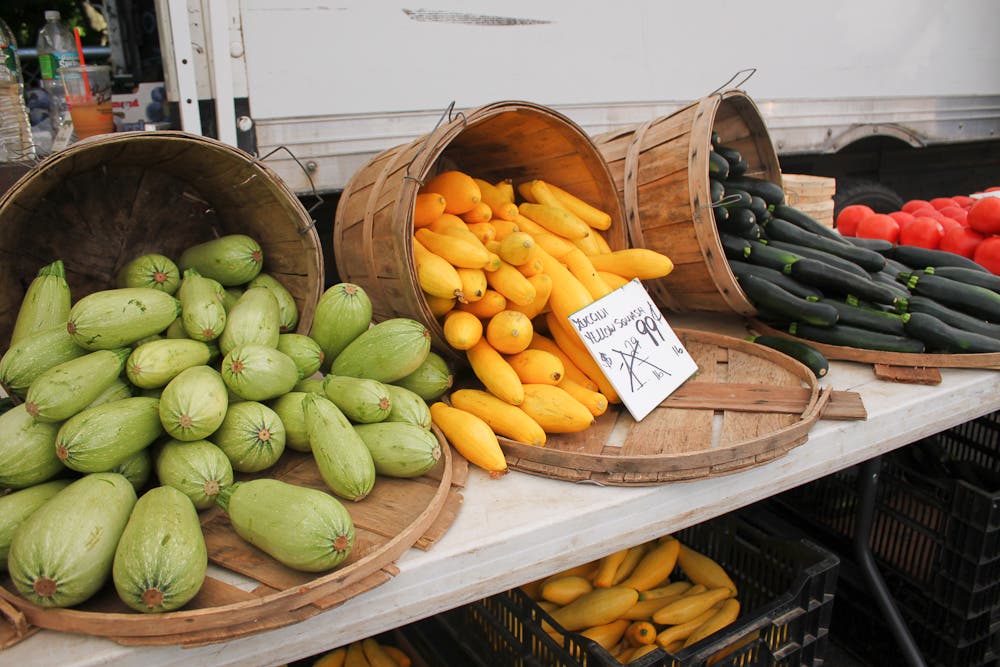


The summer so far in The Caldwells—and pretty much the entire region—has been hot. Actually, more like oppressive.
When it's like this, we tend to focus on ourselves and children, employing splash-splash cures or simply just stay inside.
We're not farmers by trade, and most of us— save for a few "vanity farmers" with a tomato plant or two—do not grow our own food.
Find out what's happening in Caldwellsfor free with the latest updates from Patch.
However, there is a plant around that we all have whose appearance has been indicative of the recent spate of super-high temperatures. Our formerly green lawns are now a tan-ish brown hay. Even the most-treated Scott's No. 2 lawns have gone belly up in spite of our TLC.
Then, there are our lunch and dinner plates, or at least some of what's on them. With regard to fruits and vegetables, in the current surge of heat, items that are grown locally are severely compromised, sometimes perishing altogether. When crop size goes down, prices go up. It won't be for a while, but can and will happen. Think Halloween.
Find out what's happening in Caldwellsfor free with the latest updates from Patch.
There's perhaps no place to go more locally than the Caldwell Farmers' Market to find out exactly how much the recent weather has affected or will impact things.
As farmers awaited some much-needed rain on Saturday, we stopped by the farmers market on a hot and surprisingly crowded Friday to find out if Mother Nature's recent temperature flavor of the month has been really that bad.
Caldwells Patch: How tough has this recent trend of weather been on farming/growing food?
Kristina Szilagyi (of Iona Hill Farm, Hackettstown): It's really hot—we have big pipes, watering everything with them. We are waiting for the rain!
Iona Hill Farm's Teresa Kataina chimes in: It does keep the shoppers coming out though. If it were raining, we wouldn't be here.
CP: What crops are impacted the most?
Carol Davis (Stony Hill Farm, Chester): The biggest problem is that we need rain overall. We do irrigation on most crops and on the fruit trees we have water tubes (drip tape). But things like sweet corn just need rain. We grow 5 to 10 acres of it—how do you water that? And, the pumpkins.
KS: Probably most of our stuff—our lettuces, corn, tomatoes. The pumpkins are probably not doing too good.
CP: What's wrong with the pumpkins?
CD: They just got planted in early June to be ripe by fall. Now, they are stuck in their green stage with no rain; they will just kind of sit there.
CP: Have produce prices gone up?
KS: No, we try to stick with our set prices; heat is going to happen. Our prices are actually the same as last year.
CP: Are there any special techniques people can use to combat the hot weather with regard to growing food?
CD: The tubes and drip tape—we put the water where it needs it to be, at the root of the plant and we're not losing it to evaporation.
CP: Like what happens when I water my lawn?
CD (incredulously): Why are you watering your lawn?
(Writer's note: That's always a question asked by many farmers, as they mostly look at watering a lawn as a complete waste—it's really only a decorative plant. For the record, this writer is not watering his lawn too much.)
CP: What crop holds up the best?
KS: (Laughs) Probably nothing—the grass is dying, even the weeds are dying.
Farmers' Market Manager Doug Piazza: Actually, my stuff is doing really well. I have an installed irrigation system. I have also been hand-watering.
CP: Since you farm at home, do you have any tips for amateur growers?
DP: (Laughs) Don't do it! No, it's just a lot of perseverance and hard work. I actually have covered my plant beds with my own compost and it's definitely helping—that's making a big difference. I can tell, because one bed that I did not cover is much drier. It conserves water, too. The compost retains water.
If you haven't been to the Caldwell Farmers' Market yet, step over your brown grass, put away the sprinkler and stop by the Smull Avenue Municipal Parking Lot any Friday afteroon throughout the summer from 2 to 7 p.m.