Politics & Government
Governor Commends Caldwell for Low Tax Increase
Without official approval, borough unable to adopt budget at public hearing.


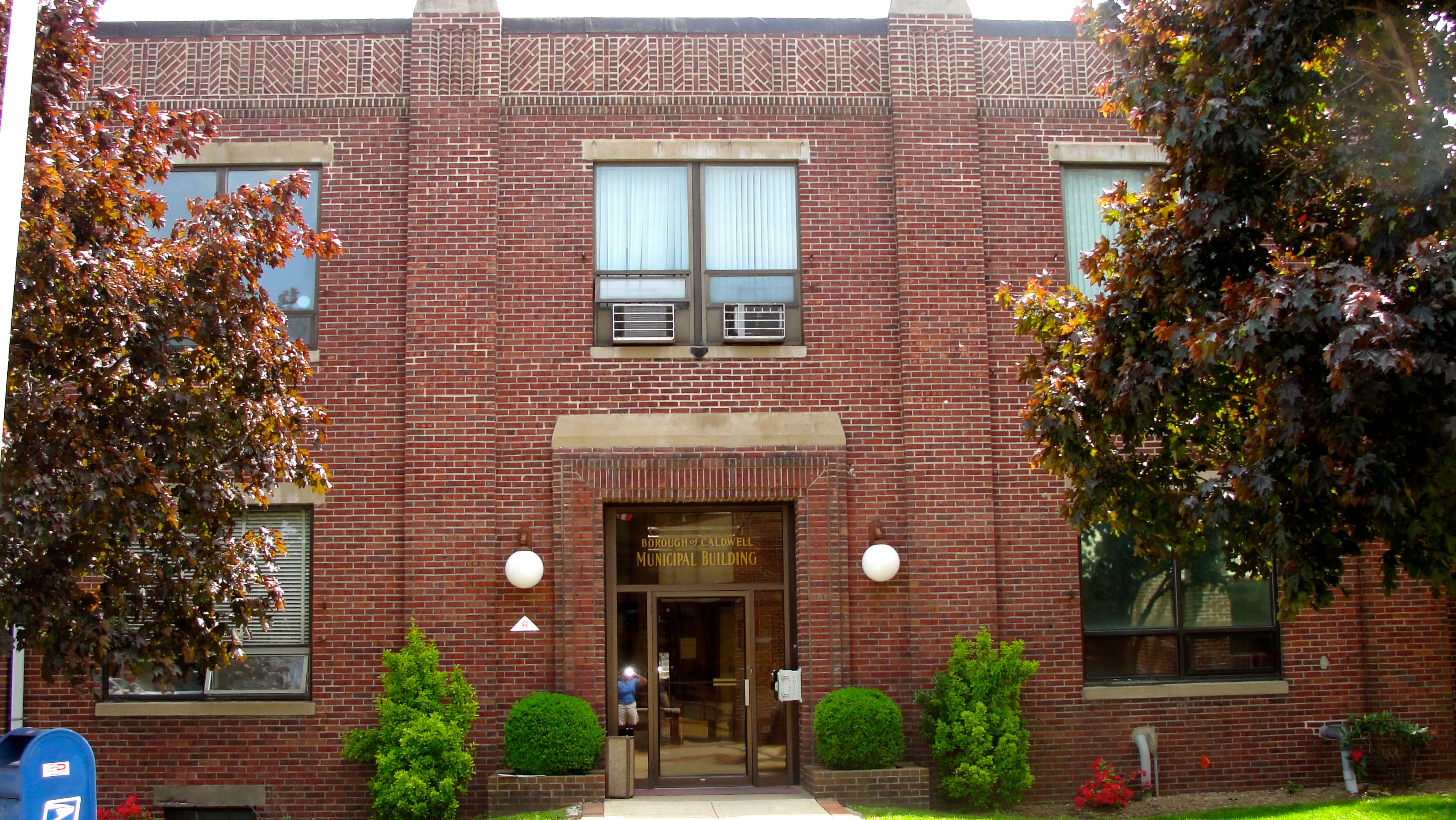
Gov. Chris Christie's office contacted Mayor Susan Gartland on Tuesday to commend the Borough of Caldwell for presenting a municipal tax increase of just 1.2 percent.
But the governor hasn't yet given his official seal of approval for the .
Without the governor's authorization, Caldwell was unable to adopt its budget during Tuesday night's council meeting.
Find out what's happening in Caldwellsfor free with the latest updates from Patch.
As a result, a resolution was passed to authorize Borough Administrator Paul Carelli to send estimated tax bills to residents.
According to Carelli, Essex County's tax levy will pose a 1.4 percent increase and residents will face an overall 1.1 percent hike of $109 for the average borough home. The municipal tax levy will comprise approximately $36 of that amount, he said.
Find out what's happening in Caldwellsfor free with the latest updates from Patch.
In addition, Carelli was authorized to begin finalizing a new contract with West Caldwell for joint police dispatch service. According to Gartland, the new agreement will begin July 1 and run through Dec. 31, 2013 and will reduce the borough's expense from $178,000 to $125,000 a year.
"We have an existing shared services agreement with West Caldwell. They came back, stating that they were willing to lower the amount for the remainder of the year and for the next three years to $125,000," Gartland said. "The terms of that agreement have not yet been concluded."
The municipality's agreement with Gregory Seaman, the borough's new sewer director, was again questioned during Tuesday night's meeting.
During the budget's public hearing, Bob Christiansen, of Ravine Avenue, criticized Seaman's compensation and the governing body for not providing non-union municipal employees a raise for another year.
Councilman Kay Slattery, who was unable to attend Tuesday night's meeting, after he initially agreed to a contract of $22,000 in January. Slattery argued the $14,000 difference could have instead been used to provide raises to the municipality's 22 non-union employees.
However, the $22,000 has been called a "clerical" error since previous sewer directors earned $30,000.
"The $22,000, I'm going to call it a typo," Councilman Gordon Lawshe told Christiansen. "It was missed by the council. It was our fault. But for you and for Councilman Slattery to continuously say that we gave someone a $14,000 raise is totally not true."
Seaman's salary was increased to the allotted $30,000 for the position and by an additional $6,000 to become Caldwell's regulatory compliance officer.
"The council was unaware of what should have been going on at the sewer plant and what the sewer director's goal was. Council was unaware of the hours that were really required by a sewer director because of past history—the hours that were required and the hours that were put in. The sewer director was also told by the council what was expected," Municipal Attorney Greg Mascera explained to Christiansen.
"The sewer director came to the council and said 'I can't do this for $22,000 because you need someone to make up for the incompetence and inattentiveness of the last five to 10 years. We need a sewer director to spend a more considerable amount of time than has been spent in the past.'
"Given Mr. Seaman's presentation to the council and Mr. Seaman's request that he be paid more money because of the mutual mistake of the expectation, the council agreed to modify the contract."
Christiansen turned to Seaman, who routinely attends the council meetings, and questioned if he was in fact working 15 to 20 hours a week.
"The time I spend on Caldwell sewer utility business is no less than 15 hours a week," Seaman responded. "I have a journal here. I log every activity that I do for the Borough of Caldwell. I don't think you're entitled for me to share it with you, but I certainly will share it with the council."
However, Christiansen remained concerned that the compensation was still too high for the amount of hours worked.
"I just want to be sure where it's going, who it's going to and if he's working enough hours to earn that money—15 hours at $30,000. I remember back when I worked 40 hours for somewhere around that," Christiansen said.
Council President Ann Dassing reminded Christiansen that the previous sewer director worked far less than 15 hours and was still compensated $30,000.
While Christiansen attempted to identify ways the municipality's non-union employees could have earned a raise, Lawshe, who said Seaman was "worth his weight and gold," said the funds simply aren't there.
"We don't have the money," Lawshe said. "There are such things as future planning. There hasn't been any future planning in this borough. I have no problem saying that. We would love to see everyone here get a raise, but we don't have the money."
Gartland, however, defended the previous Democrat-dominated administration.
"I beg to differ with you on the future planning," she told Lawshe. "There were contracts and negotiations and a variety of different things that came along the way. I think we always made sure the other employees who were not contract employees got their fair share. It was always lower than what the police or DPW got, but they always got something, even if it was a percent and a half. They always did get a raise."
Councilman Joseph Norton, chairman of the finance committee, pointed out that while the employees didn't receive a raise this year, they were also spared layoffs and furloughs.
"We didn't lay anyone off. We didn't furlough anyone. What we did was do what we thought was prudent. Everybody has to make a sacrifice," Norton said.
"Things are going to get better, but you have to make the tough decisions. No one likes not giving out raises. I'd love to be able to give my employees raises. I'd love to give borough employees raises. But there's practical and common sense and then there's the opposite end. In due time when things do turn around—did we put it into the equation this year? We did. We looked at it. Will we look at it in 2011? Absolutely."
While comparisons to the private sector were made throughout the meeting, Councilman Richard Hauser said public employees receive a better total package than those working in the private sector, which has laid off residents and reduced salaries—including his own.
"Many people in the private sector would be ecstatic if they were able to keep the same rate of pay as they have been over the last two or three years," Hauser said. "I know many friends, myself included, have had substantial reductions in pay. I would jump up and down if I had the same pay as I did three years ago."
Get more local news delivered straight to your inbox. Sign up for free Patch newsletters and alerts.