Politics & Government
No Tax to Students, 1.2% Hike to Caldwell Residents
College would have backed out of Kiwanis Oval project if fee was pursued.


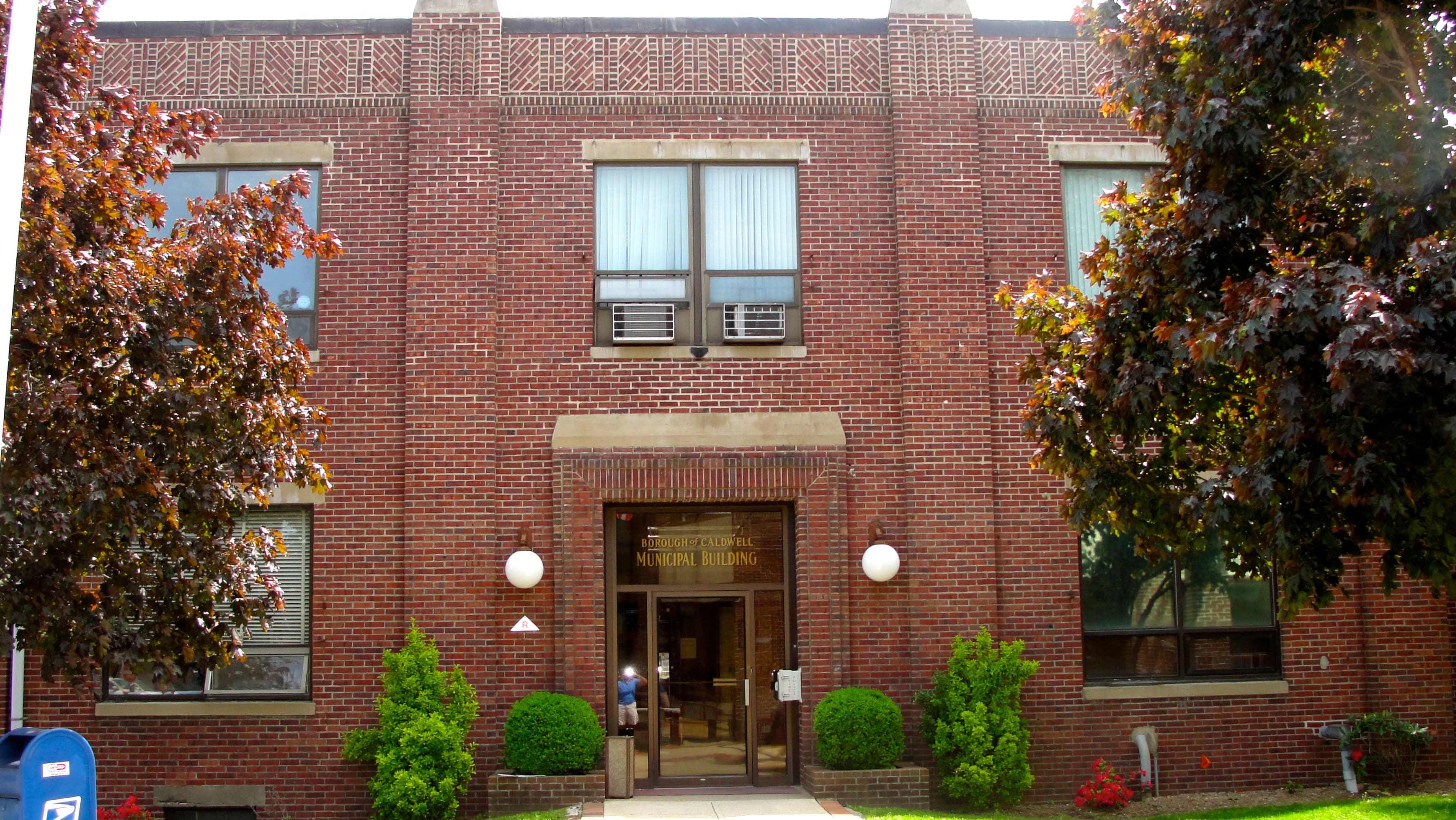
As chairman of the finance committee, Caldwell Councilman Joseph Norton stated numerous times over the past several months that "no stone will be unturned" until a zero percent tax increase was reached.
But there was one rock he just couldn't shake: Dr. Nancy Blattner.
The Caldwell College president remained unwavering in her opposition to a potential semester fee to students for the use of borough services and told The Caldwells Patch the school was prepared to pull out of the Kiwanis Oval project if the borough included the charge in its budget introduction at Tuesday night's council meeting.
Find out what's happening in Caldwellsfor free with the latest updates from Patch.
However, school officials were notified in an e-mail from new Borough Administrator Paul Carelli shortly before the meeting that the municipality was no longer pursuing the fee that, if passed by legislation, could have generated approximately .
Instead, a budget of $11,809,280—2.1 percent less than 2009—with a tax levy of $7,040,242—a 1.2 percent increase of approximately $77,000—was introduced in front of a standing-room only crowd.
Find out what's happening in Caldwellsfor free with the latest updates from Patch.
The college also maintained its verbal agreement to contribute $200,000 over 10 years toward the Kiwanis Oval project, which was awarded to Applied Landscape Technologies for $1,761, 347.
"We had to communicate that we simply could not pass that fee on to the students. Many of our students come from very low socioeconomic backgrounds. We might think as people who come from maybe more of a middle class that passing on a fee of $100 or $50 to part-time students is something that's manageable. But I know for a fact that for many of our students it's not possible," Blattner told The Caldwells Patch following the meeting.
"It wasn't possible for us as the college to pick up a five- or six-figure fee to the town, either. We're very understanding of the fact that their budget has been cut, too. We appreciate that, but yet when we looked at the possibility of where we would come up with the money, we knew that we were going to go into the oval project for 10 years at $20,000 a year for a total of $200,000. The money could only come from one source. So it was one or the other. We explained that and I'm glad to see that's the relationship they want to develop."
The budget, which was opposed by Councilman Kay Slattery, will pose a slight $36.43 yearly increase or about $3 a month for the average borough home assessed at $432,734. A public hearing is scheduled for June 22.
In addition to various department's spending reduced by 5 to 10 percent, the municipal budget, which poses no furloughs or layoffs, includes two phases of health care modifications of $100,000 and $75,000 in annual savings.
In addition, police overtime was reduced from $165,000 to $100,000, fees for off-duty police was restructured to increase revenue by $139,000, the sale of a municipal fire truck is expected to generate $40,000 and technology upgrades will reduce expenses by $5,000.
"At this point, given the big picture of life, yeah, I think we've done everything that we could have done. Some things worked out this year. Some things didn't work out in the short term, but that doesn't mean that they're not going to come to fruition in the long-term. There are a lot of other programs that we're looking at from every department to every source of revenue moving forward that we still have a lot of options ahead of us," Norton said after the meeting.
"Were there a couple of other little things that I wish could have possibly come to fruition in 2010? Sure, but what we did at $3 a month—that's stability, that's exactly what we said we were going to do. We were going to stabilize the tax base and stabilize the finances of this borough."
One of the areas reduced was police overtime. According to Councilman Gordon Lawshe, chairman of the public safety committee, $239,000 was spent on overtime in 2007 when three officers were out for a significant portion of the year, $166,000 in 2008, $165,000 in 2009 and $100,000 will be allotted for 2010.
However, $50,000 in overtime had already been accrued as of May 14, Lawshe said.
"This has nothing—and I repeat, nothing—to do with hurting the public safety of this town," he said.
According to Lawshe, the department will only receive overtime for mandatory training sessions, wanders will be implemented for municipal court and, while the D.A.R.E. program will remain, overtime will not be paid for these activities.
"This has to be done during the day," Lawshe said. "We had some absorbanent D.A.R.E. overtime costs where a police officer worked on a Thursday and had to come in and do a D.A.R.E. program on a Friday. It's not acceptable."
Another overtime expenditure has been for the department's one detective, who works a day shift, to come in to investigate incidents at night, Lawshe said.
As a result, the borough will consider hiring a new police officer and promote one member of the department to detective.
"This is a public safety issue," Lawshe said. "We really need to have somebody available at night. Let's face it, the makeup of the town is changing quite a bit. That's something we're going to look strongly at."
The budget's introduction was approved by a vote of 5-to-1 with Slattery opposed because she said certain line items could pose "significant problems" in the future and she
When Seaman was appointed the borough's sewer director in January, he agreed to a $22,000 salary.
However, Lawshe called the amount a "clerical" error during an April council meeting since previous sewer directors earned $30,000.
Seaman's salary was increased to that amount and by an additional $6,000 to become Caldwell's regulatory compliance officer for a total compensation of $36,000.
However, Slattery said the $14,000 increase could have been used to provide a raise to the borough's 22 non-union employees, whose salaries have been frozen since 2008.
"I'm going to be voting 'no' on the budget for two main reasons," Slattery said. "One, this budget as it is introduced if it follows through for adoption is going to present significant problems for the borough in years to come—beyond 2010 when you look at some of the line items.
"Secondly, it's a matter of principal. … I object to one individual employee, after three months of employment, received a 63 percent increase in his salary and 22 non-union employees are at the same salary for the third year in a row."
But considering that resulted in the budget's introduction postponed three times, Norton said the appropriations, which pose a tax rate increase of just 0.680, lay a foundation for long-term fiscal stability.
"It's do more with less. Be more efficient. That's a lot of the directive and the management that we said we were going to bring to the table and we've done it," Norton said after the meeting.
"It's just doing things smarter. That's why we're in the position, financially moving forward, that we're going to be. I want to work on a long-range 10-year plan for the next year of my life, then we've attained the goal as a town to be fiscally stable for a decade no matter what may happen. That's the name of the game and we're well on our way to doing it."
Get more local news delivered straight to your inbox. Sign up for free Patch newsletters and alerts.