Community Corner
Rabbi Builds Jewish Connection In The Caldwells – One Conversation at a Time
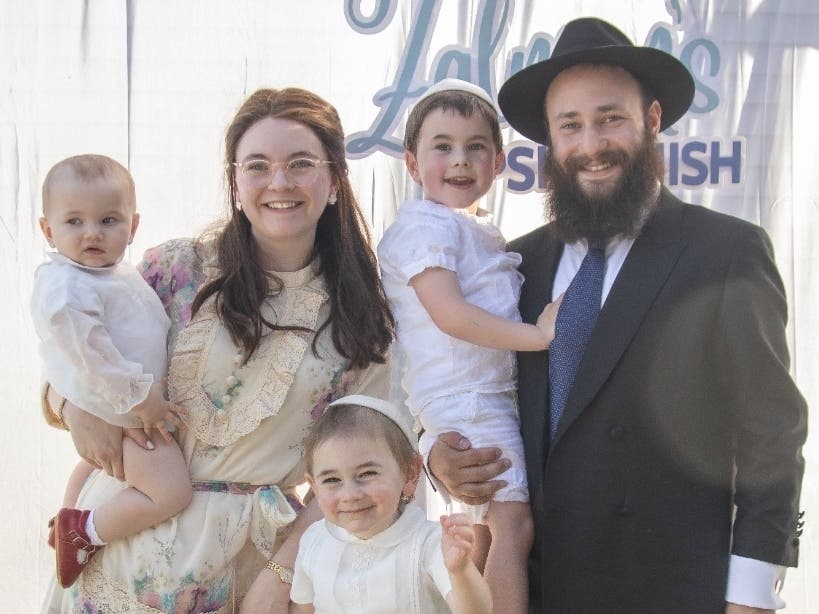
Rabbi Shmuly Sputz often shares a story about a wealthy philanthropist who left his children a final lesson.


CALDWELLS, NJ — The following article comes courtesy of Jackie Schatell. Find out how to post announcements or events to your local Patch site.
On a recent day at Crane’s Mill, after a class he teaches, someone approached Rabbi Shmuly Sputz with a question that usually comes with a little baggage.
Are you Reform, Conservative, Orthodox?
Find out what's happening in Caldwellsfor free with the latest updates from Patch.
Rabbi Sputz’s answer was simple, almost disarming. He told her that he does not put labels on people, or ask them to squeeze into a mold. He is Jewish, you are Jewish, we are all the same. Everyone connects in their own way, and everyone has room to grow.
It is an approach that explains a lot about Rabbi Sputz, and about the way he is building community in the Caldwells: steady, open, and focused on meeting people exactly where they are.
Find out what's happening in Caldwellsfor free with the latest updates from Patch.
Crown Heights made his “why” unavoidable
Rabbi Sputz grew up in Crown Heights, Brooklyn, the central hub of Chabad Lubavitch. In that neighborhood, Judaism was not only something practiced privately. It was something carried outward into the world.
He often speaks about the Lubavitcher Rebbe, Rabbi Menachem Mendel Schneerson, whose influence reshaped modern Jewish outreach. The Rebbe encouraged followers to go wherever Jewish life needed strengthening, to bring light to communities large and small, and to see Jewish identity as something lived through action.
For Rabbi Sputz, that vision quietly shaped his understanding of what a rabbi could be. Not only a leader inside a building, but someone actively engaged with people’s lives and experiences.
The training that took him across the globe
Before he and his wife, Gittel, were married, Rabbi Sputz spent years traveling as part of his rabbinic training, serving Jewish communities in places that lacked established infrastructure.
He helped organize Passover observances in remote regions of Peru, visited Jewish travelers in the Canary Islands and St. Lucia, and traveled to Morocco and Madrid for holiday programming. In Ukraine during the 2014 conflict surrounding Crimea, he joined a delegation that brought Passover celebrations to a Jewish community facing uncertainty.
The experiences reinforced a central lesson. Whether serving five people or five hundred, the mission remained the same: meet individuals where they are and help them reconnect in meaningful ways.
He recalls encountering an Israeli backpacker on a beach in Peru who had lost track of the calendar and did not realize Passover was approaching. Seeing two rabbis unexpectedly appear felt like a moment of grounding, a reminder of home in an unfamiliar place. For Rabbi Sputz, that single encounter captures the essence of outreach, being present when connection matters most.
Arriving in the Caldwells
Rabbi Sputz and Gittel relocated to the Caldwells in 2022, stepping into a community where they initially knew no one.
Rather than waiting for people to come to him, Rabbi Sputz began introducing himself face to face, walking into local spaces, meeting residents, and building relationships one interaction at a time. The approach reflects his broader philosophy: community grows through genuine connection, not just programming or advertising.
He often jokes that if a mayor might try to meet every resident during a campaign, then a rabbi building a new community should aim to do the same.
Measuring success through moments
Ask Rabbi Sputz about his proudest accomplishment so far, and he resists choosing a single highlight. Every day brings moments that feel meaningful, he says, and each has its own impact.
Still, certain initiatives stand out.
One is CTeen, a Jewish teen group that has quickly gained momentum. Rabbi Sputz believes teenage years are often an overlooked stage of Jewish engagement, and the program focuses on volunteerism, friendship, and identity alongside social connection.
Men’s programming has also grown organically. What began as a small gathering evolved into events that blend camaraderie and community, from shared meals to themed gatherings that create space for connection without pressure.
Regular programs like bagels, lox, and tefillin mornings offer approachable opportunities for learning, discussion, and shared experience.
Jewish pride in a complicated moment
When discussing the most important Jewish value today, Rabbi Sputz does not hesitate. Jewish pride.
He believes that embracing identity openly strengthens both individuals and communities. Pride, for him, is not about confrontation but about confidence, authenticity, and connection.
His advice for anyone interested in deepening their Jewish connection is intentionally simple: start with small actions. Light Shabbat candles. Attend a class. Take one step and allow meaning to grow from there.
The work people rarely see
Much of Rabbi Sputz’s work happens quietly through one on one interactions.
People reach out during celebrations and crises alike. A mezuzah installation may turn into a long conversation. A holiday delivery might open the door to someone sharing a personal challenge. Families seek guidance during milestones such as bar or bat mitzvahs, weddings, or funerals.
Gittel describes these moments as central to their mission. Many relationships begin informally, sometimes through social media or casual introductions, and grow into meaningful connections.
The message they hope people understand is simple: no formal affiliation is required to reach out.
Music, joy, and the human side of a rabbi
Outside of programming, Rabbi Sputz enjoys music and singing and has served as a cantor for High Holiday services. He describes music as a natural way to bring energy and emotion into a room, helping people feel comfortable and connected.
These personal details often help people see beyond the formality they might associate with a rabbi and recognize someone approachable and relatable.
A lesson that reflects his path
Rabbi Sputz often shares a story about a wealthy philanthropist who left his children a final lesson. The man requested to be buried with a pair of black socks, only for tradition to prevent it. A later message explained the point: no matter how much wealth someone accumulates, material possessions cannot follow into the next world.
The story reflects the values guiding Rabbi Sputz’s own choices. While he could have pursued other paths, he chose a life centered on service, connection, and helping others find meaning.
Looking ahead
In the coming years, Rabbi Sputz hopes to establish a Center for Jewish Life in the Caldwells, envisioned as a welcoming hub where education, celebration, and community connection come together.
The vision is not simply about creating a building. It is about building relationships, nurturing Jewish pride, and creating a space where people feel welcomed exactly as they are.
And if the early chapters are any indication, the future of Chabad of the Caldwells will continue to grow the same way it began: one conversation, one relationship, and one meaningful moment at a time.
For more information, visit chabadcaldwells.com
Send local news tips and correction requests to eric.kiefer@patch.com. Learn more about advertising on Patch here.
Get more local news delivered straight to your inbox. Sign up for free Patch newsletters and alerts.