Politics & Government
Some Council Members Stop Short of New Measures
Slattery, Hauser oppose first of four-stage plan to increase pedestrian, traffic safety.


The introduction of an ordinance to convert three Caldwell intersections into all-way stop corners received praise from several residents Tuesday night.
But some council members said not so fast.
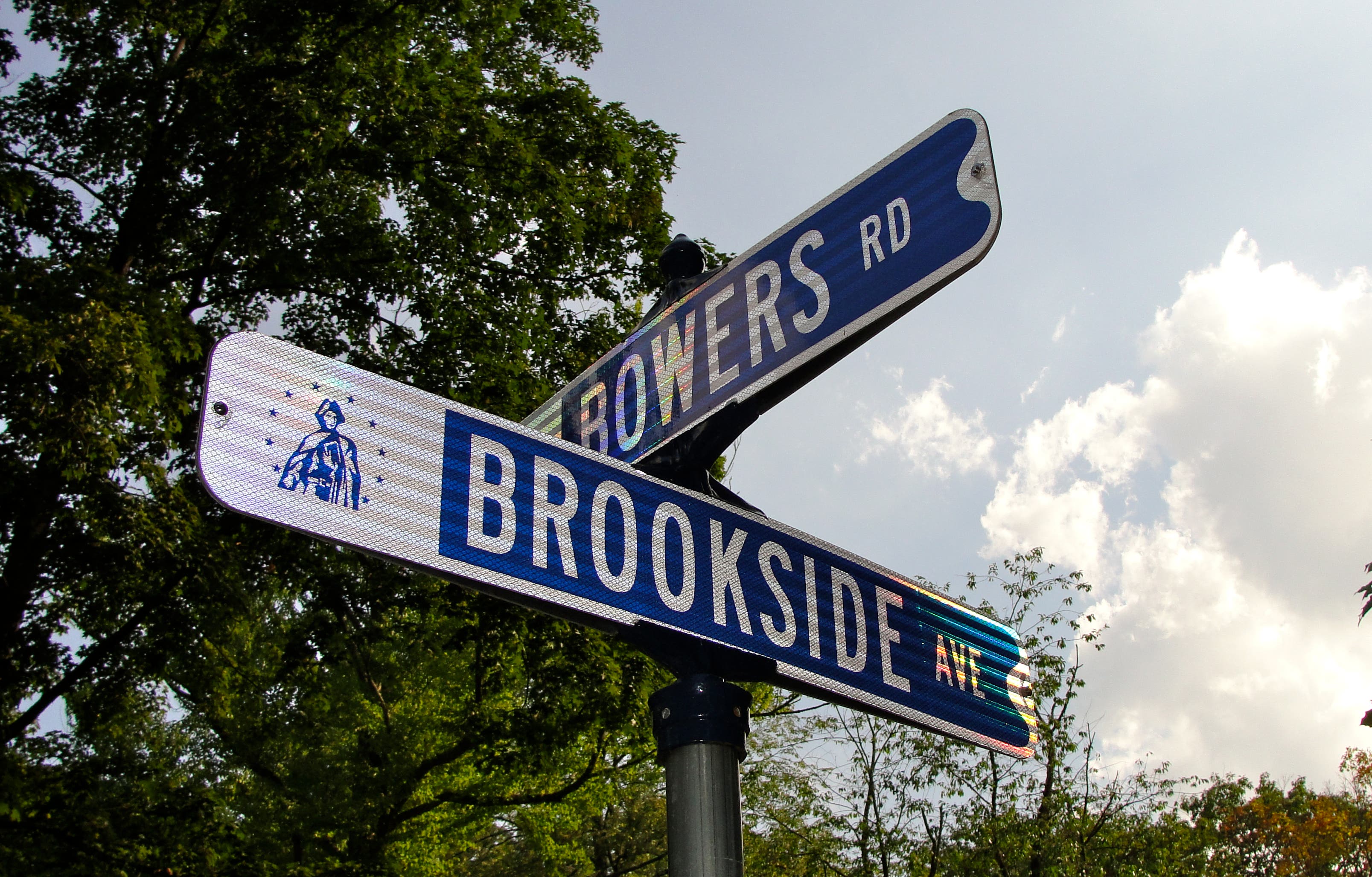
An ordinance was introduced by just a 3-to-2 margin to place stop signs on Brookside Avenue in both directions at the corners of Bowers Road and Cleveland Road—creating a three-way stop at these intersections—as well as placing stop signs in both directions on Arlington Avenue to create a four-way stop at the corner of Crane Street.
Find out what's happening in Caldwellsfor free with the latest updates from Patch.
Councilmen Richard Hauser and Kay Slattery voted against the introduction, while Council President Ann Dassing and councilmen Joseph Norton and Peter Murray voted in favor of the signage. Councilman Gordon Lawshe was unable to attend the meeting due to a family emergency.
"I don't understand a lot of the logic behind this. At what point do we stop putting stop signs at corners? In many respects, I think it's going to create more of a traffic problem than the perception of what may be trying to be achieved," Hauser said.
Find out what's happening in Caldwellsfor free with the latest updates from Patch.
"On some of these roads, whether it's hills, when it's bad weather, it's difficult enough to get up the road, let alone have to stop at a stop sign and try to get going again. I'm certainly open to more information and try to learn more about the reasoning, but on the surface, it's not something that makes sense to me."
According to Norton, this is the first of four stages to increase traffic and pedestrian safety throughout the borough.
The first step is to implement measures in areas within 500 feet of a park or school. The second is to create the same measures in other areas that are considered "problematic," Norton said.
The third phase includes installing traffic calming devices like center islands and chokers, which are extensions of the curb that are used to narrow the roadway and slow traffic.
The final phase is to create what Norton called "peaceful streets" where residents can apply to have a portion of a road closed for a period of time. Norton said more details will be announced on this proposal at the next council meeting.
"What we wanted to do was address traffic throughout the borough. We're kind of doing it in stages," Norton said.
"It's a long time coming for the area and hopefully this puts everyone's minds at ease."
Under the first ordinance, the intersection of Arlington Avenue and Crane Street will be converted into a four-way stop. The intersection is within 500 feet of Lincoln School and where a child was nearly struck by a car this spring.
The stop signs on Brookside Avenue will help increase safety along Grover Cleveland Park, Norton said. While stop signs already exist on Bowers Road and Cleveland Road, traffic in both directions on Brookside Avenue would have to stop at these corners as well under the new ordinance.
If the ordinance passes, a second ordinance was introduced that would no longer deem Brookside Avenue a "thru-street," since traffic would now have to stop along this road.
"I support those three-way stops at Bowers and Cleveland," said Caroline Mescia, a resident of Bowers Road. "Obviously, the park is a heavy pedestrian thoroughfare, a lot of people are coming from the neighborhoods and a lot of people are coming in their cars. The speeders go about 40.
"Anything that will get them to slow down. We've been trying to get them to slow down on Brookside since I've lived here and thus far have been unsuccessful. I really support the three-way stops at those intersections."
However, Slattery was concerned that drivers might not have enough warning of the new stop signs, considering the corner of Brookside Avenue and Bowers Road is immediately after a curve in the roadway as drivers are traveling south from Bloomfield Avenue.
"I am absolutely not opposed to it, but my concern is that there has to be more than 'OK, a stop sign is coming up,'" said Slattery, who, like Hauser, also questioned the safety of making traffic stop at the corner of Arlington and Crane during inclement weather.
"Someone coming down Bowers, someone coming down Cleveland assuming now that the traffic is going to stop on Brookside is not a good assumption. I think there's going to have to be more. People run those stop signs all the time. I'm not opposed to it, but all I'm saying is that it needs to have more attention than just putting this stop sign up."
According to Norton, Mario Bifalco, the director of public works, and Glenn Beckmeyer, the borough's engineer, have already examined ways and have a plan to educate drivers of the new signage.
"The amount of foot traffic coming from the Cedars down to Brookside and the pure volume of cars, the speed of the cars—this has been something that has been addressed with the engineer and Mario as far as the placement of the signs, proper notification that the new signs exist and are coming up are taken into account in putting this through," Norton said.
"This isn't just plopping a stop sign on a corner. There has been a lot of discussion between Glenn, Mario and it's going to be done in a proper manner. People are going to be educated. There are going to be signs that say there's a stop sign ahead. There are going to be signs in the middle of the road that indicate there is a stop sign ahead."
However, Hauser argued that whether there's a stop sign or not, people could still break the law.
"The enforcement is what the issue is. Whether you have the stop sign, a traffic light, a 25-mile-per-hour speed sign. The enforcement is the issue. Putting another stop sign up is not going to resolve that issue," Hauser told Norton.
"I'm all for saving somebody's life. The issue you brought up [the boy nearly struck near Lincoln School] fortunately didn't end with a tragic situation. But putting a stop sign there would not have prevented that person from driving as fast as they did through that intersection. It's not something that I'm necessarily in favor of or against. In some locations, I don't think it makes sense."
But Norton said these safety measures are worth the slight inconvenience they may cause.
"The idea of inconveniencing somebody or making somebody do the 25-mile-per-hour speed limit, balancing that out and saving one person's life, one person's accident," Norton said, "I think it's something that I would trade off on any day."
Get more local news delivered straight to your inbox. Sign up for free Patch newsletters and alerts.