Neighbor News
Father-son duo to play Brahms sonatas
Violinist Mark Kaplan and his son, pianist David Kaplan, will play all three Brahms sonatas at a Lyrica Chamber Music concert
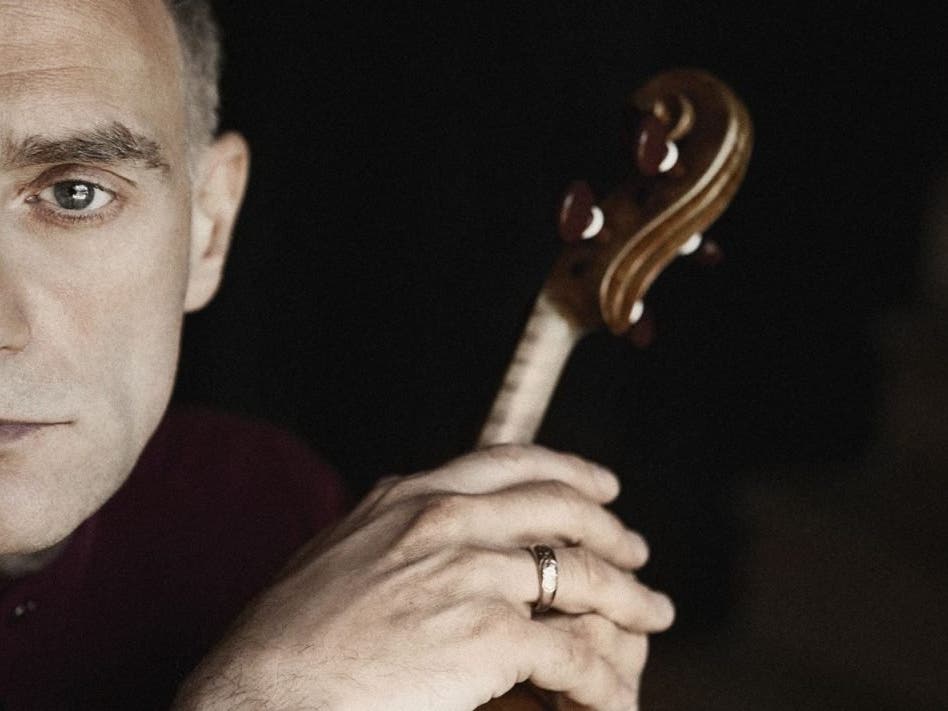

When a father and son share the concert stage, it’s likely their familial bond can weave their musical DNA into an unforgettable listening experience.
Violinist Mark Kaplan (father) and pianist David Kaplan (son) will demonstrate when they play all three Brahms violin sonatas Sunday, May 5, at 3 p.m., in Lyrica Chamber Music’s final concert of the 2023-24 season, at the Presbyterian Church of Chatham Township, 240 Southern Blvd.
Lyrica concerts are presented with the support of Morris Arts which seeks to build community through the arts.
Find out what's happening in Chathamfor free with the latest updates from Patch.
“Well, of course there are advantages,” Mark Kaplan said emphatically. “Chamber music is the most personal form of communal music-making, and sonata playing, with only two people, is arguably the most intimate form of chamber music.”
But don’t expect a “performance” when the father-son duo play together on Sunday. Instead, think of the experience as interactive.
Find out what's happening in Chathamfor free with the latest updates from Patch.
“I tend to avoid the word ‘performing’, which sounds to me too much like an athlete performing a difficult jump,” Kaplan said. “I prefer to think of sharing music with the audience rather than performing for them.”
The two Kaplans are usually of a like mind about their approach to music. Mark Kaplan, a professor of violin at the University of Indiana, noted how some string quartets have been torn apart by interpretive squabbles.
“After a certain point of development, however, the excitement of working toward a common communicative goal far outweighs any differences of opinion. I think that David and I have in the deepest sense the same types of interpretive approaches, while at the same time naturally seeing many details from different angles.
“And we would not want it to be otherwise: Playing sonatas is in many ways like having a conversation. If general interpretive approaches are not similar, it can be hard to find the right language and vocabulary, while on the other hand if two people really have the same things to say, then any conversation between them is likely to be pretty boring!”
Of course, Mark and David Kaplan have collaborated many times before.
“We’ve played quite a few concerts together before, going back many years,” Mark Kaplan said. “I think our first really professional appearance was at the Seattle Chamber Music Festival, when David was barely into double digits. After he went to college, we played together less frequently for some time, but in recent years we’ve again been doing more concerts, and are now working towards making a recording of the Brahms Sonatas.”
A concert of all three sonatas offers a diverse experience because Brahms brought something different to each one.
“They are all mature works of Brahms, and his mature works are all quite distinct from each other, each having its own story to tell. Broadly speaking, the third is the most extroverted — for example, it’s the only one ending with a vigorous and heroic last movement, while the first is the most private (and ends quietly), and the second has maybe some of the aspects of a couple, indeed the first movement has the extremely unusual indication of allegro amabile, that is, a loving allegro. Such things, however, are highly subjective, and every listener will have their own way of hearing the pieces.”
The task of conveying the essence of these sonatas is not necessarily an easy one, as Kaplan explains.
“Of course, the basic interpretive challenge for any music is always to help the composer’s musical message come across to the listeners,” he said. “In Brahms’s case, he was such a very complex person, in addition to being a genius — and so there are many layers to his music. He played around often with different textures, and often the violin is called upon to find the sonorities of a piano, or of a horn, or of a singer.”
The sonatas are old friends for Kaplan, but it is a friendship that is renewed each time he encounters them again.
“Sometimes I find things that change my point of view, and other times, I find my first views vindicated,” Kaplan said. “For example, decades ago I wrote to someone about the first sonata, and how it seemed to me, despite its major key, to deal with issues having to do with death and loss. That was intuitive, just based on the music itself, and I had no idea of the ‘back story’ of the work.
“Later there was published a manuscript copy of the second movement that Brahms had written out for Clara Schumann with an inscription having to do with the loss of the Schumanns’ son Felix. Seeing that message to Clara, I became even more aware of the uncanny ability of music, even with no words, to convey very specific parts of ourselves.”
Anyone wanting to experience more of Mark Kaplan’s playing can delve into his extensive discography. His most recent recording, of the complete Beethoven piano trios with cellist Peter Stumpf and pianist Yael Weiss, received a glowing review in Gramophone magazine.
Internationally acknowledged as one of the leading violinists of his generation, Kaplan has played with nearly every major American and European orchestra and created a busy performance schedule around the world as both a soloist and a chamber musician.
He has performed with the New York and Los Angeles Philharmonic orchestras, the Cleveland and Philadelphia orchestras, the National Symphony Orchestra of Washington D.C., and the symphony orchestras of St. Louis, Pittsburgh, Baltimore, Minnesota, Cincinnati, Dallas, and Houston, among others.
His flourishing career in Europe began in 1975 when he was asked to replace Pinchas Zukerman in a concert conducted by Lawrence Foster in Cologne. This led to engagements with the Berlin Philharmonic and the New York Philharmonic with Klaus Tennstedt — launching his international career.
David Kaplan, pianist, has been called “excellent and adventurous” by The New York Times, and praised by the Boston Globe for “grace and fire” at the keyboard. He has appeared as soloist at the Barbican Centre with the Britten Sinfonia and Das Sinfonie Orchester Berlin in the Philharmonie, and this season made debuts with the symphony orchestras of Hawaii and San Antonio.
Kaplan has consistently drawn critical acclaim for creative programs that interweave classical and contemporary repertoire, often incorporating newly commissioned works. He has given recitals at the Ravinia Festival, Washington’s National Gallery, Strathmore, and New York’s Carnegie and Merkin Halls.
Tickets for Lyrica concerts are $30 ($25 for seniors), and students and children are admitted free. For more information about Lyrica Chamber Music, visit www.lyricachambermusic.org or call 973-309-1668.