Schools
$628K Shortfall Seen in Initial Cherry Hill School Budget
Administrators and school board members agree to plan that includes going to the 2-percent levy cap, but cuts to staff or programs seem likely.


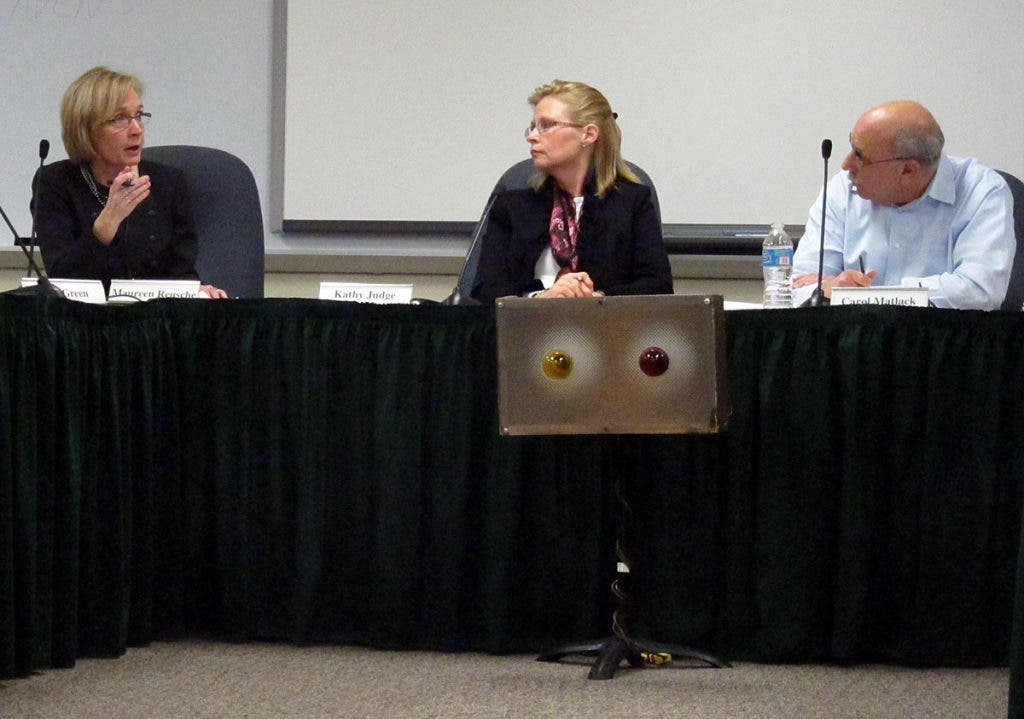
With cuts already in place for textbooks, supplies and other non-personnel costs, Cherry Hill school administrators will likely have to consider slashing staff or programs as part of the 2013-2014 budget due to a six-figure shortfall, Superintendent Maureen Reusche said Tuesday night.
Even with a push to the limit of the 2-percent cap on an increase in the tax levy—a move supported by the seven school board members at the board’s first budget planning session—the district’s budget is about $628,000 short under current estimates, even with cuts left and right to requests for additional funding, Reusche said, putting administrators in the position of having to find savings in the two spots they try to avoid.
“This is not eliminating anything that exists,” Reusche said. “You can see how it becomes more difficult when we get to that bottom line. We’re getting to the point…where there isn’t any other place to go.”
Find out what's happening in Cherry Hillfor free with the latest updates from Patch.
While the shortfall is only 0.36 percent of the overall budget, which will likely come in somewhere around $174 million when finalized, the district has whittled things about as tight as they can go, including a 3 percent cut to textbooks and classroom supplies and a 1 percent cut on general supplies throughout the district, said Jim Devereaux, the assistant superintendent in charge of the business office.
“There are fewer places to go to get that money,” he said. “We literally go through every purchase order we have.”
Find out what's happening in Cherry Hillfor free with the latest updates from Patch.
While spending is about as tight as it can be, administrators said, there aren’t many options on the revenue side, either. Devereaux joked they could buy a few lottery tickets and hope, but said in reality there were only a few possibilities, including increasing the student activity fee—something school board members generally didn’t support—or trying to bring in more tuition students.
The one mystery this year is state aid, which ticked up slightly last year after being flat the year before. Reusche said they’ve planned the budget based on flat aid this year, just to be safe.
Otherwise, there doesn’t appear to be a lot of opportunity to bring in extra money, despite efforts to find other sources.
“We’ve been beating the bushes for extra revenue…it’s not there,” school board member Steven Robbins said.
That leaves cuts to programs and personnel—the district’s staff takes up about 80 percent of the budget, according to Reusche—as the only real options, administrators said.
An exact plan of where those cuts could occur hasn’t been formulated yet, Reusche said, but most likely wouldn’t target teachers.
“My top priority will be those who have the least amount of contact with children,” Reusche said. “The last people were going to look at is people who have 100 percent of their contact with children.”
Though Reusche wouldn’t lay out any specifics, she said one possibility is to make staff cuts at positions which aren't required under state and federal guidelines.
“It doesn’t mean it’s best practice…but there are positions that fall into that category,” she said. “We will have these identified by position.”
Whatever those proposed cuts might be, they’ll come together by the board’s work session next Tuesday, Reusche said. School board members will have a chance to weigh those proposals before making any final decisions, with budget approval potentially slated for Feb. 26.
Those possible cuts were the reason several board members gave for backing the plan to go to the 2-percent increase to the tax levy, given the need to cut even deeper with a smaller levy increase.
“If we cut our staff any more, we’re jeopardizing our children’s success,” board member Sherrie Cohen said.
Other board members raised concerns over the 2-percent cap in general, as well as the pitfalls of having not gone to cap in previous years—the levy ticked up roughly 1.87 percent last year, and was flat the year before.
“The 2-percent cap is strangling us,” Robbins said. “Two percent is not going to be sustainable—it can’t be.”
Similarly, school board President Kathy Judge said the compounded effects of staying below cap have hurt the district in the long term.
“We’re paying for it now—we’re definitely paying for it now,” she said.
As to the effects on the local tax rate, it isn’t clear yet what going to the 2-percent cap will do to a homeowner’s property tax bill, Devereaux said, because of the revaluation the township just completed. It’s possible an increase in the township’s ratable base—now valued at roughly $7.5 billion—could reduce the hit to the average homeowner, he said.
Get more local news delivered straight to your inbox. Sign up for free Patch newsletters and alerts.