Crime & Safety
Fentanyl Continues Killing Camden County Residents, State Data Shows
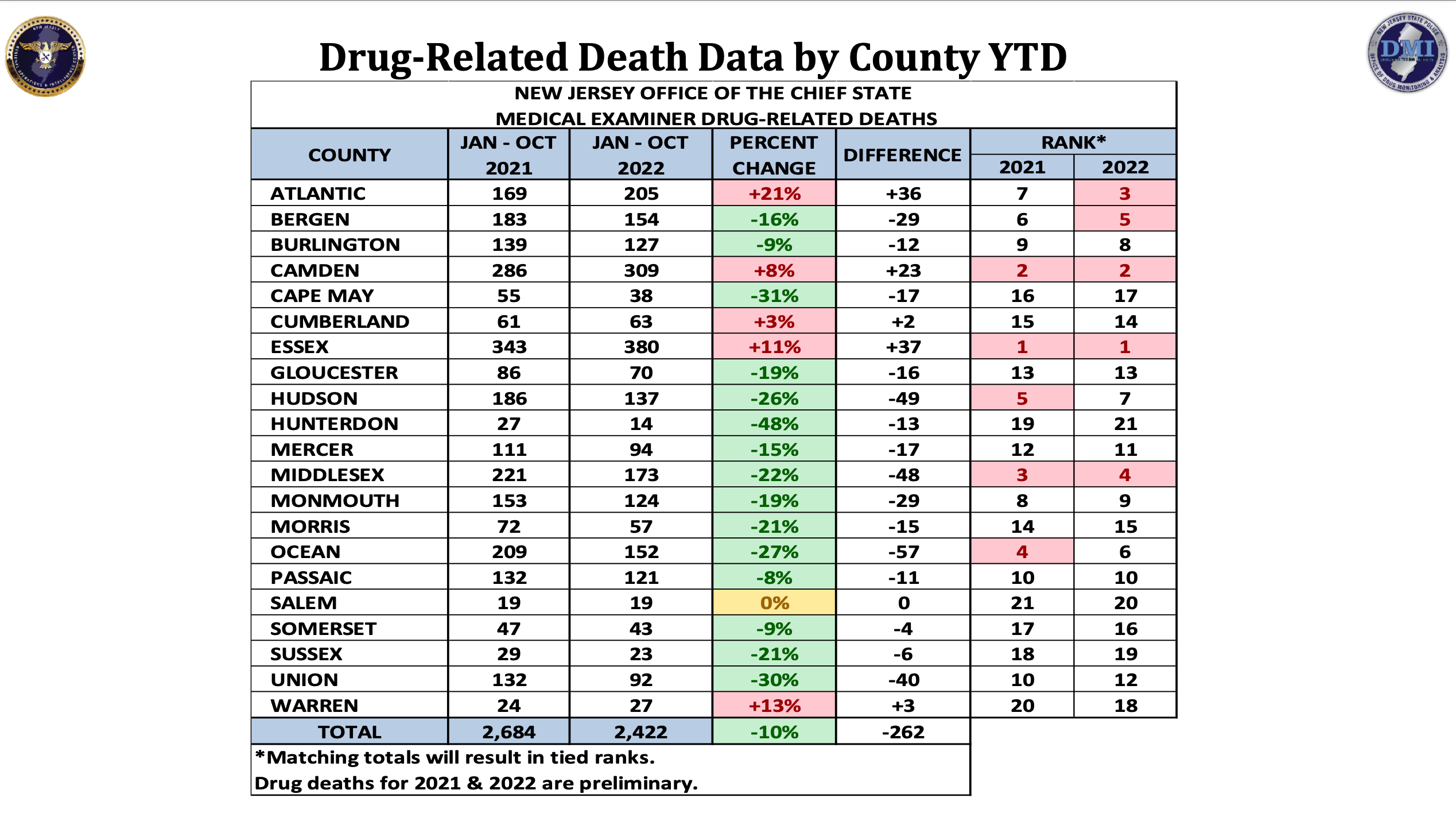
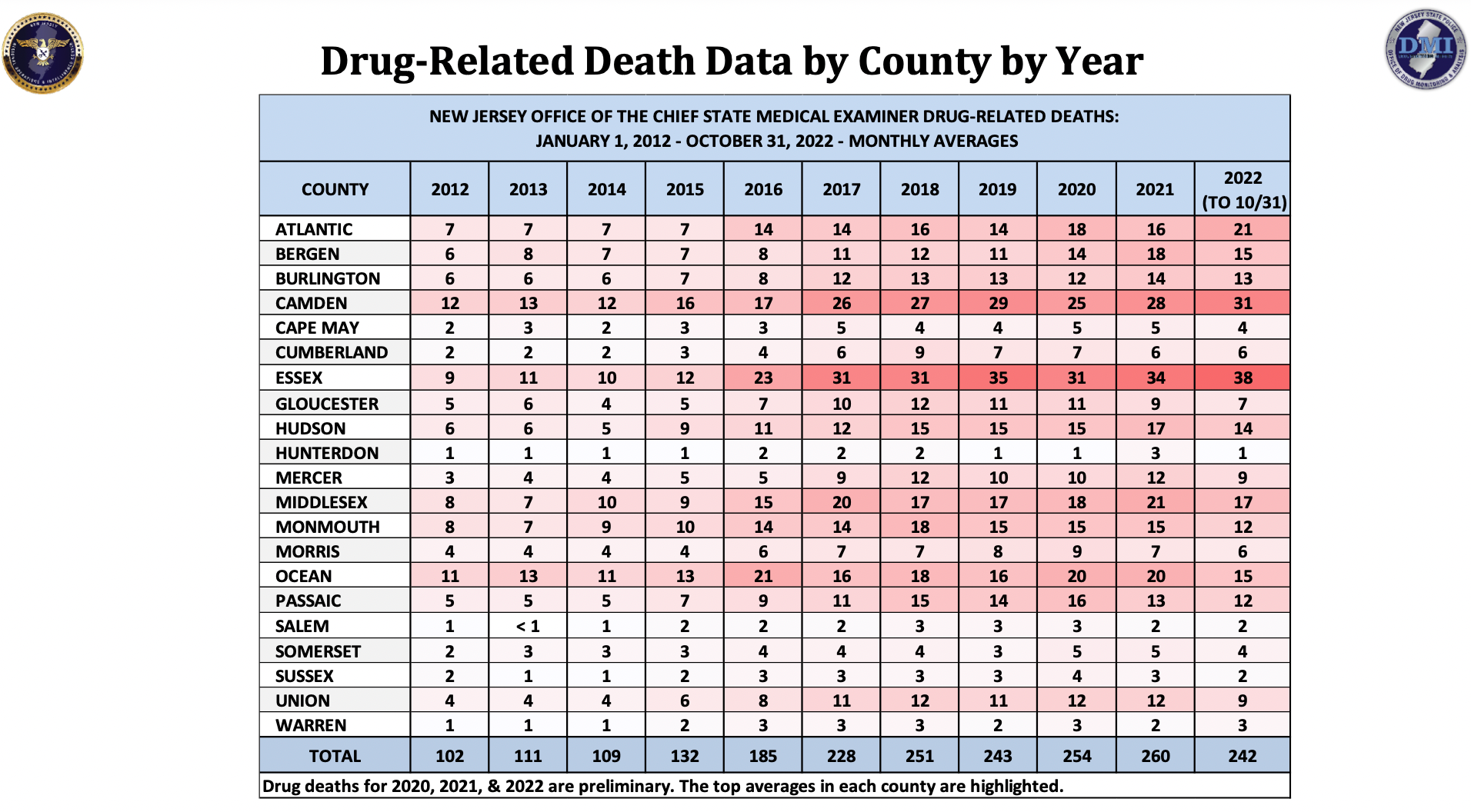
Preliminary data shows Camden County will again have the second-highest drug-related death rate in New Jersey this year.


CAMDEN COUNTY, NJ — Drug overdose deaths in Camden County are rising again, state data shows. The New Jersey Office of the State Medical Examiner says 309 people have died in the county as of Oct. 31, compared to 286 people from Jan-Oct of 2021.
Camden County again has the second-highest drug-related death rate in the state this year, behind Essex County, according to preliminary data.
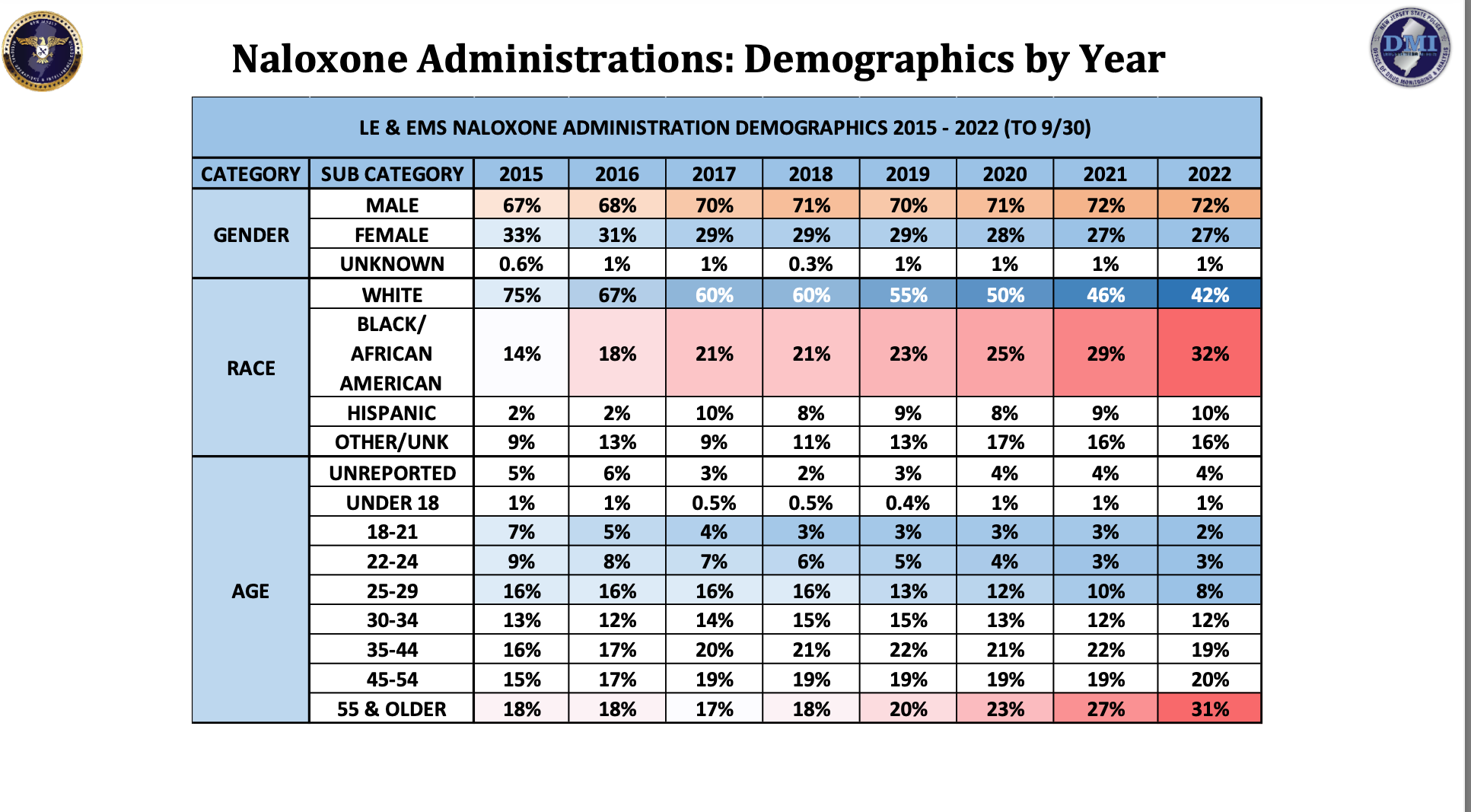
And, law enforcement and first responders have administered naloxone at a higher rate in Camden County than any other since 2015, cumulative data shows.
Find out what's happening in Cherry Hillfor free with the latest updates from Patch.
Commissioner Director Louis Cappelli Jr. said the volume of fentanyl has been "poisoning members of our community" and contributes to the fatal overdose rate in Camden County municipalities.
"This potent opioid – that only takes the equivalent of a spec of sand to be lethal - has flooded the United States and is now showing up in pills and substances that are no longer just related to heroin," said Cappelli.
Find out what's happening in Cherry Hillfor free with the latest updates from Patch.
Camden County is second out of NJ’s 21 counties in the “State Drug Harm Index,” which is a cumulative ranking based on drug submissions, drug deaths, opioid prescriptions, and naloxone administrations from 2015 through 2021.
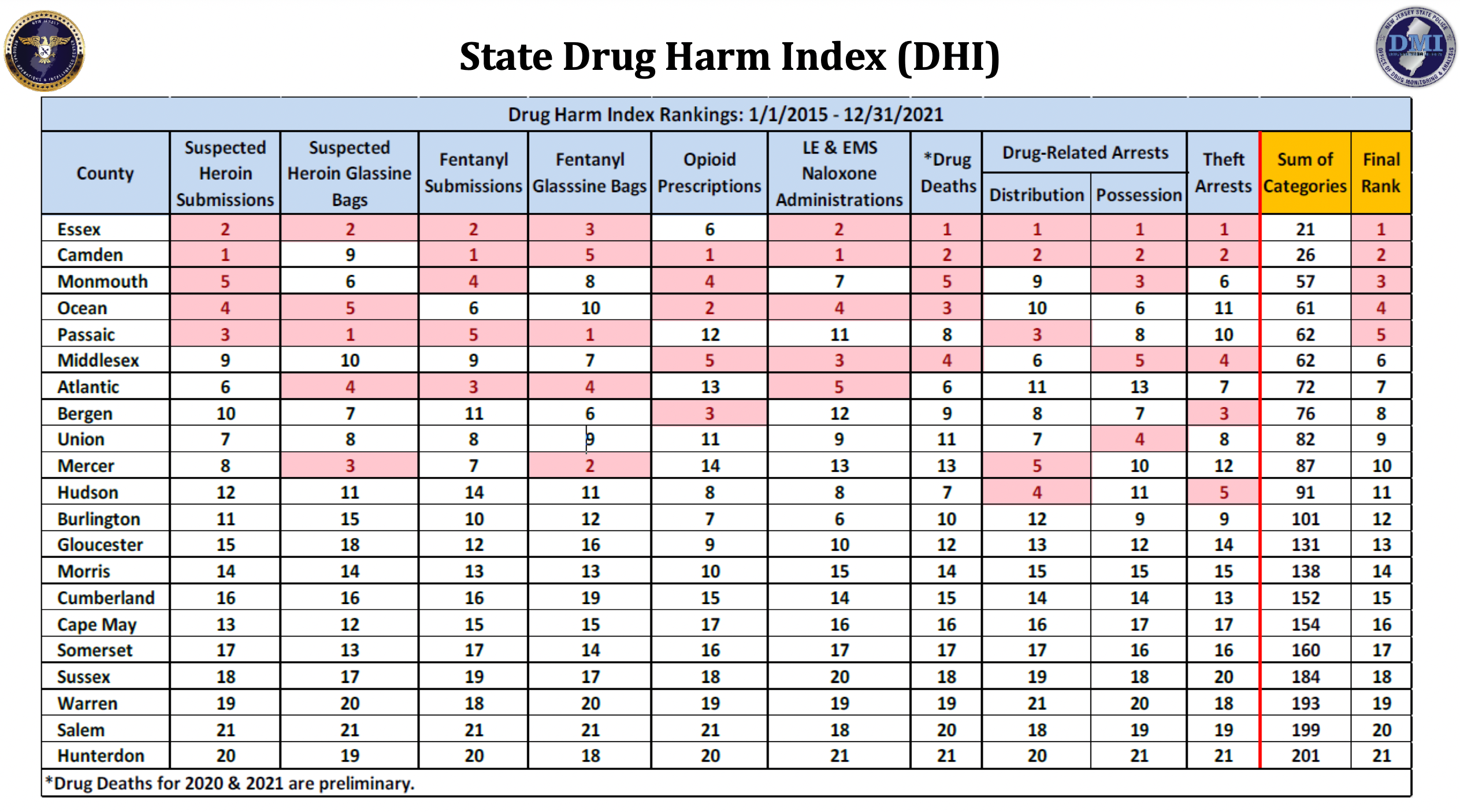
This drug data represents drugs seized by law enforcement and sent to criminal forensic labs, state police said.
From 2015-2021, Camden County has the most suspected heroin submissions, fentanyl submissions, and law enforcement/EMS naloxone administrations, state data shows. The county has also seen the second-highest number of drug deaths, and the second-highest number of drug-related distribution and possession arrests in that time period, data shows.
Essex County leads the state in drug deaths and arrests, according to state data.
State police shared drug data during a Dec. 8 webinar hosted by Partnership for a Drug Free New Jersey, according to NJ Spotlight News. You may view the presentation here. Related article: Drug Deaths Rising Among Black, Hispanic, Older NJ Residents
Camden County created a Camden County Addiction Awareness Task Force in 2014 to promote addiction awareness and education. Cappelli Jr., founder of the Task Force, expounded on some of the steps officials have taken since then and said the task force will continue working to assist and educate residents.
“Over the last eight years we have battled this public health crisis by expanding our core mission with the county office of mental health and addiction providing more access and opportunity to treatment, detox, reducing the stigma of opioids, modernizing medically assisted treatment in our jail, creating an early intervention program in our municipal courts, educational campaigns on the dangers of fentanyl and ensuring that all first responders and public places including schools have the lifesaving pharmaceutical naloxone," Cappelli Jr. said in a statement to Patch.
"Nevertheless, as the founder of the Camden County Addiction Awareness Task Force we will continue to push forward with ways to assist families and residents with opioid use disorder and do everything we can to educate our residents about the dangers of fentanyl.”
State data shows more older people dying of overdoses
Across the state, drug overdose deaths are declining overall, but rising in several demographics: among people over 55 and among Black and Hispanic New Jersey residents, state data shows. First responders are also administering naloxone to people over 55 and to Black and Hispanic people at a rising rate, data shows.
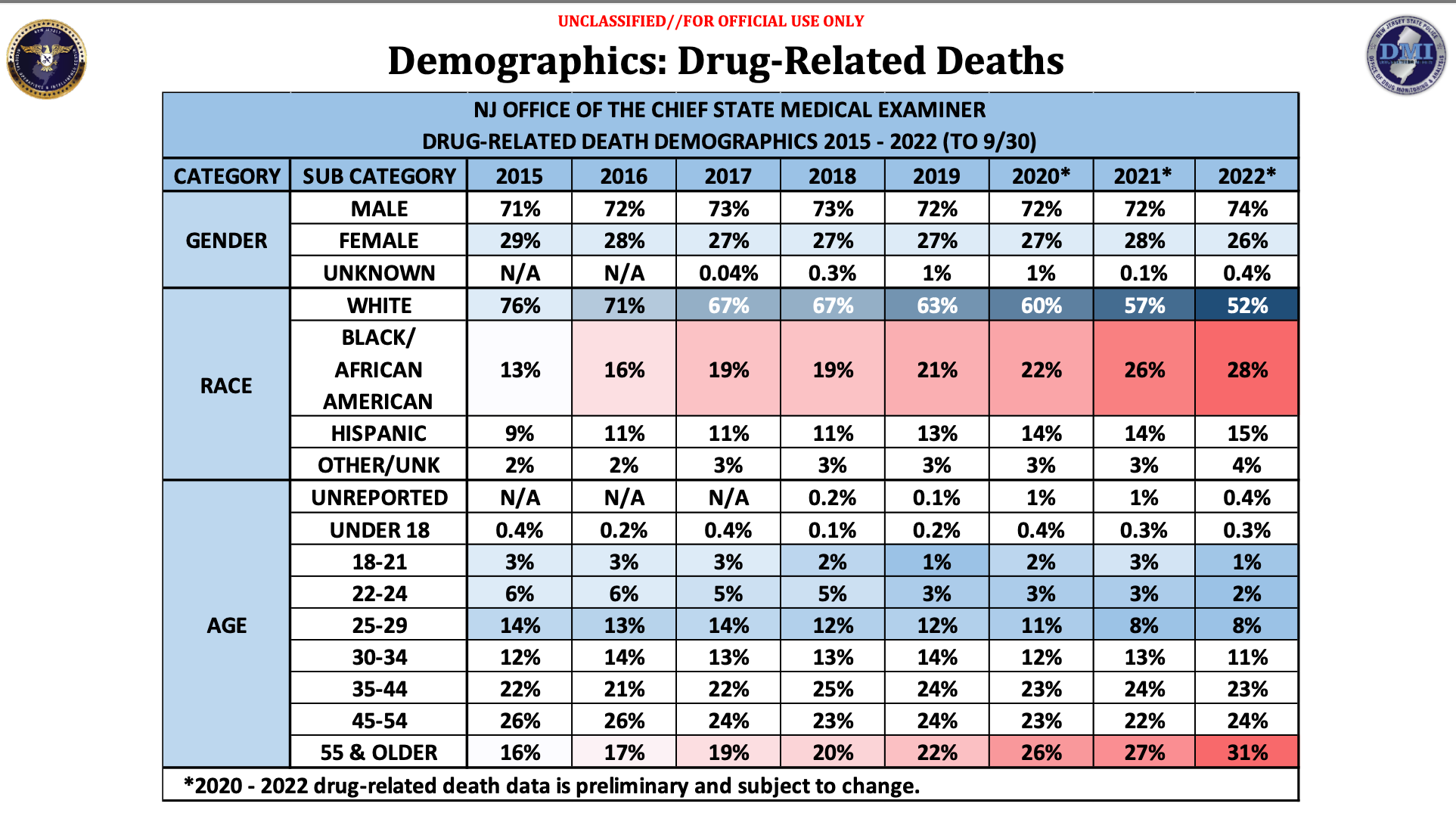
The rate at which people over 55 die of drug-related deaths has been rising steadily since 2015, according to the NJ Office of the Chief Medical Examiner.
The CDC noted similar nationwide trends of growing racial disparities. The rate of overdose deaths — deaths per 100,000 people — increased 44 percent among Black from 2019 to 2020. A lower portion of people in racial and ethnic minority groups received prior substance-use treatment before their deaths, compared to white people, according to the agency.
"Income inequalities, often negatively impacting people from racial and ethnic minority groups at a greater level, can lead to lack of stable housing, reliable transportation, and health insurance," the CDC says. "This makes it even more difficult for people to access treatment and other support services."
Overdose deaths among people 65 and older have also increased around the nation, according to the federal health agency. The national rate of overdose deaths in seniors nearly quadrupled from 2000 to 2020, jumping from 2.4 to 8.8 deaths per 100,000 people in that time.
Drug deaths in New Jersey are projected to be 7 percent below the numbers reached in 2020 and 2021, preliminary data from the state medical examiner shows. On average, 242 people have died every month this year in NJ from drug-related overdoses, data shows.
In 2020, the state had 3,050 drug overdose deaths and that number climbed to 3,124 in 2021. This year, projections indicate 2,904 people will die in New Jersey from drug-related overdose deaths. First responders are also projected to administer more life-saving naloxone this year than in the two previous years. NJ has not had under 3,000 overdose deaths in a calendar year since 2017, data shows.
Fentanyl use has risen exponentially since the state began tracking it in 2015, when seven percent of suspected heroin contained fentanyl. In the 3rd quarter of 2022, 98 percent of suspected heroin submissions contained fentanyl, state agencies said, and 63 percent of suspected heroin submitted to state forensic labs during Q3 did not contain any heroin.
There has also been a “significant increase” in the presence of the sedative xylazine, also called “tranq.”
Data shows an increase in lab-analyzed specimens of cocaine that contain fentanyl, and a slight decrease in the percentage of methamphetamine specimens that contain fentanyl.
Methamphetamine and cocaine seizures increased in 2021; reports of overdoses from crack, cocaine, and meth rose above heroin overdose reports in Q2 of both 2021 and 2022.
Since 2019, the DEA New Jersey has seized approximately 487 kilograms of fentanyl, 490 kg of heroin, 8,620 kg of cocaine, 456 kg of methamphetamine, 1,124 kg of pharmaceutical medications, and 23,764 kg of marijuana according to the presentation.
Patch's Josh Bakan contributed to this report.
Get more local news delivered straight to your inbox. Sign up for free Patch newsletters and alerts.