Community Corner
Burlington County Woman Not Trained In CPR Saves Husband's Life
Barbara Quick was among 36 individuals and organizations in New Jersey that were recently honored for their life-saving efforts.


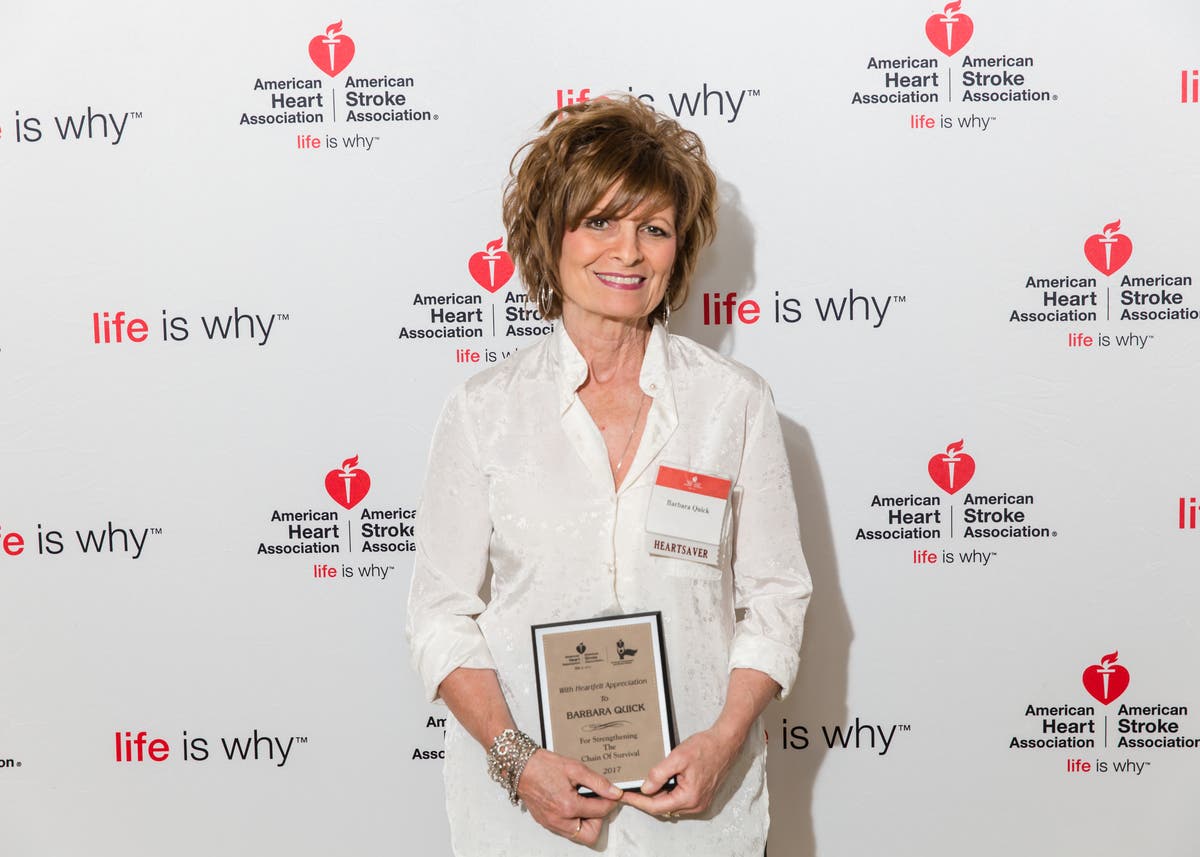
A Burlington County woman with no formal CPR training was able to save her husband’s life when he collapsed and became unresponsive last summer.
Barbara Quick, of Florence, was among 36 individuals and organizations in New Jersey that were recently honored for their life-saving efforts at the 2017 New Jersey American Heartsavers and Stroke Heroes Awards.
But that would have been the last thing from her mind when she found her husband, Bert, on the floor with clenched fist becoming unresponsive last July. Suddenly, even their vacation they were preparing to depart for took a back seat as she called 911 for help.
Find out what's happening in Cinnaminsonfor free with the latest updates from Patch.
Although never trained, she was able to perform CPR as the dispatcher walked her through the steps and continued until help arrived.
The American Heart Association and American Stroke Association’s American Heartsavers and Stroke Heroes Awards is held annually. The awards commend individuals, organizations and schools throughout the state for taking extraordinary steps to strengthen the American Heart Association Chain of Survival or for rescue efforts that saved a life of someone experiencing a cardiac or stroke emergency.
Find out what's happening in Cinnaminsonfor free with the latest updates from Patch.
The Chain of Survival is only as strong as its weakest link. The American Heart Association Chain of Survival is a critical five-step process that can mean the difference between life and death for someone experiencing sudden cardiac arrest, heart attack or stroke, as well as other medical emergencies such as choking and drowning.
- Link # 1: Early Access (know the warning signs of sudden cardiac arrest, heart attack and stroke and call 9-1-1 immediately)
- Link # 2: Early Cardiopulmonary Resuscitation (CPR)
- Link # 3: Early Defibrillation
- Link # 4: Early Advanced Care
- Link # 5: Integrated Post-Cardiac Arrest Care
Nearly 350,000 people suffer cardiac arrest outside of a hospital every year. Given immediately, CPR doubles or triples survival rates and executing the Chain of Survival can save thousands of lives annually. Additionally, someone suffers a stroke every 40 seconds, while someone dies from a stroke every four minutes.
Time is crucial for stroke treatment, the faster the Chain of Survival is initiated and symptoms are recognized, the better the outcome.
The American Heartsaver Recognition Program is an initiative supporting the American Heart Association’s efforts to strengthen the Chain of Survival in our communities as part of their impact goal to improve the cardiovascular health of all Americans while reducing death and disability from heart disease and stroke by 20 percent by the year 2020.
Visit www.heart.org/handsonlyCPR for a short instructional video on hands-only CPR that could help save a life. The American Stroke Association suggests remembering the acronym FAST to recall the most common signs of stroke. F.A.S.T. stands for:
- Face Drooping Does one side of the face droop or is it numb? Ask the person to smile. Is the mouth lopsided or uneven?
- Arm Weakness Is one arm weak or numb? Ask the person to raise both arms. Does one arm drift downward?
- Speech Difficulty Is speech slurred, are they unable to speak, or are they hard to understand? Ask the person to repeat a simple sentence, like "the sky is blue." Is the sentence repeated correctly?
- Time to call 911 If the person shows any of these symptoms, even if the symptoms go away, call 9-1-1 and get them to the hospital immediately.
For more information, visit www.strokeassociation.org.
The attached image of Barbara Quick was provided
Get more local news delivered straight to your inbox. Sign up for free Patch newsletters and alerts.