Health & Fitness
Gov. Murphy Now Says NJ Daily COVID Cases Could Double To 12K
Cases may hit 12,000 if NJ doesn't control COVID, and hospitalizations could spike to their highest levels since spring, Gov. Murphy said.


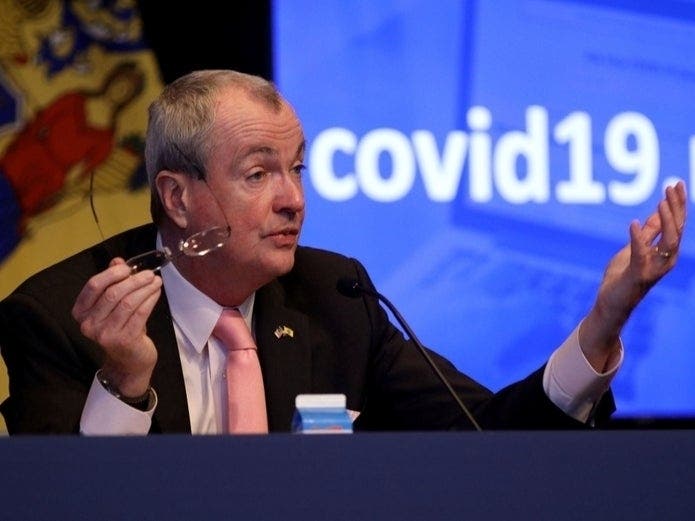
NEW JERSEY — New Jersey could see upwards of 12,000 cases of the coronavirus by early next year if it doesn't get control of the spread of the virus, and hospitalization rates could spike to their highest levels since the spring, Gov. Phil Murphy said on Wednesday.
While he's been hesitant to impose lockdowns like he did in the spring, Murphy said newly developed predictive models cite worst-case scenarios that could force New Jersey to take such actions. The governor said on Tuesday that such actions could be economically devastating, but necessary. Read more: Gov. Murphy: NJ Recovery May Be 'Years' As COVID Vaccines Arrive
"Protecting the ability of our healthcare system to treat the ill is our paramount concern," Murphy said during the Wednesday news conference. "If the numbers begin to roll in where the ability to put that into question, we will have no choice but to act."
Find out what's happening in Cinnaminsonfor free with the latest updates from Patch.
Later in the news conference, he said all options to act would be on the table to prevent the healthcare system from being overrun.
New Jersey Coronavirus Updates: Don't miss local and statewide announcements about novel coronavirus precautions. Sign up for Patch alerts and daily newsletters.
Find out what's happening in Cinnaminsonfor free with the latest updates from Patch.
Speaking during the news conference, Murphy announced 4,665 new cases of the coronavirus and 91 more deaths — the highest number in six months — before pointing to two independent predictive models to project what might happen if the virus were to spiral out of control.
One model, used by the state Department of Health, predicts the second wave of the pandemic would spike at 12,595 on Jan. 14 under a worst-case scenario — meaning, New Jersey and its residents don't take enough precautions to reduce the risk of the virus.
A model used by the Office of Innovation — a separate division within the Murphy administration that deals with long-range projects — predicts a worst-case scenario spike of 9,932 on Feb. 1.
This is higher than what Murphy predicted a few weeks ago, when he said cases could rise to 8,000 to 10,000 a day — doubling the Garden State's highest totals ever — if people don't take personal responsibility to fight the disease. Read more here: Gov. Murphy: NJ COVID Cases Could Hit 10K A Day, Reach Daily High
The Department of Health's model predicts a worst-case scenario of 8,747 hospitalizations on Jan. 13, with 1,679 in the Intensive Care Unit (ICU) and 1,088 on ventilators. The Office of Innovation predicts 8,689 hospitalizations, 1,632 in the ICU and 1,037 on ventilators, all on Feb. 5.
The first wave of the pandemic hit peak hospitalizations on April 14, when 8,270 patients were hospitalized, with 2,051 in ICU and 1,872 on ventilators, Murphy said.
There was also a more moderate scenario, where residents continued to "do a little more with our masking and social distancing," Murphy said. "Where more of us use common sense and smart decision-making throughout the holidays. Under these assumptions, we see a path where our hospital metrics stay within the safety zone."
In a moderate-case scenario, the Department of Health foresees 9,120 cases and a peak of Jan. 13 under this moderate scenario, with 6,333 hospitalizations, 1,215 in ICU and 788 on ventilators the following day.
The Office of Innovation predicts a Christmas Day peak of 7,180, with 5,752 hospitalizations, 1,180 in ICU and 687 on ventilators by Jan. 31. Neither model takes into account death totals.
MODERATE CASE MODEL: We all do a little more to continue with our masking, social distancing, & avoiding gatherings. This path would keep our hospital metrics within the safety zone. The numbers would still be very big, but wouldn't overwhelm our health care system capacity. pic.twitter.com/KgBZWa57kh
— Governor Phil Murphy (@GovMurphy) December 9, 2020
"Under this scenario, we would not need to reinstate any of our prior restrictions," Murphy said. "However, if we can over perform as we did in the spring and truly recommit to doing the right things, we can push these numbers down even further.
However, Murphy said neither prediction presents numbers he wants to hear.
"Those numbers are pretty stark in either scenario," Murphy said.
He said the two models use the same data, but interpret that data differently. He also said they are just models, change every day, and improve the more residents take the proper precautions.
The Department of Health model makes predictions based on hospitalizations at their highest rates, while the Office of Innovation model looks at the rate of cases converted into hospitalizations, New Jersey Department of Health Commissioner Judith Persichilli said.
Moderate cases assume a conversion of 75 percent, and that cases coming out of future holidays are comparable to those of previous holidays during the pandemic, Persichilli said. The worst-case scenario assumes a 100 percent conversion rate and takes the hospitalization rates from the larger, religious holidays, she said.
"The more we can change them for the better, the sooner we can crush the curve of this second wave and get ourselves gliding down the other side," Murphy said. "If we do that, we will have put ourselves into a more promising position for when a vaccine becomes widely available in the spring. That means we can envision lifting restrictions that much sooner."
Murphy said the best ways to keep numbers down are to get tested, and for business owners to ensure that their employees have proper access to personal protective equipment (PPE).
"Unlike last April, we have worked with our hospitals to stockpile PPE and ventilators," New Jersey Department of Health Commissioner Judith Persichilli said.
She said the state has been conferencing with healthcare officials about what would trigger access to these stockpiles, as well as on decisions for curtailment of admissions and increases in bed capacity.
"Unlike in April, we do have new treatments to lessen the severity of the virus and hasten recovery," Persichilli said. "But like the last surge, we continue to be concerned for our healthcare workforce."
But she also said that unlike the first surge, every state is experiencing this surge at the same time, and she urged residents to do everything they can to keep the spread of the virus down.
Get more local news delivered straight to your inbox. Sign up for free Patch newsletters and alerts.