CLARK
State takes over probe of town’s cops, leaders
The Rev. Charles Boyer says authorities had a moral duty not to sit on evidence that Clark’s leaders harbored racist views. Here, he is pictured in Piscataway in October 2020. Patti Sapone, NJ Advance Media for The Star-Ledger
S.P. Sullivan and Riley Yates - For The Star-Ledger
With racist recordings exposed, AG seizes control as some question length and silence of investigation.
State authorities have formally taken control of an investigation into the Clark Police Department and township leaders after NJ Advance Media revealed secret recordings of the longtime mayor and police brass using racial slurs.
The state Office of Public Integrity and Accountability “has assumed the investigation into the leadership of the Clark Police Department and township,” Steven Barnes, a spokesman for acting Attorney General Matthew Platkin, said in a statement Thursday evening.
The Union County Prosecutor’s Office, which has had control of the police department since July 2020, “has been directed to maintain their supersession authority” over the department “until further notice,” Barnes said.
The disclosure came amid withering criticism over how county and state authorities have handled their inquiry.
The secret recordings were made by a would-be whistleblower, police Lt. Antonio Manata, but were kept under wraps until last week, when NJ Advance Media published some of them.
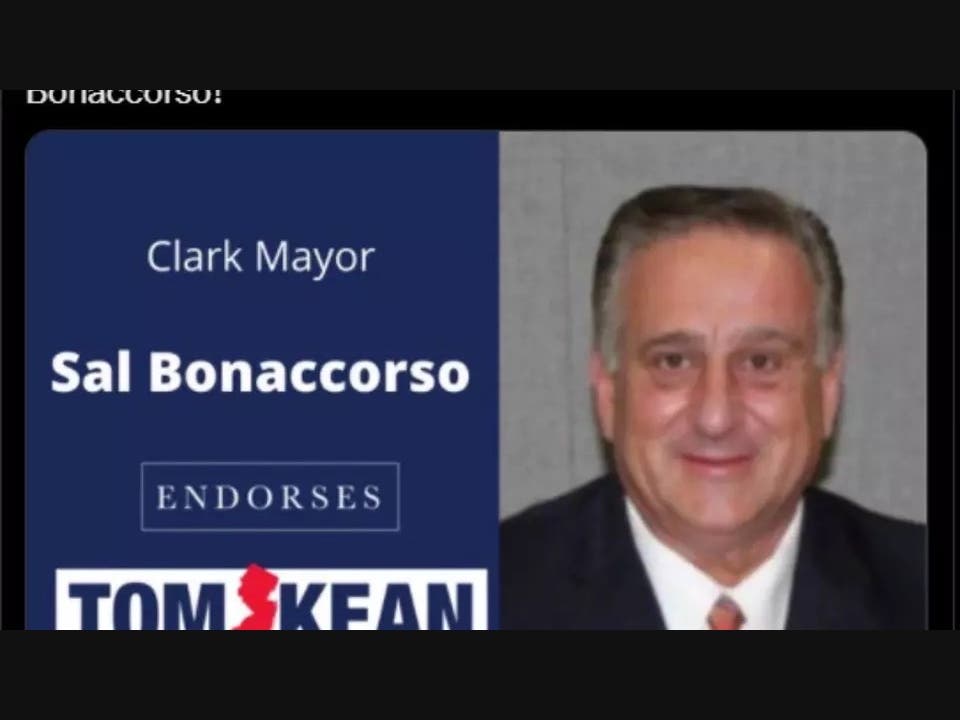
They capture Mayor Sal Bonaccorso referring to Black people as the N-word and “spooks” and calling women in law enforcement “all (expletive) disasters.”
The township quietly paid Manata and his attorney $400,000 in a settlement to conceal the allegations. Union County prosecutors long knew about those recordings, having taken control of the
department six months after the settlement was approved.
In the 20 months since the department’s takeover, Chief Pedro Matos and Sgt. Joseph Teston — who were also allegedly captured on tape using racial slurs — have continued to collect their paychecks while suspended with pay. Bonaccorso continues to head Clark’s government, having won a sixth term in November 2020.
State authorities still won’t say what they are investigating, beyond what they term are “credible allegations of misconduct.” But they have now made clear the probe includes both the police department and township government.
Bonaccorso initially denied using racial slurs or knowing of the existence of the recordings but later acknowledged in an apology video that he had used racial slurs.
“I am embarrassed and ashamed to have spoken that way about a race of people,” the Republican said in an online video posted Tuesday.
Reached by phone Wednesday, the mayor declined to comment further.
Legal experts who spoke to NJ Advance Media said the probe could concern whether local officials misused public funds to keep the mayor and police leaders’ racist comments from being disclosed.
When county prosecutors took over the department in 2020, they pledged to produce a public report of their findings. State authorities have said they still intend to do so, but have offered no timeline for the investigation.
Thursday’s statement marked the first time the Attorney General’s Office formally acknowledged they had taken over the probe.
Some policing experts say state and county prosecutors had a responsibility to inform the public and move more swiftly in their investigation.
“I have some real questions and serious concerns about this investigation and why the mayor wasn’t identified,” said Brian Higgins, a John Jay College of Criminal Justice professor and former Bergen County police chief. He said that by keeping the allegations out of the public eye, prosecutors became culpable to some extent in efforts to cover up the scandal.
“Even when they are investigating, there was enough evidence to say this gentleman should not be allowed to be mayor or the leader of that department,” Higgins said.
The Rev. Charles Boyer, a pastor and founder of the civil rights group Salvation and Social Justice, said authorities had a moral duty not to sit on evidence that Clark’s leaders harbored racist views.
“There’s absolutely an obligation for folks in authority over these policing agencies to alert the public when the (town and police) leaders are explicitly racist,” said Boyer, who grew up in nearby Plainfield and noted that Clark has long had a bad reputation in the Black community.
In a written statement Wednesday, the Attorney General’s Office explicitly acknowledged for the first time that the investigation extends beyond the police department and also covers the “township leadership.” The office said it takes seriously its responsibility to ensure policing isn’t done with bias.
“While we endeavor to increase transparency in policing, we are bound by the system of rules and regulations governing court procedure and investigations more generally,” said the statement issued by Barnes. “As soon as we are legally able to share additional information with the public, we will do so.”
The Union County Prosecutor’s Office did not respond to a request for comment.
Gov. Phil Murphy has called on Bonaccorso to resign, as has former state Senate Minority Leader Tom Kean Jr., a Republican running for Congress in the district.
In his video statement, Bonaccorso did not refer to the legal settlement that the township agreed to pay Manata in January 2020 to keep the allegations out of the public eye. At a Township Council meeting Monday evening, Bonaccorso attributed the settlement to pressure from the township’s insurer, though a lawyer for Manata disputes that.
“No representative of any insurance company was present during any settlement negotiations,” the lawyer, Patrick Toscano Jr., said Thursday.
Prosecutors are often loath to tip their hands during ongoing investigations, and they operate under ethical dictates that seek to protect the innocent from being improperly exposed to public ridicule.
Find out what's happening in Clark-Garwoodfor free with the latest updates from Patch.
In his video statement, Bonaccorso did not refer to the legal settlement that the township agreed to pay Manata in January 2020 to keep the allegations out of the public eye. At a Township Council meeting Monday evening, Bonaccorso attributed the settlement to pressure from the township’s insurer, though a lawyer for Manata disputes that.
“No representative of any insurance company was present during any settlement negotiations,” the lawyer, Patrick Toscano Jr., said Thursday.
Prosecutors are often loath to tip their hands during ongoing investigations, and they operate under ethical dictates that seek to protect the innocent from being improperly exposed to public ridicule.
That can mean that even troubling accusations must be kept confidential until an investigation is complete, said Jamie Pukl-Werbel, a Seton Hall law professor and a former assistant prosecutor in Manhattan. She defended prosecutors’ handling of the Clark allegations, saying that by seizing control of the department and announcing an investigation into misconduct, they had done right by the public and their professional rules.
“It would be improper for the prosecutor’s office to comment on the specific allegations of police misconduct because the investigation is ongoing,” Pukl-Werbel said.
It is also unknown how expansive that investigation is and what directions it may have taken. Jeremy Abay, an adjunct professor at Rutgers Law School in Camden, represents whistleblowers in private practice. He said the probe might be looking into whether the township’s settlement represented an illegal use of public money.
It is against the law for public officials to use public funds for their benefit, Abay noted. He said that if the township entered the settlement to avoid political fallout against the mayor and other town officials, that could be a crime. At issue would be the town’s motive in agreeing to the payout, he said, and whether there was a legitimate explanation for it — for instance, a desire to avoid the cost of litigation.
If not, “it would take you potentially into the realm of criminal activity or conspiracy,” Abay said. “And the question would really come down to intent.”
Some experts in criminal justice have been critical of how long the investigation has dragged on.
“There’s a question of some kind of malfeasance here: Why has it taken two years?” said David Rudovsky, a University of Pennsylvania law professor and an expert on police misconduct. “Why haven’t they done something sooner?”
Ex-Perth Amboy Police Chief Roman McKeon, who retired last year, called the allegations “really bad” and questioned why the probe hadn’t concluded.
“Wasn’t it true that until a few days ago this outrage was completely swept under the rug with the hope it would ‘go away?’ ” McKeon asked in an opinion piece he sent to NJ Advance Media. “If the justice system typically took this long for criminal matters to be resolved just imagine how long a homicide, robbery or drug case would take to see the scales of justice. Our justice system would be rendered useless.”
McKeon said rank-and-file officers face far greater scrutiny of their actions. He pointed to a firestorm of criticism that Perth Amboy fielded a year ago after officers confiscated bicycles from a group of largely Black and Latino teenagers, arresting one of them. The Middlesex County Prosecutor’s Office investigated the incident and concluded in October that police acted legally and showed no sign of racial discrimination during the encounter.
“So where is the accountability within ... Clark for clearly outrageous and offensive behavior by its so-called ‘leaders?’ ” McKeon asked.
Higgins, the John Jay professor, said that pressure builds on prosecutors with each passing day to show they haven’t been sitting on the case. When they release their report, he said, it had better be significant.
“If their report comes out and it really only contains what you have revealed already,” Higgins told NJ Advance Media, “the question would be, ‘What took you so long, and what were you waiting for?’ ”